A City Caught Between War and Peace
American military photographs trace Osaka from wartime target to occupied and recovering city in a Peace Osaka exhibition drawn from the U.S. National Archives — and open a door into the museum’s larger story of wartime Osaka.
Before American servicemen photographed themselves sightseeing at Osaka Castle, the U.S. military was photographing Japan for a very different reason.
During World War II, American forces gathered images and other material as intelligence for the war against Japan. After Japan’s surrender, cameras remained, but their purpose changed. Photographs documented the Allied occupation and a country beginning the long transition from war to peace. Many of those records eventually entered the U.S. National Archives. Now, Peace Osaka has brought a selection concerning Osaka back to the city they captured.
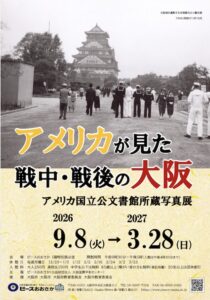
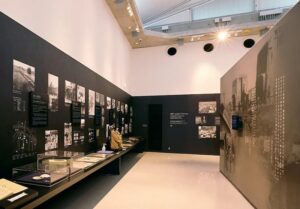
Osaka During and After the War, as Seen by America runs through March 28, 2027 at Peace Osaka, bringing photographs and moving images from the U.S. National Archives into Peace Osaka’s first-floor special exhibition room. Together they offer an unusual perspective: Osaka not through family albums or Japanese news photography, but through cameras connected to the country that had first fought Japan and then occupied it.
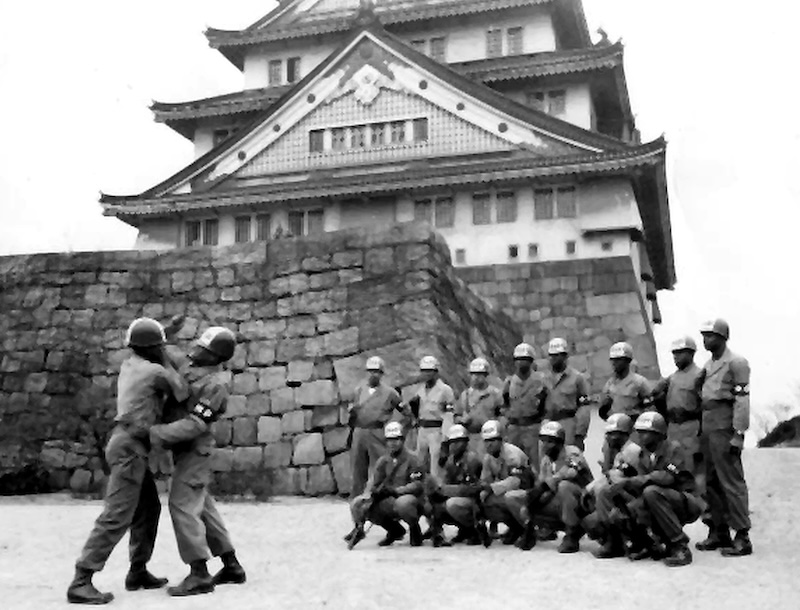
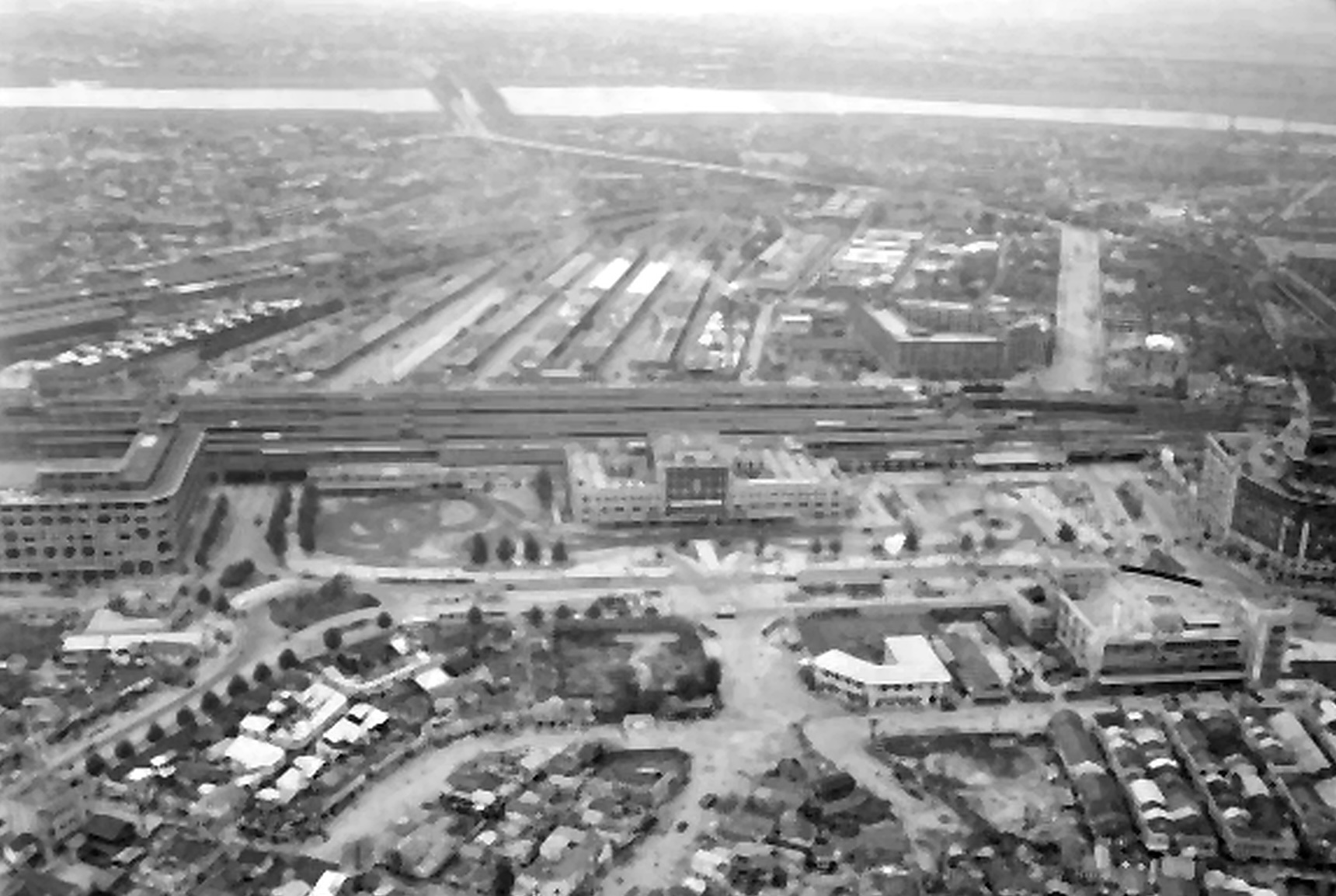
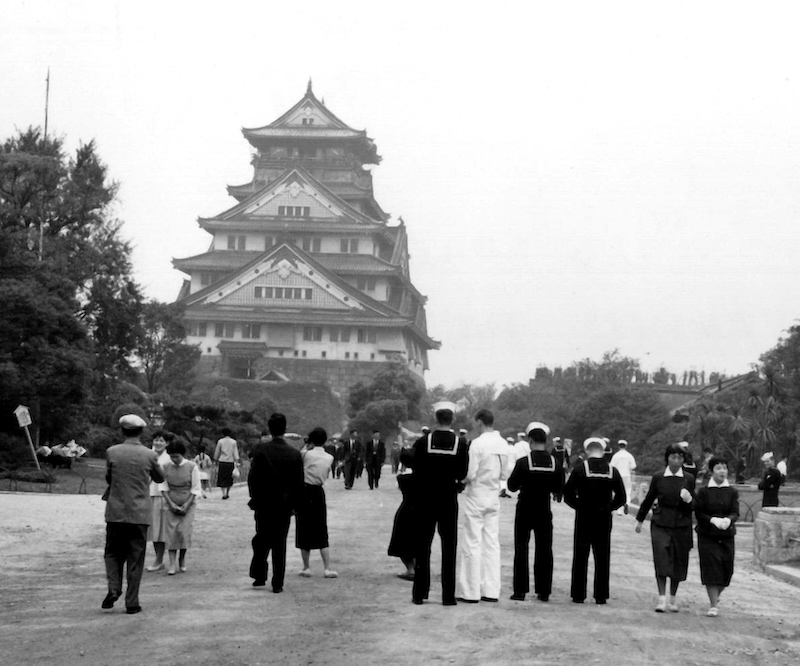
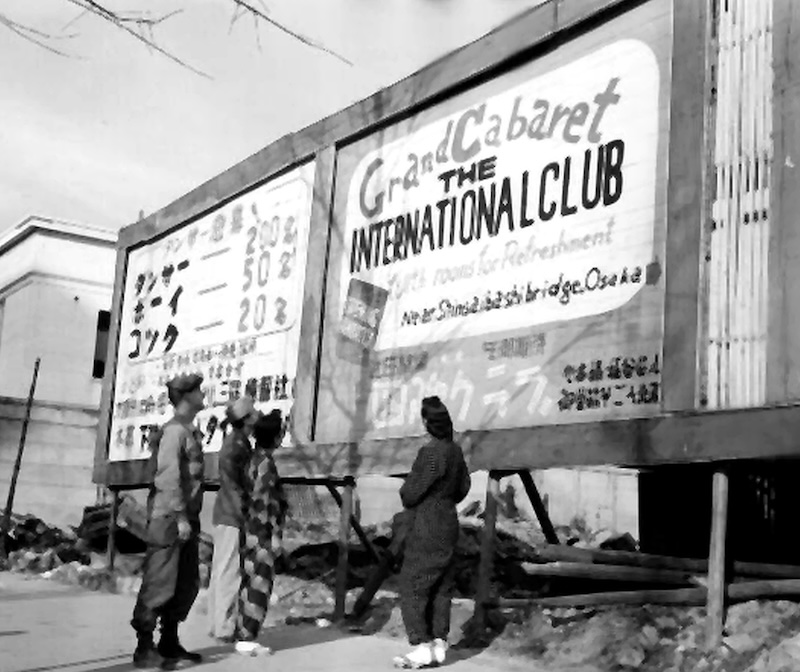
Individual images turn that enormous historical transition into recognizable pieces of Osaka. A Shinsaibashi cabaret advertises its opening on November 15, 1945, only three months after Japan’s surrender. U.S. military police practice judo in front of Osaka Castle in 1951. Another photograph records the Osaka Station area in 1949. By October 1956, a U.S. Navy serviceman stands with tourists photographing Osaka Castle — an image strikingly different in purpose and mood from the wartime intelligence that began the collection.
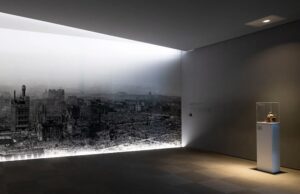 The exhibition is also an ideal doorway into Peace Osaka itself. The permanent museum widens the view from American cameras to the people who lived through the period: wartime homes and rationing, letters and diaries, air-raid preparations, survivor testimony and the devastation of the Osaka air raids. Upstairs, the story continues through occupation, housing shortages, black markets and Osaka’s postwar recovery.
Seen together, the special and permanent exhibitions offer two perspectives on the same city. One records Osaka from the outside. The other tells what it meant to live through those years from within.

 Osaka Through American Cameras – See wartime and Occupation-era photographs and moving images.
From Target to Occupied City – How American documentation changed as war gave way to recovery.
A Different Osaka Castle – See U.S. military personnel around one of today’s most familiar Osaka landmarks.
Postwar Osaka in Detail – Encounter images of Shinsaibashi, Osaka Station and everyday life as the city emerged from war.
Explore the Larger Story – Museum admission also opens Peace Osaka’s permanent galleries.
Photos: Peace Osaka Event Website / US National Archives
WHAT ELSE IS HAPPENING IN OSAKA?
Discover events, exhibitions, festivals, concerts, culture & more.

Follow @osakascene on Instagram
Maps
Contact
Opening Hours
THE SCENE: FAQ’s
ACCESS
Venue: Peace Osaka (Osaka International Peace Center)
Address: 2-1 Osakajo, Chuo Ward, Osaka 540-0002
Trains
JR Osaka Loop Line → Morinomiya Station, North Exit → approximately 400 meters west.
Subways
Osaka Metro Chuo / Nagahori Tsurumi-ryokuchi Lines → Morinomiya Station, Exit 1 → approximately 200 meters west.
Osaka Metro Tanimachi / Chuo Lines → Tanimachi 4-chome Station → approximately 1.1 km east.
Peace Osaka is on the southern side of Osaka Castle Park along Chuo-dori.
◷ FROM CENTRAL OSAKA
From Namba — about 20–25 minutes
Osaka Metro to Morinomiya with one transfer, followed by the short walk from Exit 1.
From Osaka/Umeda — about 20–25 minutes
JR Osaka Loop Line from Osaka Station to Morinomiya, then approximately five minutes on foot from the North Exit.
SCHEDULE
Exhibition Period
September 8, 2026–March 28, 2027
Hours
09:30–17:00
Last admission: 16:30
Regular Closure: Mondays, with additional museum closure dates during the exhibition period.
Peace Osaka has announced a temporary closure on November 14, 2026. Visitors planning around holidays or later dates should check the museum’s current opening calendar before traveling.
TICKETS
Admission to the special exhibition is included with regular Peace Osaka admission.
Adults: ¥250
High school students: ¥150
Junior high school students and younger: Free
Age 65+: Free with proof of age
Visitors with disabilities: Free with documentation
One accompanying caregiver: Free
No separate special-exhibition ticket is required.
THE EXPERIENCE
The temporary exhibition works particularly well as the beginning of a larger Peace Osaka visit.
- Examine American photographs and moving images of Osaka during the war, Occupation and postwar period.
- Look for familiar places including Osaka Castle, Shinsaibashi and the Osaka Station area in unfamiliar historical settings.
- Continue into the permanent galleries covering wartime life, air-raid preparation and the Osaka air raids.
- Enter a reconstructed wartime home and an air-raid shelter, and encounter diaries, letters, artifacts and survivor testimony.
- Follow Osaka beyond 1945 into occupation, shortages, black markets and postwar recovery.
- Use multilingual smartphone audio guidance available in Japanese, English, Chinese and Korean at 41 points through the permanent exhibition.
The special exhibition provides the outside view; the permanent museum fills in what those turbulent years meant for the people living inside the city.
INFO & TIPS
Allow enough time for the permanent museum rather than treating this as a quick photo exhibition. The temporary exhibition is on the first floor, but the larger museum experience spans three floors.
Photography inside Peace Osaka is restricted: general visitor photography is permitted under museum rules, but close-up photography of exhibition materials, flash and tripods are prohibited. Follow any additional restrictions posted within the special exhibition.
Coin lockers are available, and the museum has elevators, ramps and an accessible restroom. There is no restaurant inside the museum.
The permanent exhibition’s smartphone audio guide supports English, Japanese, Chinese and Korean, which makes this a particularly accessible museum option for international visitors.
Peace Osaka (Osaka International Peace Center)
Telephone: 06-6947-7208
https://www.peace-osaka.or.jp/