A centuries-old culture of craftsmanship, community and tradition.
Every autumn, Osaka’s danjiri thunder through the streets, with Kishiwada providing the most famous spectacle. But behind the racing floats is a culture built on neighborhood pride, generations of tradition and extraordinary craftsmanship.
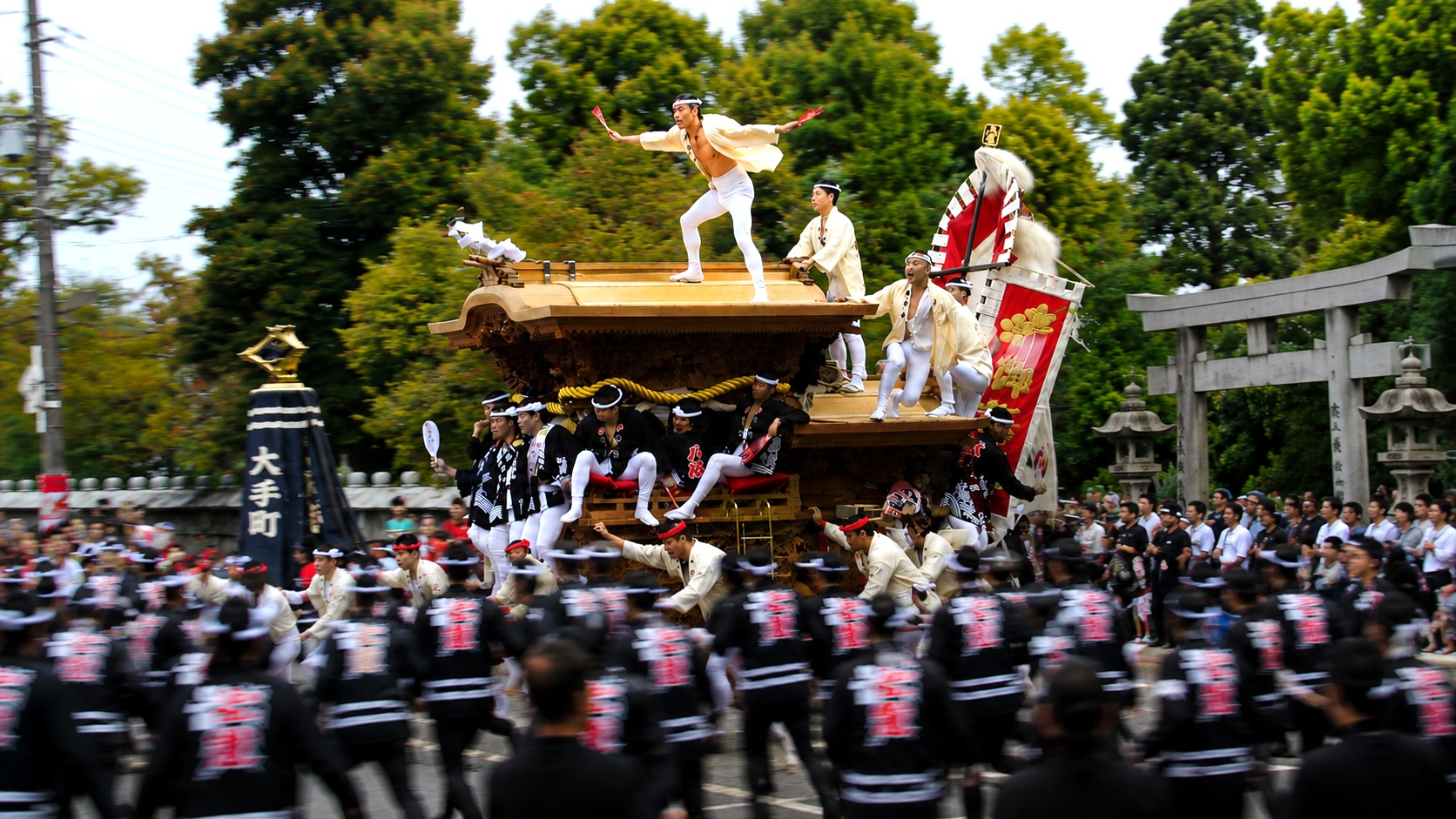
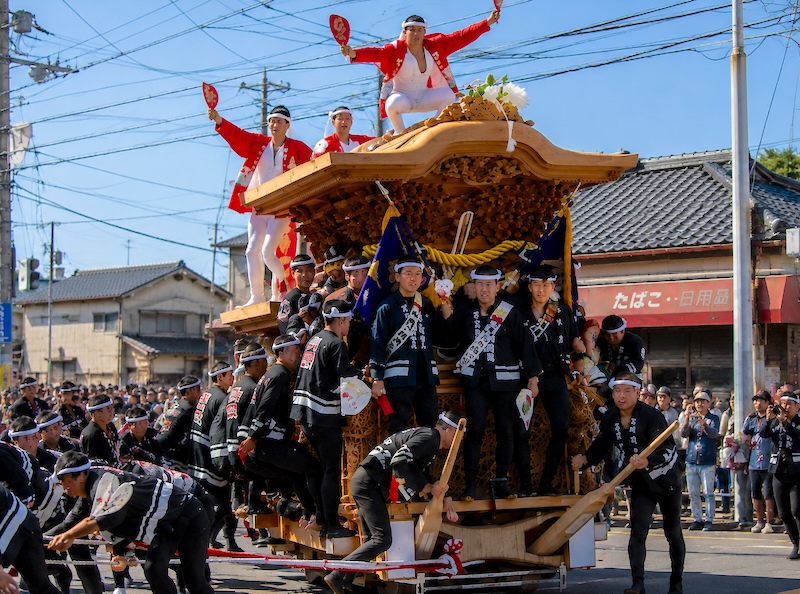
You may hear it before you see it. Drums and flutes somewhere down the street. Shouts from the runners. Then the crowd shifts and a huge wooden danjiri appears, pulled by long ropes and surrounded by people running alongside it. High above them, a daikugata dances across the roof with a fan in hand. Then comes the corner. Surely they’re going to slow down.
They don’t.
Instead, ropes tighten, crews move into position and the entire danjiri swings around the intersection at speed in the maneuver that has made Kishiwada famous: yarimawashi.
Every September, the Kishiwada Danjiri Matsuri returns for one of Osaka Prefecture’s most anticipated traditional festivals. For two days, the streets become a stage for a tradition Kishiwada traces back more than 300 years. But what exactly are we watching?
What is a danjiri? Why is someone dancing on its roof? Why does each neighborhood have its own? And why do generations of residents devote so much time to pulling a wooden float through the streets? To understand Kishiwada, you have to look behind the spectacle.
What Is a Danjiri?
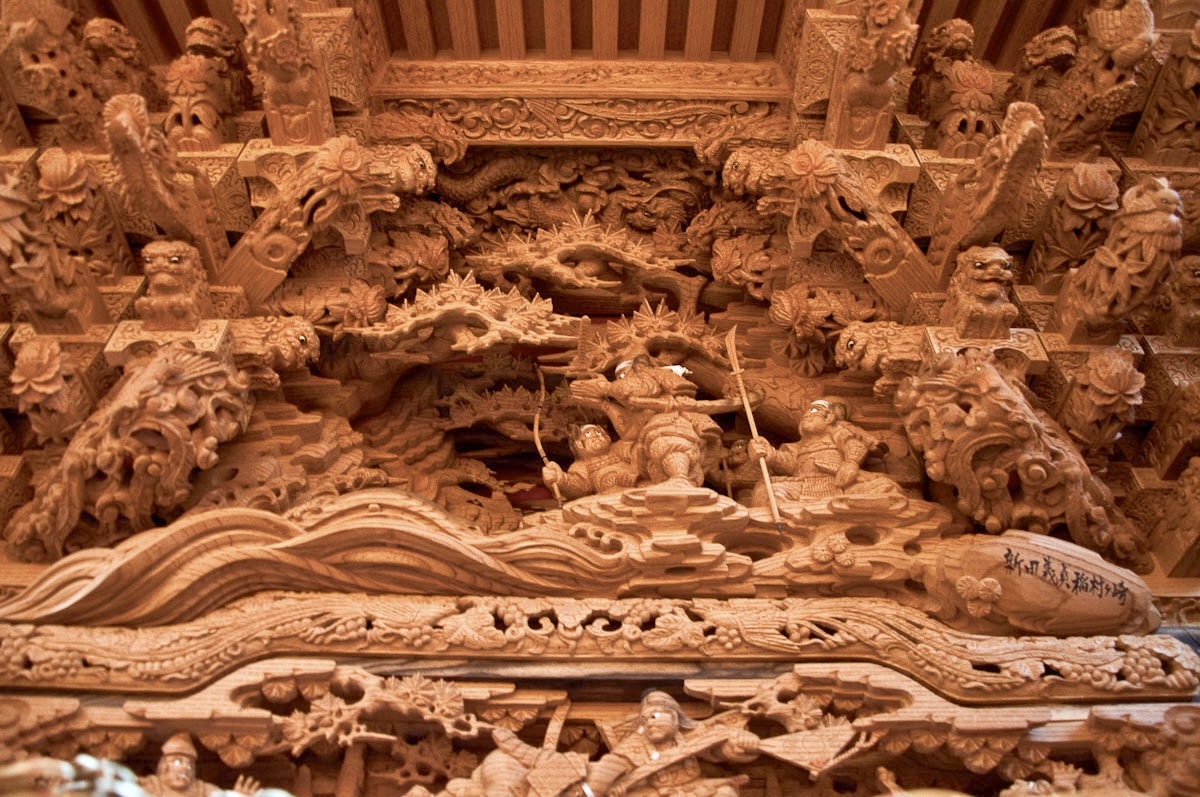
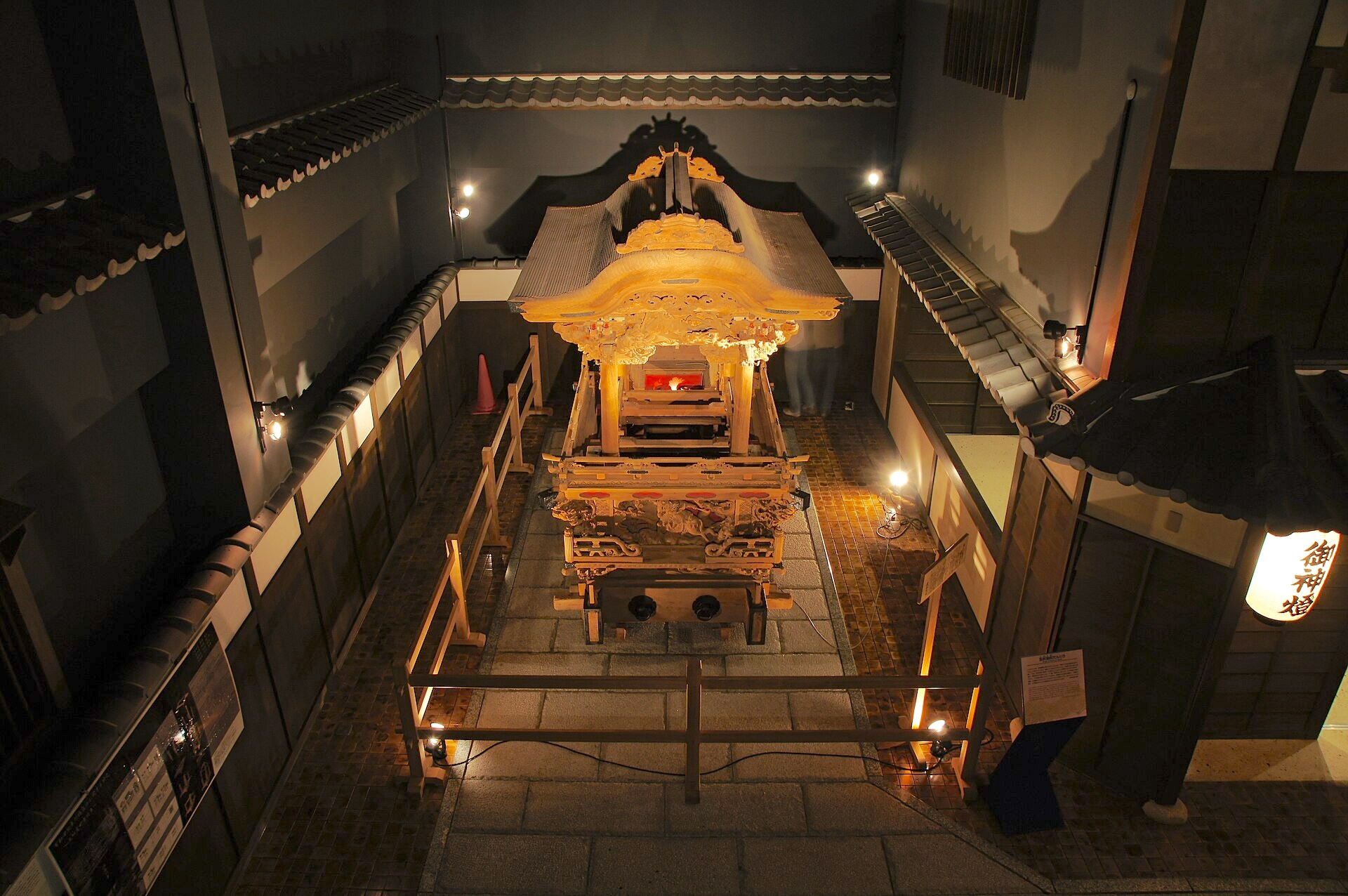
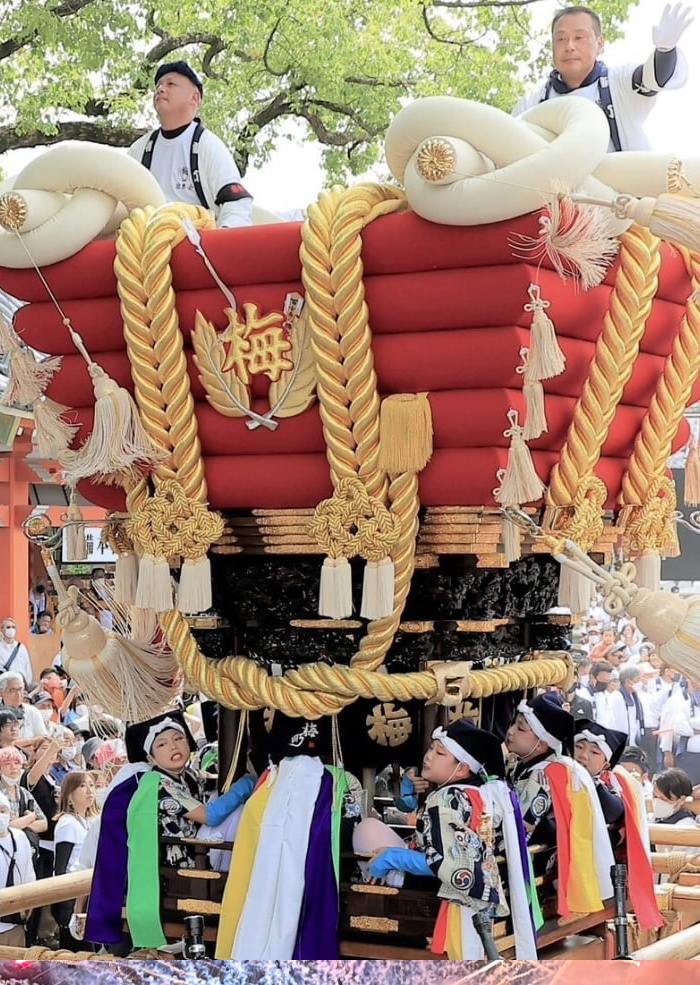
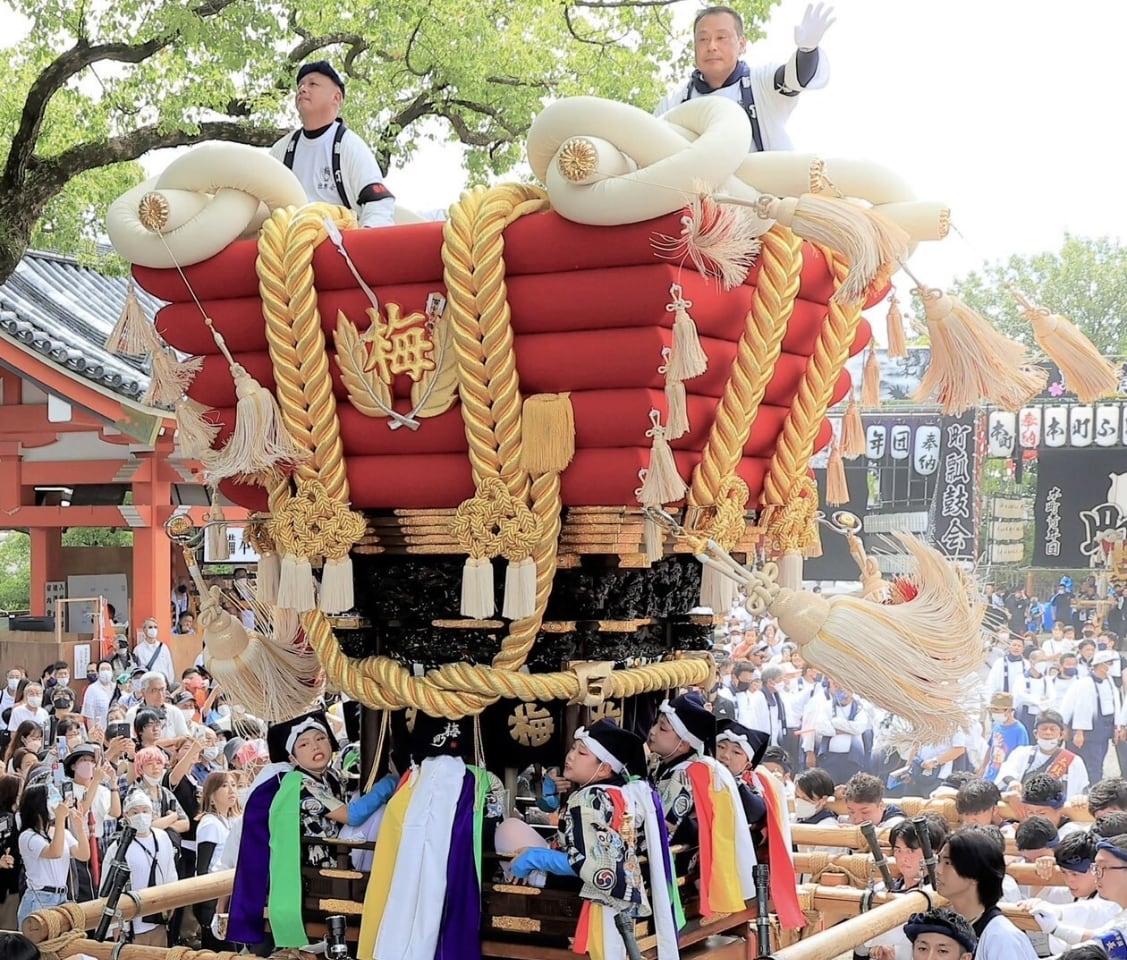
Calling a danjiri a “festival float” is accurate. It also feels a little like calling Osaka Castle a “building.” A danjiri is an elaborately constructed wooden float used in festivals across parts of western Japan, with particularly deep traditions in Osaka. Kishiwada’s are built largely from wood including keyaki, or Japanese zelkova, and covered with extraordinarily detailed carvings.
Look closely and an entire world appears in the wood. Warriors charge into battle. Horses race across panels. Dragons, flowers and mythological creatures emerge from beams and roof supports. Scenes draw from Japanese history and mythology as well as storytelling traditions. Rather than hiding the wood beneath elaborate decoration, the carvings themselves become the decoration.
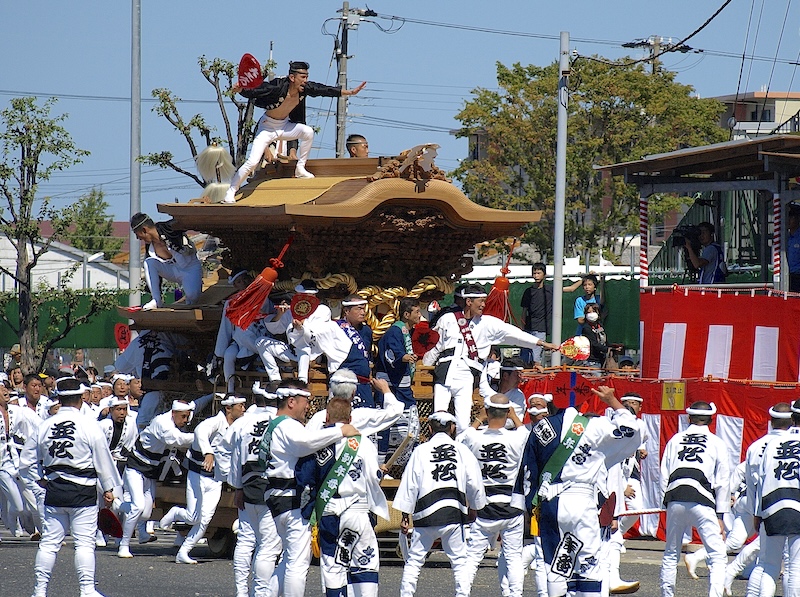
Then there are the people. Musicians ride inside, playing large and small drums, flute and gong. Long ropes stretch far ahead of the float, with teams of pullers providing the power. Other crews work close to the wheels and at the rear, controlling its movement.
And on top stands the daikugata. The rooftop figure may look like the festival’s resident daredevil—and watching one leap between the roofs while the danjiri is moving does little to discourage that impression. But the role isn’t simply decorative. The daikugata also signals to the people controlling the rear of the float. All of those jobs become especially important during the yarimawashi maneuver.
A danjiri isn’t built like a car. Its wheels don’t simply steer around a corner. Executing a fast turn requires coordination between the pullers on the ropes, crews working levers near the front wheels, people controlling long rear levers and signals from above. What looks for a few seconds like glorious chaos is actually a highly coordinated maneuver.
From a distance, the speed gets your attention. Up close, the carvings do. But the danjiri itself is only half the story.
More Than a Festival
To understand why danjiri matter, it helps to stop thinking about them as something a city brings out to entertain a crowd. They belong to communities.
Kishiwada traces its danjiri festival to 1703, when the lord of Kishiwada Domain established an Inari festival to pray for a good harvest. More than three centuries later, the tradition is still rooted in the neighborhoods that keep it moving.
Responsibilities are divided by age and experience, and participation can begin remarkably young. Children begin toward the front of the rope, youth groups provide much of the pulling force, and experienced participants take on control, coordination and leadership roles. Older members can remain involved as advisers, passing what they know to the next generation.
So the child holding a rope isn’t simply joining the festival for a day. They may be taking their first place in a tradition that will give them different roles for decades.
What made Kishiwada famous is the spectacle: racing danjiri, rooftop daikugata and the high-speed yarimawashi turns that draw crowds to the city’s intersections every year.
But Kishiwada is the most famous expression of Osaka’s danjiri culture, not the definition of it. Across Senshu, different communities have their own floats, shrines and traditions. And autumn is the perfect time to see the difference.
Start with the superstar. The famous September festival brings out the danjiri of the Kishiwada and Haruki districts, with rooftop daikugata, pounding festival music and the high-speed yarimawashi turns that have made Kishiwada synonymous with danjiri. Test pulls take place September 6 and 18.
But Kishiwada gets a second act. On October 10–11, danjiri return in the Higashi-Kishiwada, Minami-Kamori, Yagi, Yamanao, Yamanao-minami and Yamataki districts, with a test pull October 4. Different neighborhoods, different danjiri, same citywide tradition.
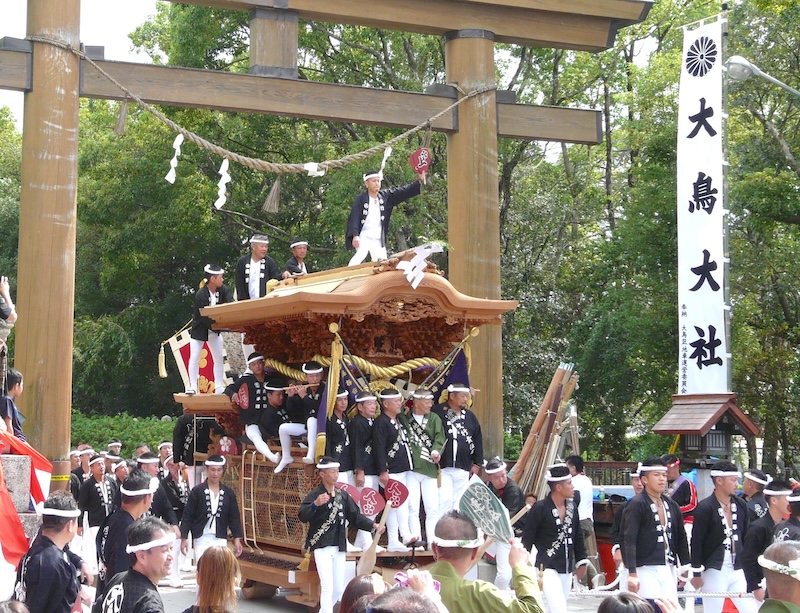
If Kishiwada demonstrates spectacle, Sakai demonstrates scale. The city has more than 80 danjiri, spread across numerous neighborhoods and shrine festivals. Otori provides one of the best-known gatherings, centered around Otori Taisha and the miyairi, when ten neighborhood danjiri make their way into the shrine.
It’s a glimpse of something much bigger: Kishiwada may have made danjiri famous, but across Sakai, the tradition belongs to dozens of communities.
October 10–11 presents a particularly Osaka dilemma: Kishiwada or Izumiotsu? In one, watch the danjiri race around corners. In the other, watch them crash into each other on purpose.
Izumiotsu shows just how much danjiri traditions can change over a short distance. Its autumn festival spans three areas—Hama Hachicho, Anashi and Sone/Sukematsu—with different styles and customs.
Most striking is Hama Hachicho’s kachiai. Danjiri are deliberately brought into contact with one another. Elsewhere in Izumiotsu, yarimawashi is part of the tradition.
Same broader danjiri culture. Very different ways of putting it into motion.
And That’s Only the Beginning
Kishiwada, Sakai and Izumiotsu are three ways into the story. They aren’t the whole story.
Across Senshu, communities in Izumi and elsewhere maintain their own danjiri and autumn festivals. Nor does every danjiri wait for autumn. Festival-float traditions appear during summer celebrations in Osaka City and elsewhere, carrying different histories and local customs of their own.
That’s why Kishiwada is best understood not as the danjiri festival, but as the most famous doorway into a much larger culture.
The next time the music comes down a Kishiwada street and the crowd starts moving, look beyond the speed. Look at the carvings. Listen to the musicians inside. Watch the people controlling the float rather than only the person dancing above it. Look down the rope, where children pull alongside a community that has been doing this for generations.