Osaka Art & Design 2026: Transforming the City into a Walkable Gallery
A Month of Art, Design, and Architecture Across Osaka
There’s no gate, no ticket booth, no single moment where Osaka Art & Design 2026 begins. It unfolds gradually, almost quietly, as you move through the city. A department store window becomes an exhibition. A rooftop plaza becomes an installation space. A train station exit opens onto a piece of public art you didn’t expect to find.
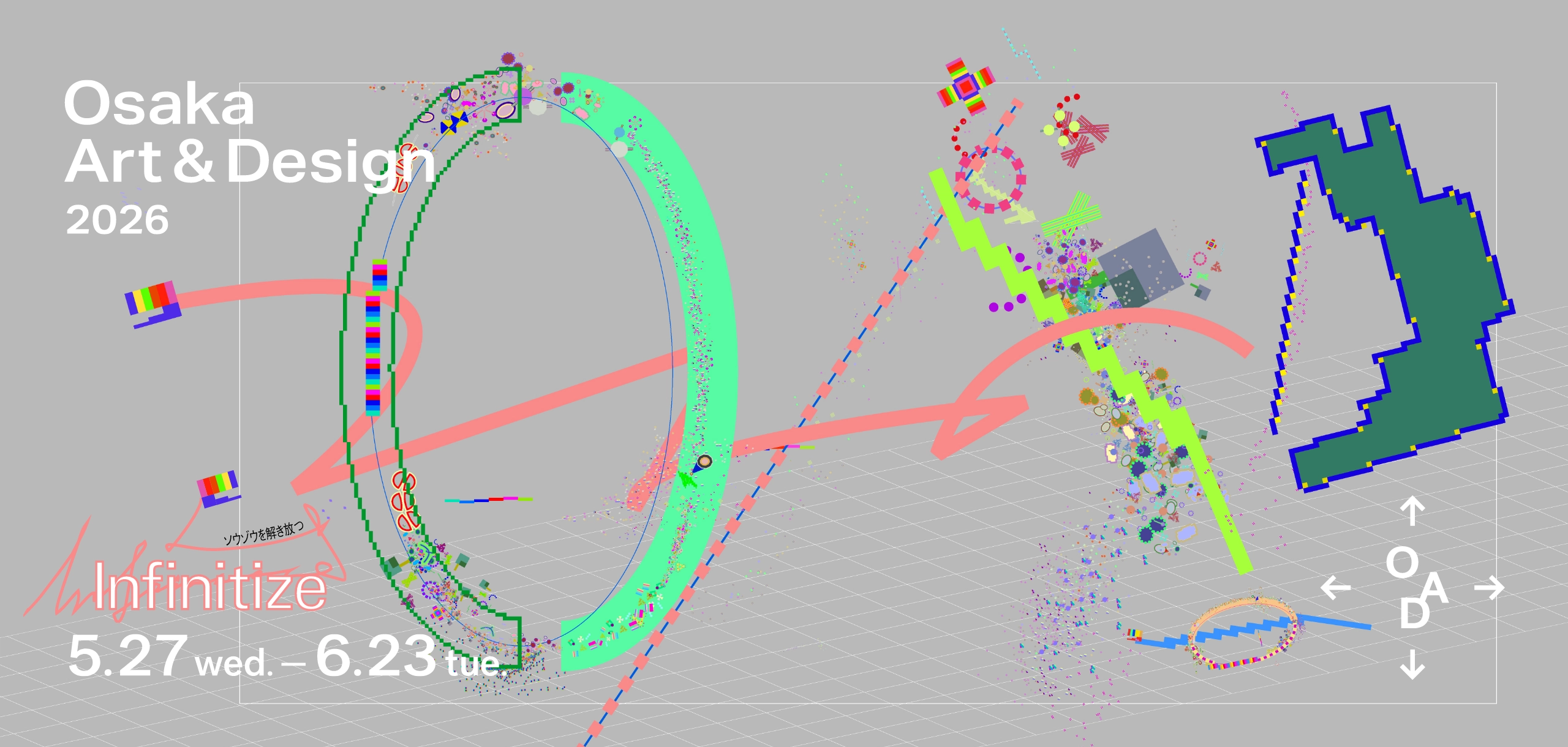
Running from May 27 to June 23, 2026, Osaka Art & Design stretches across districts including Umeda, Shinsaibashi, Namba, and beyond, embedding itself into the city’s daily rhythm. Instead of isolating art inside a single venue, the event disperses it—placing creative work directly into the paths people already take.
The result is something less like a festival and more like a shift in perspective. Osaka doesn’t change physically—it reveals itself differently.
Department Stores, Reimagined as Cultural Spaces
Some of the most immediate entry points are the places Osaka residents already know well. At the Umeda flagship of Hankyu Umeda Main Store, artist Yuichi Hirako’s NON NATURE occupies the highly visible concourse window space, turning a commercial facade into a site of reflection and visual interruption.
Further south, the street-facing windows of Daimaru Shinsaibashi host the “HITOMASU” art museum project—a rotating visual display featuring multiple artists, including international names like Donald Robertson and Rob Ryan. These installations aren’t tucked away—they’re positioned to meet the street, catching both intentional visitors and passersby.

Inside Osaka Takashimaya in Namba, Kenji Yanobe’s Living with SHIP’S CAT installation brings a more playful, character-driven presence into a retail environment. It’s a reminder that design here isn’t just conceptual—it’s interactive, approachable, and sometimes quietly surreal.
Look Up: Rooftops and Stations as Exhibition Space
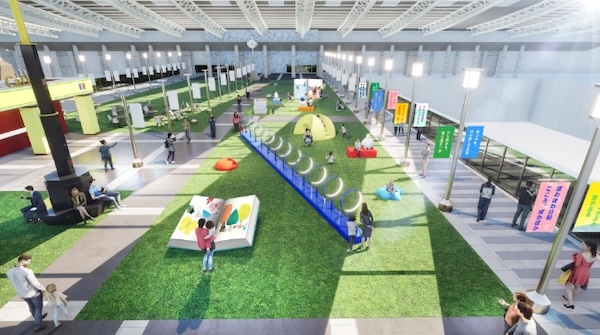
One of the most accessible—and unexpected—installations sits above the flow of one of Osaka’s busiest transit hubs. At Osaka Station’s Toki-no-hiroba Plaza, PICTURE BOOK PARK transforms the rooftop into a long-running visual installation open from early morning until late at night.
This is where Osaka Art & Design shows its strength: you don’t need to commit to a full day. You can step into it between trains, after work, or as part of a casual walk. The work meets you at different times of day, under changing light, with different crowds.
Elsewhere, directly connected to Bentencho Station, Benten Hiroba hosts a large-scale mirrored sculpture by Taz Kurafuji—ten meters tall and seven meters wide. It’s not just something to observe; it reflects the city back onto itself, pulling the surrounding environment into the work.
Quiet Spaces, Deep Focus
Beyond the high-traffic installations, the event extends into smaller galleries and design studios where the pace slows down. Spaces like Marco Gallery and TEZUKAYAMA GALLERY host more traditional exhibitions, offering time and distance from the movement of the city.
At The National Museum of Art, Osaka, the exhibition Nakanishi Natsuyuki: Devices for Gentle Gazing and Endless Lingering anchors the institutional side of the program, contrasting the pop-up nature of other works with a more contemplative environment.
Meanwhile, design showrooms and retail spaces—including ACTUS Shinsaibashi and Ritzwell Osaka—present exhibitions that sit at the intersection of product, craftsmanship, and spatial design. These are places where objects are not only displayed but contextualized, bridging the gap between art and everyday use.
Exploring the City, Guided
For those who want structure within the sprawl, Osaka Art & Design offers guided tours that turn entire neighborhoods into curated experiences.
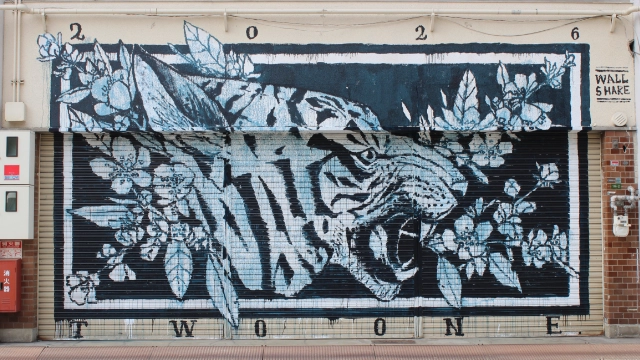
In Konohana Ward, a mural tour explores 37 large-scale works from 22 countries, led by project representative Takanobu Kawazoe and featuring a talk session with poet Yoshinori Henguchi. It’s one of the few opportunities to engage directly with both the artwork and its context.
Architecture-focused tours in Kitasemba and Minami shift the focus again—this time toward the built environment. Guided by experts affiliated with the Living Architecture Museum Osaka, these tours trace the legacy of Osaka’s development through its buildings, from early modern commercial structures to works by Togo Murano and Tadao Ando.
Each tour requires advance reservation via lottery, with limited capacity, making them some of the most intentional experiences within the broader event.
Osaka Art & Design 2026 doesn’t demand a checklist. It doesn’t push you toward a single “must-see” moment. Instead, it offers a network of possibilities—some planned, some accidental.
You might start at Hankyu Umeda, move through Shinsaibashi, and end up on a rooftop installation at Osaka Station. Or you might follow a guided route through architecture and leave with a completely different understanding of the city.
What matters is not covering everything, but engaging with what you find. Because here, the city itself is the exhibition—and the experience is built one discovery at a time.
THE SCENE: FAQs
Key Installations
Yuichi Hirako – “NON NATURE”
Location: Hankyu Umeda Main Store (1F Concourse Window)
- Dates: May 20 – June 22, 2026
- Time: 10:00–20:00
Access:
- JR Osaka Loop Line → Osaka Station (Central Exit) — ~5 min walk
- Osaka Metro Midosuji Line → Umeda Station (Exit 6/7) — direct underground access
“HITOMASU” Art Museum (Window Installation)
Location: Daimaru Shinsaibashi (1F exterior window)
- Dates: May 29 – June 25, 2026
- Time: 10:00–20:00
Access:
- Osaka Metro Midosuji Line → Shinsaibashi Station (Exit 4) — immediate access
“PICTURE BOOK PARK”
Location: Osaka Station City – Toki-no-hiroba Plaza (5F rooftop)
- Dates: April 29 – June 23, 2026
- Time: 08:00–23:30
Access:
- JR Osaka Loop Line → Osaka Station — direct access inside station complex
Kenji Yanobe – “Living with SHIP’S CAT”
Location: Osaka Takashimaya (6F POP UP STATION)
- Dates: May 27 – June 16, 2026
- Time: 10:00–20:00
- Note: Closes 19:00 on final day
Access:
- Nankai Line → Namba Station — direct connection
- Osaka Metro Midosuji Line → Namba Station (Exit 4/5) — ~3 min walk
Taz Kurafuji – “The Tiger Swimming Through the Rings of Rokko”
Location: Benten Hiroba (adjacent to Bentencho Station)
- Dates: May 27 – June 23, 2026
- Time: 08:00–20:00
Access:
- JR Osaka Loop Line → Bentencho Station — direct connection to plaza
JEFF KOONS – “PAINTINGS AND BANALITY”
Location: Espace Louis Vuitton Osaka (Midosuji)
- Dates: Feb 20 – July 5, 2026
- Time: 12:00–20:00
- Note: Closed on venue holidays
Access:
- Osaka Metro Midosuji Line → Shinsaibashi Station (Exit 2) — ~5 min walk
“life, death and beauty persist or not?”
Location: Marco Gallery
- Dates: May 30 – June 27, 2026
- Time: 13:00–18:00 (17:00 final day)
- Closed: Mon / Tue / holidays
Access:
- Osaka Metro Yotsubashi Line → Yotsubashi Station — ~5–7 min walk
ZANAT Exhibition
Location: ACTUS Shinsaibashi
- Dates: May 27 – June 23, 2026
- Time: 11:00–19:00
- Closed: June 16
Access:
- Osaka Metro Midosuji Line → Shinsaibashi Station — ~5 min walk
- May 27 – June 23, 2026
Individual exhibitions vary. Some begin earlier or extend beyond these dates.
General Access
Most installations: Free
Guided Tours (Reservation Required – Lottery System)
Konohana Mural Tour
- Dates: June 3 & June 13, 2026
- Capacity: 20 participants
- Fee: Free
- Content: 37 murals from 22 countries + guided commentary
Kitasemba Architecture Tour
- Date: June 20, 2026
- Times: 10:00 / 13:30
- Fee: ¥4,000
- Area: Yodoyabashi → Hommachi
Minami Architecture Tour
- Date: June 21, 2026
- Times: 10:00 / 13:30
- Fee: ¥3,000
- Area: Shinsaibashi → Namba
Application Window
- April 15 – May 28, 2026
Policies & Tips
- Plan around 2–4 locations per visit
- Expect heavy foot traffic in Umeda and Shinsaibashi
- Use Osaka Station or Shinsaibashi as starting points
- Check exhibition-specific dates carefully
- Apply early for guided tours (limited to 20 participants per session)
- Start with Umeda (Hankyu / Osaka Station) or Shinsaibashi (Daimaru / ACTUS)
- Combine nearby installations:
- Umeda cluster
- Shinsaibashi–Namba cluster
- Use Bentencho as a standalone stop for public art
- Gallery exhibitions have shorter hours and closure days
- Guided tours require early application due to 20-person limits
Contacts
Organizer: Osaka Art & Design Executive Committee
Official Website: https://www.osaka-artanddesign.com/en/
VIDEO
Osaka Scene: GUIDES
Festival Guide