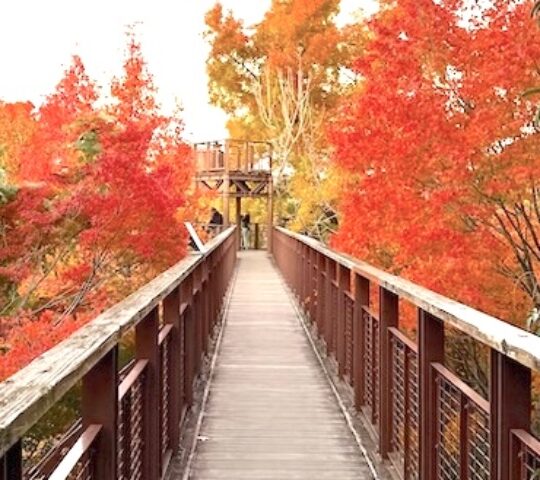


Peak Foliage in Osaka
Osaka glows red and gold as autumn foliage sweeps from forested hills and castle grounds to parks and city boulevards. Here’s when to catch the colors at their seasonal best.

• Updated October 6, 2026
As autumn sweeps through Kansai, Osaka’s gardens, boulevards, and castle grounds burst into red and gold. It’s a chance to enjoy Japan’s most poetic season in the heart of the city.
In Japan, autumn isn’t just a season—it’s a spectacle. Known as kōyō (紅葉), the changing of the leaves has been admired for centuries, inspiring poets, painters, and travelers alike. While spring’s cherry blossoms may draw global crowds, autumn holds a quieter, deeper magic: a time when the air sharpens, colors deepen, and everyday places are briefly transformed into living scrolls of crimson and gold.
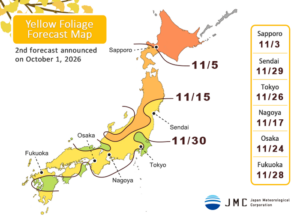
For 2026, Osaka’s autumn colors are expected to arrive close to their usual schedule, but in two distinct waves. Japan Meteorological Corporation’s October 1 forecast puts the city’s ginkgo trees at peak yellow around November 24, followed by maples reaching peak red around December 4. That ten-day spread gives Osaka a long transition from gold to crimson, with cooler and higher-elevation areas generally coloring ahead of the city center. Western Japan overall is forecast to see foliage around its normal timing, despite warmer-than-average temperatures through October.

Osaka’s slightly later foliage season is part of its appeal. While the mountains and cooler northern reaches of the prefecture begin changing first, color gradually works its way toward the heart of the city. That progression stretches the experience across several weeks rather than a single perfect weekend, with different corners of Osaka reaching their best at different times.
For the classic autumn escape, head north to Minoh Park, where a forest trail follows the river toward Minoh Falls beneath a canopy of maple leaves—and where the local specialty, momiji tempura, turns maple leaves into an edible souvenir. Back in the city, Osaka Castle Park layers autumn color against stone walls, moats and the castle keep, while Midosuji Boulevard trades crimson maples for one of Osaka’s great urban autumn sights: rows of ginkgo trees turning the city’s grand avenue gold.
The magic is in catching Osaka somewhere in between. One neighborhood may still be green while another has turned gold, and a short train ride can lead to hillsides already burning red. Chase the perfect photograph if you like, but leave time simply to walk. Autumn rewards slowing down—and for a few brief weeks, even familiar corners of Osaka can feel completely transformed.
Explore the OSAKA SCENE Fall Foliage Travel Planner for when to go, where to find the best colors, suggested itineraries and foliage spots across Osaka.
PLAN YOUR AUTUMN IN OSAKA ➜
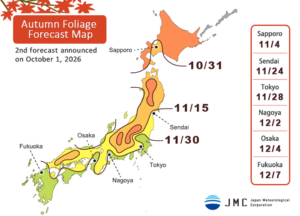

 Seasonal Spectacle — Osaka’s foliage season unfolds in waves, carrying autumn color from the cooler hills into the heart of the city.
Maples & Ginkgos — From forest ravines to castle moats, Osaka blends deep reds and shimmering gold in spectacular fashion.
Urban & Natural — Experience kōyō in both serene parklands and along the city’s bustling boulevards.
Historic Tradition — A centuries-old practice of admiring autumn leaves, still alive in gardens and temple precincts today.
Photographer’s Dream — Crisp skies, glowing trees, and iconic backdrops make this one of the most photogenic moments of the year.
Photos: Osaka Scene Staff, Japan Meteorological Agency
WHAT ELSE IS HAPPENING IN OSAKA?
Discover events, exhibitions, festivals, concerts, culture & more.

Follow @osakascene on Instagram

THE SCENE: FAQ’s
ACCESS
Minoh Park is about 40 minutes from Umeda by Hankyu Railway
Osaka Castle Park is just a few minutes from JR Ōsakajō-kōen Station or Osaka Metro Osaka Business Park Station.
Midosuji Boulevard runs north–south through central Osaka and is best explored on foot.
SCHEDULE
2026 Forecast
Osaka’s ginkgo trees are forecast to reach peak yellow around November 24, followed by maple trees reaching peak red around December 4. Both are close to their historical averages.
Best Overall Window
Plan around late November through early December for the strongest chance of seeing autumn color somewhere in Osaka. Cooler and higher areas generally change before central Osaka, so conditions vary considerably by location.
Forecasts are estimates rather than guarantees. Temperature, elevation, weather and individual tree species all affect the actual timing.
TICKETS
Most of Osaka’s major public foliage experiences are free, including walking through Minoh Park, Osaka Castle Park and along Midosuji Boulevard.
- Public parks and streets generally require no admission.
- Individual temples, gardens, museums and attractions may charge admission.
- Seasonal night illuminations or special viewing events may have separate fees or reservation requirements.
You do not need to enter Osaka Castle’s main tower to enjoy the foliage around Osaka Castle Park.
THE EXPERIENCE
Osaka’s foliage season isn’t one synchronized event. Color moves through the prefecture in stages, making it possible to experience very different autumn landscapes during the same trip.
- Follow maple-lined forest paths and waterfalls in northern Osaka.
- See red and gold foliage against Osaka Castle’s moats and stone walls.
- Walk beneath Midosuji’s long rows of golden ginkgo trees.
- Look for both kōyō (red autumn leaves) and ōyō (yellow foliage).
- Combine foliage viewing with temples, gardens, neighborhoods and seasonal illuminations.
The contrast is part of the appeal: one day can mean a quiet forest walk, while the next brings autumn color straight into the center of the city.
INFO & TIPS
What Does “Peak” Mean?
Japan Meteorological Corporation’s forecast dates refer to the first day when most of the leaves on a representative tree are expected to have changed color. They are useful benchmarks—not a prediction that every tree in Osaka will peak that day.
Yellow Comes Before Red
Ginkgo generally colors at warmer temperatures than maple, which helps explain Osaka’s projected Nov. 24 yellow / Dec. 4 red progression in 2026.
Go Early or Late in the Day
Morning generally means quieter paths and crisp light; late afternoon can bring particularly warm color for photography.
Wear Good Walking Shoes
Foliage viewing often involves considerably more walking than expected—especially at Minoh, where the waterfall is part of the experience.
Don’t Chase One Perfect Date
If your trip doesn’t coincide with the forecast peak, don’t write off the season. Higher elevations, northern Osaka and the city center color at different times.
Respect the Landscape
Stay on designated paths, don’t pick leaves or branches, and give other visitors and photographers room to enjoy the view.
2026 Forecast Source
Japan Meteorological Corporation, Autumn Foliage Forecast — 2nd forecast, released October 1, 2026. The next forecast update is scheduled for early November.