Login Sign Up
  • Scenes
    • The Food & Drink Scene
    • The Music Scene
    • The Fireworks Scene
    • The Sports Scene
    • The Museum Scene
    • The Festival Scene
    • The Marketplace Scene
    • The Anime & Manga Scene
    • The Illuminations Scene
    • The Sakura Scene
  • Events
    • May 2026
    • June 2026
    • July 2026
  • Guides
    • Festival Guide
    • Fireworks Guide
    • Beer Festival Guide
    • Concert Guide
    • Sports Guide
    • Osaka Castle Guide
    • Spring Blossoms Guide
    • Golden Week Guide
  • Magazine
    • July Magazine
      • Japan’s Three Great Festivals
      • The Sound of Summer
      • Osaka’s Rooftop Beer Gardens
      • The Summer Nights Everyone Waits For
    • June Magazine
      • The Summer of BBQ in Osaka
      • Osaka Beer Festival Season
      • Osaka Art & Design 2026
      • Hydrangeas in Bloom
    • May Magazine
      • Golden Week Events
      • Arashi – The Final Storm
    • April Magazine
      • April Sounds: Legends & K-Pop
      • Golden Week in Osaka: Why the City Empties
    • March Magazine
      • Hello Osaka! Hello World!
      • Baseball Is Back
      • March Music Month
      • Sumo: The Power of the Haru Basho
      • When Will Osaka Bloom?
    • February Magazine
      • February in Osaka: Winter in Full Swing
      • Valentine’s Day, the Japanese Way
      • Setsubun: Chasing Away Winter
      • Plum Blossom Season in Osaka
      • Osaka’s Late‑Winter Comfort Foods
    • January Magazine
      • The World’s No.1 Trending Destination
      • Expo’s 2026 Afterglow
    • December Magazine
      • Osaka in Lights
      • Countdown Osaka 2026
    • November Magazine
      • Life After the Expo
      • Peak Foliage in Osaka
      • One Day at Osaka Castle
      • Nakazaki-cho: Osaka’s Retro Village
    • October Magazine
      • Fall Sports in Season
      • Summer Sky’s Last Glow
      • Expo’s Grand Finale
      • Osaka’s Halloween Twist
  • Trip Planner
    • One Day in Osaka
    • Two Days in Osaka
    • Three Days in Osaka
    • Dawn to Dusk: A Full Day at Osaka Castle
  • 🌐 EN
    • 翻訳はまもなく公開されます。公開までの間はブラウザ翻訳をご利用ください。
    • 翻译即将发布,期间请使用浏览器翻译功能。
    • 번역은 곧 제공됩니다. 제공 전까지는 브라우저 번역 기능을 사용해 주세요.
    • Translation coming soon. Please use your browser’s translation function in the meantime.
Osaka Scene
  • Animal Scene Animal Scene
  • Art Scene Art Scene
  • Community Scene Community Scene
  • Craft Beer Scene Craft Beer Scene
  • Culture Scene Culture Scene
  • Expo Scene Expo Scene
  • Fan Scene Fan Scene
  • Film Scene Film Scene
  • Holiday Scene Holiday Scene
  • International Scene International Scene
  • Marketplace Scene Marketplace Scene
  • Movie Scene Movie Scene
  • Neighborhood Scene Neighborhood Scene
  • Pop Culture Scene Pop Culture Scene
  • Sakura Scene Sakura Scene
  • The Game Scene The Game Scene
  • Theater Scene Theater Scene
  • Tokusatsu Scene Tokusatsu Scene
  • TV Scene TV Scene
  • Scenes
    • The Food & Drink Scene
    • The Music Scene
    • The Fireworks Scene
    • The Sports Scene
    • The Museum Scene
    • The Festival Scene
    • The Marketplace Scene
    • The Anime & Manga Scene
    • The Illuminations Scene
    • The Sakura Scene
  • Events
    • May 2026
    • June 2026
    • July 2026
  • Guides
    • Festival Guide
    • Fireworks Guide
    • Beer Festival Guide
    • Concert Guide
    • Sports Guide
    • Osaka Castle Guide
    • Spring Blossoms Guide
    • Golden Week Guide
  • Magazine
    • July Magazine
      • Japan’s Three Great Festivals
      • The Sound of Summer
      • Osaka’s Rooftop Beer Gardens
      • The Summer Nights Everyone Waits For
    • June Magazine
      • The Summer of BBQ in Osaka
      • Osaka Beer Festival Season
      • Osaka Art & Design 2026
      • Hydrangeas in Bloom
    • May Magazine
      • Golden Week Events
      • Arashi – The Final Storm
    • April Magazine
      • April Sounds: Legends & K-Pop
      • Golden Week in Osaka: Why the City Empties
    • March Magazine
      • Hello Osaka! Hello World!
      • Baseball Is Back
      • March Music Month
      • Sumo: The Power of the Haru Basho
      • When Will Osaka Bloom?
    • February Magazine
      • February in Osaka: Winter in Full Swing
      • Valentine’s Day, the Japanese Way
      • Setsubun: Chasing Away Winter
      • Plum Blossom Season in Osaka
      • Osaka’s Late‑Winter Comfort Foods
    • January Magazine
      • The World’s No.1 Trending Destination
      • Expo’s 2026 Afterglow
    • December Magazine
      • Osaka in Lights
      • Countdown Osaka 2026
    • November Magazine
      • Life After the Expo
      • Peak Foliage in Osaka
      • One Day at Osaka Castle
      • Nakazaki-cho: Osaka’s Retro Village
    • October Magazine
      • Fall Sports in Season
      • Summer Sky’s Last Glow
      • Expo’s Grand Finale
      • Osaka’s Halloween Twist
  • Trip Planner
    • One Day in Osaka
    • Two Days in Osaka
    • Three Days in Osaka
    • Dawn to Dusk: A Full Day at Osaka Castle
  • 🌐 EN
    • 翻訳はまもなく公開されます。公開までの間はブラウザ翻訳をご利用ください。
    • 翻译即将发布,期间请使用浏览器翻译功能。
    • 번역은 곧 제공됩니다. 제공 전까지는 브라우저 번역 기능을 사용해 주세요.
    • Translation coming soon. Please use your browser’s translation function in the meantime.
Login Sign Up
Tenjin Matsuri Hero
Magazine

One of Japan’s Three Great Festivals Happens Right Here in Osaka

The Journey of Tenjin Matsuri

Every summer, more than a million people gather across Osaka for a celebration that unfolds across shrine grounds, city streets, riverbanks, and the night sky. Tenjin Matsuri is one of Japan’s Three Great Festivals—and one of the most extraordinary experiences the city has to offer.

Every country has its defining celebrations. In Japan, a small handful of festivals stand above all others—events so deeply woven into the nation’s cultural identity that they have become destinations in their own right.

Among them are Kyoto’s Gion Matsuri, famous for its towering floats and centuries-old traditions, and Tokyo’s Kanda Matsuri, where portable shrines and elaborate processions sweep through the heart of the capital. Together with Osaka’s Tenjin Matsuri, they form what is commonly known as Japan’s Three Great Festivals.


For many international visitors, Kyoto and Tokyo naturally attract much of the attention. Yet every summer, one of Japan’s greatest festivals unfolds right here in Osaka.


For more than a thousand years, Tenjin Matsuri has transformed the city into a stage for ritual, celebration, community, and spectacle. What begins at a historic shrine grows into a procession of thousands, spills onto the Okawa River aboard more than one hundred boats, and culminates in one of the most memorable summer nights in Japan.


What makes Tenjin Matsuri remarkable is not any single ceremony or procession. It is the way the festival expands outward, gradually drawing an entire city into the celebration. To understand why it earned a place among Japan’s Three Great Festivals, you have to experience how it moves—not just through time, but through Osaka itself.

The Shrine

Tenjin Matsuri shrine procession

Every great festival begins somewhere. For Tenjin Matsuri, that place is Osaka Tenmangu Shrine.


Tucked into the heart of the city, Osaka Tenmangu has served as the spiritual center of the festival for centuries. Dedicated to Sugawara no Michizane, the deity of learning and scholarship, the shrine draws worshippers year-round, but nowhere is its importance more visible than during Tenjin Matsuri. What begins here will eventually spread across streets, waterways, and neighborhoods throughout Osaka.


The celebrations officially begin on July 24th with Yoimiya, the eve festival. As ceremonies and rituals take place within the shrine grounds, a sense of anticipation begins to build throughout the surrounding district. Worshippers stop to offer prayers, festival participants prepare for the days ahead, and visitors gather to witness the opening moments of one of Japan’s most celebrated traditions.


For first-time visitors, Yoimiya offers something the larger processions cannot: a chance to experience Tenjin Matsuri at its source. Before the crowds swell into the hundreds of thousands and before the boats take to the river, the shrine provides a quieter glimpse into the history, faith, and traditions that have sustained the festival for more than a thousand years.


Standing beneath the shrine’s lanterns on the eve of the festival, it becomes clear that Tenjin Matsuri is more than a spectacle. It is a living tradition that begins with community, devotion, and a connection to the city that has endured across generations.

The Streets

Tenjin Matsuri Omikoshi

By the afternoon of  July 25th, Tenjin Matsuri spills out into the city.


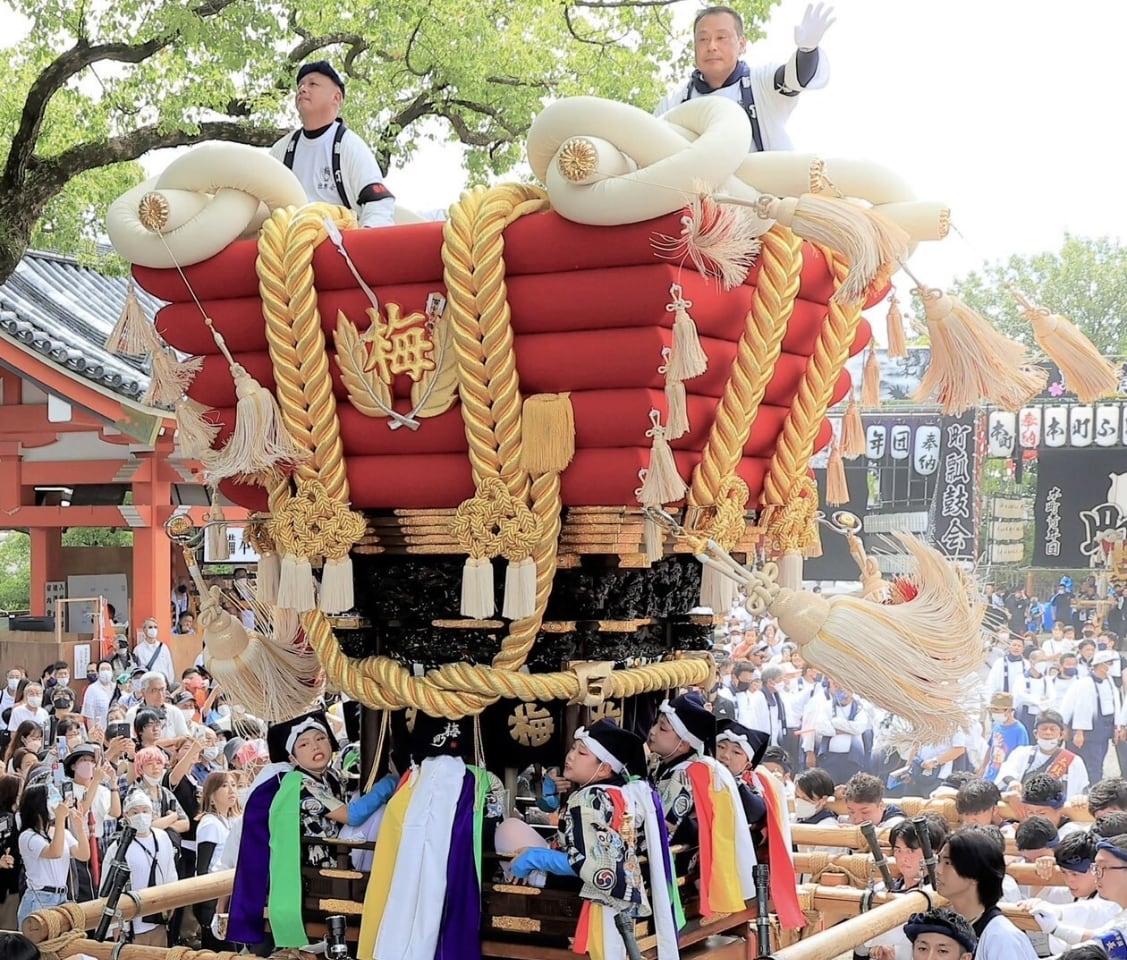
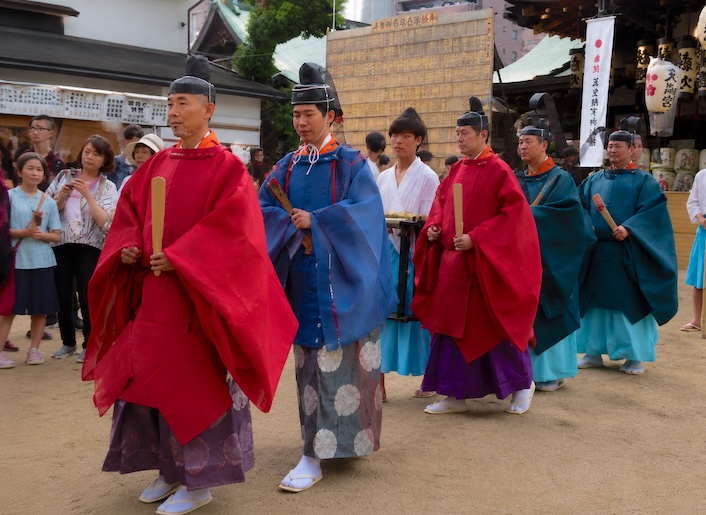
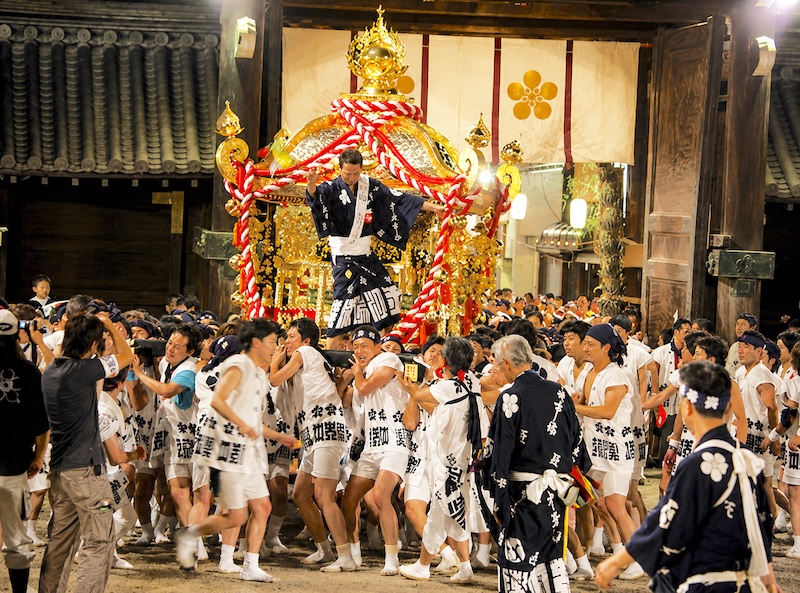
The famous Rikutogyo, or land procession, departs Osaka Tenmangu with approximately 3,000 participants dressed in historical costumes. Portable shrines, musicians, attendants, festival officials, and representatives of traditional organizations move through central Osaka in a procession that transforms modern city streets into a living scene from Japan’s past.


For many visitors, this is where the true scale of Tenjin Matsuri becomes impossible to ignore. Crowds gather several rows deep along the route, cameras emerge, and entire neighborhoods come alive with anticipation as the procession approaches. What began as a shrine celebration now feels like a citywide event.
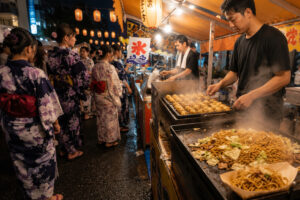
 

The procession itself is impressive, but it is only one part of the atmosphere. In previous years, shopping streets and surrounding roads have been lined with food stalls, festival games, and temporary vendors offering everything from takoyaki and yakisoba to kakigori and grilled festival favorites. The scent of food drifts through the summer air while families, office workers, photographers, and festival enthusiasts move from one viewing spot to the next.


Tenjin Matsuri is also one of Osaka’s great people-watching events. Visitors arrive in colorful yukata, local businesses decorate storefronts, and residents gather with friends and family to take part in a tradition that has been passed down for generations. By evening, the crowds swell into the hundreds of thousands, contributing to attendance figures that have historically exceeded one million visitors across the festival period.


What makes this part of Tenjin Matsuri special is that there is no single place to stand and watch. The festival unfolds across the city itself. A side street, a shopping arcade, a bridge, or a stretch of procession route can suddenly become the perfect place to experience the celebration. For a few hours, Osaka stops feeling like a collection of neighborhoods and begins to feel like one enormous festival.
The River

Tenjin Matsuri Waiting

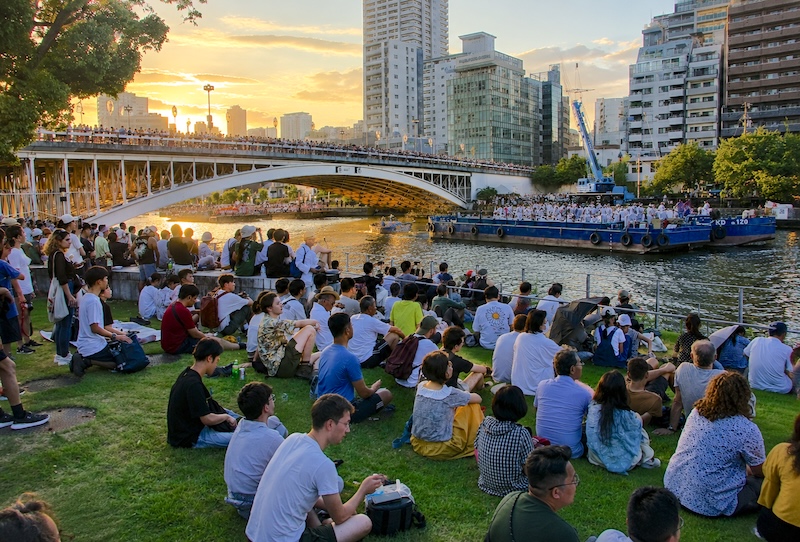
As evening approaches on July 25, the festival changes once again. The crowds that spent the afternoon following the procession begin drifting toward the Okawa River. Bridges fill with spectators, riverside promenades become standing-room-only, and a sense of anticipation settles across the waterfront. The festival is about to leave the streets behind.
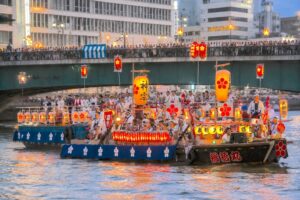
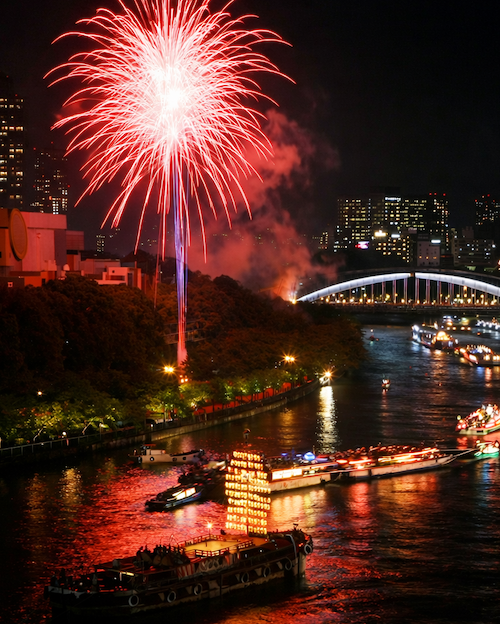
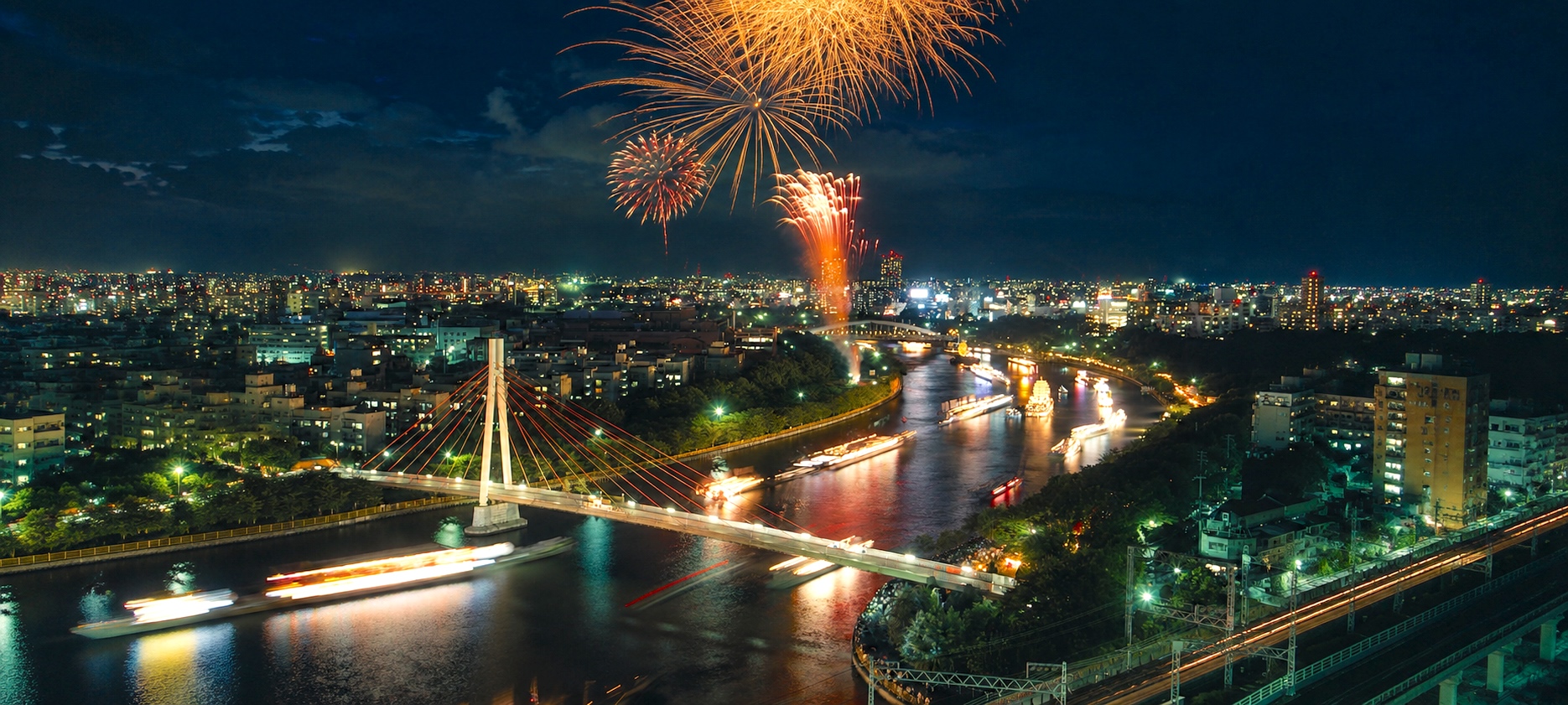
This is the beginning of the Funatogyo, the river procession that has become one of Tenjin Matsuri’s most iconic traditions. More than one hundred boats take to the water carrying participants, musicians, shrine representatives, and sacred elements of the festival beneath the glow of lanterns and city lights.
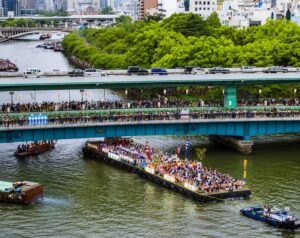
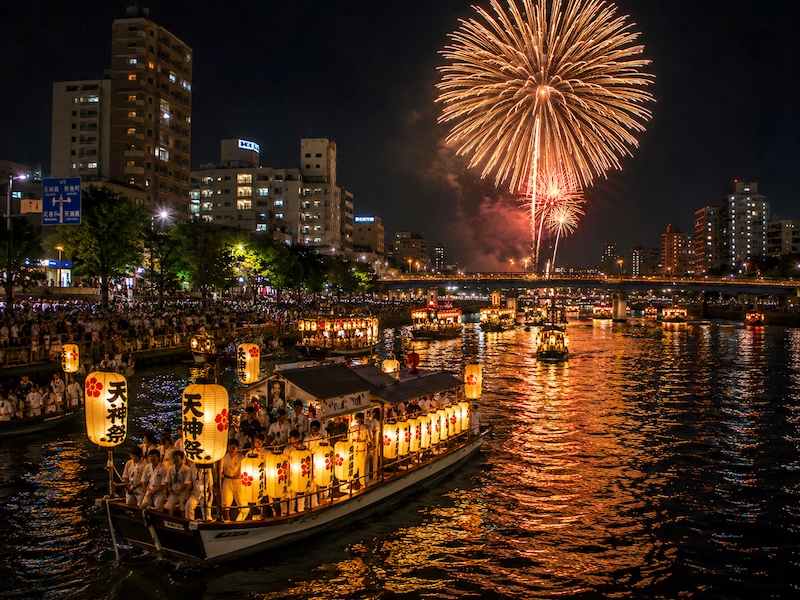
What makes the scene so remarkable is the contrast. Modern office towers and apartment buildings rise above the river while centuries-old traditions unfold below. Lanterns shimmer across the water, traditional music drifts between the boats, and spectators line both banks to witness a ceremony that has connected Osaka to its waterways for generations.
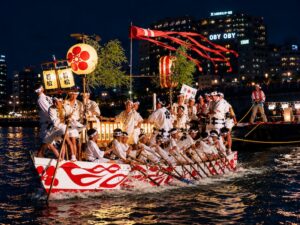
Unlike the land procession, where the action moves through neighborhoods and shopping streets, the river procession feels almost theatrical. The Okawa becomes a stage. Every bridge becomes a viewing platform. Every section of riverbank becomes part of the audience. The city itself seems to pause and watch.

For photographers, this is often the most memorable part of Tenjin Matsuri. Lantern-lit boats glide through the evening darkness while reflections dance across the water below. The combination of traditional vessels, glowing lanterns, and the Osaka skyline creates one of the most recognizable summer scenes in the city.

It is also the moment when many visitors begin to understand why Tenjin Matsuri earned its place among Japan’s Three Great Festivals. Plenty of festivals have parades. Plenty have food stalls. Very few transform an entire river into part of the celebration.
The Finale

Tenjin Matsuri River Burst

As darkness settles over Osaka on July 25, the separate pieces of Tenjin Matsuri begin to merge into a single experience.


The shrine ceremonies have concluded. The land procession has crossed the city. The boats have taken to the river. Now hundreds of thousands of people gather along streets, bridges, parks, and riverbanks waiting for the final act of one of Japan’s great summer traditions. This is often the moment visitors remember most.


The glow of lanterns reflects across the Okawa River. Crowds in colorful yukata fill the waterfront. The scent of festival food drifts through the evening air as conversations, laughter, and music blend into the background hum of the city. Friends meet after work, families spread out along the riverbanks, and visitors search for the perfect vantage point as anticipation builds across the waterfront.
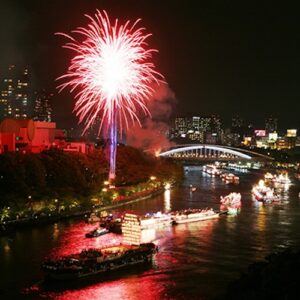
 

What makes Tenjin Matsuri special is that the finale does not belong to a single location. There is no stadium, arena, or enclosed venue. Instead, the city itself becomes the gathering place. Bridges become observation decks. Riverbanks become grandstands. Entire neighborhoods participate in the celebration.


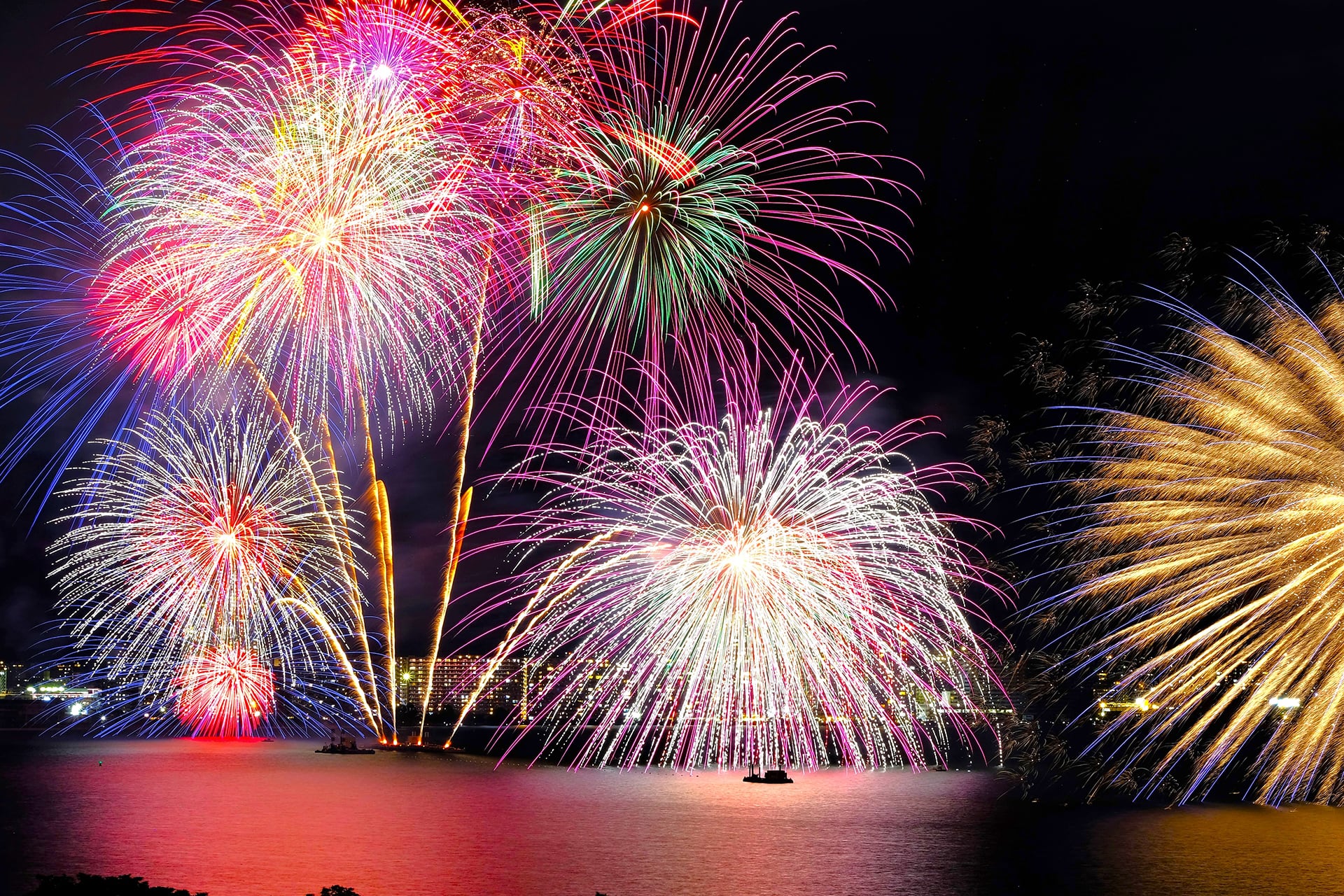
The festival’s famous fireworks display may provide the visual climax, but the atmosphere surrounding it is every bit as memorable. Long before the first shell rises into the sky, Osaka has already transformed into something extraordinary. The fireworks are not the event itself—they are the culmination of everything that came before.
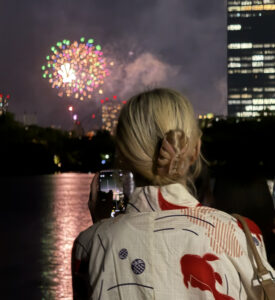
 

For visitors experiencing Tenjin Matsuri for the first time, this is the moment when the scale of the festival truly becomes apparent. The crowds, the river, the lanterns, the boats, the city skyline, and the shared anticipation all combine to create a scene unlike anything else in Osaka’s annual calendar.


It is a finale measured not only in fireworks and spectacle, but in the feeling that an entire city has come together to celebrate.
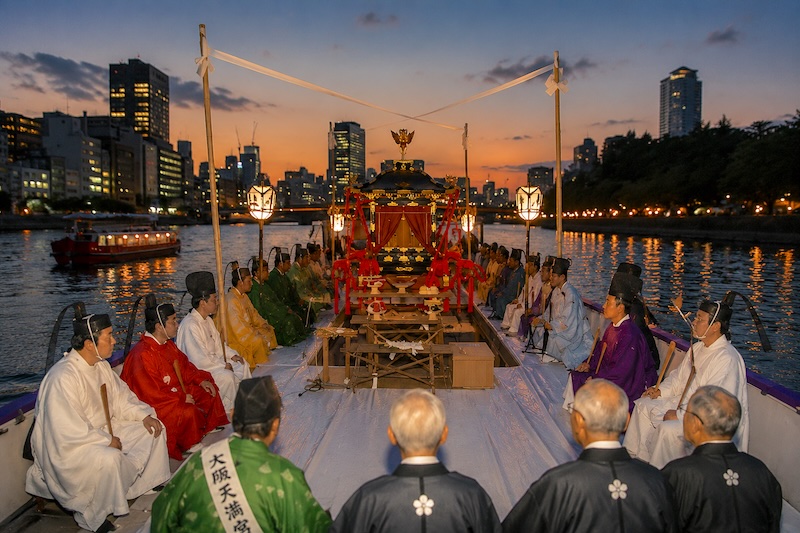

Why It Matters

Tenjin Matsuri Boatview

It would be easy to describe Tenjin Matsuri as a festival of processions, boats, and fireworks. All of those things are true. Yet none of them fully explain why it has endured for more than a thousand years or why it remains one of Japan’s Three Great Festivals.


What makes Tenjin Matsuri special is the way it transforms an entire city into part of the celebration. It begins at a shrine, spreads through the streets, gathers along the river, and ultimately brings together hundreds of thousands of people in a shared experience that belongs uniquely to Osaka.


Ancient rituals unfold beneath office towers. Traditional boats pass through the heart of a modern city. History and community meet in a festival that feels both timeless and alive.


For visitors, Tenjin Matsuri offers far more than a chance to watch a procession or admire a fireworks display. It offers an opportunity to experience Osaka at its most vibrant, welcoming, and unforgettable.


Every summer, Japan’s Three Great Festivals are celebrated in Kyoto, Tokyo, and Osaka. One of them happens right here.


And for two unforgettable days, the city becomes the festival.

THE SCENE: FAQs

THE SHRINE

Access & Directions

Venue
Osaka Tenmangu Shrine
2-1-8 Tenjinbashi, Kita-ku, Osaka 530-0041

Nearest Stations

JR Tozai Line → Osaka Tenmangu Station (Exit 3)
Approximately 3-minute walk.

Osaka Metro Tanimachi Line → Minami-Morimachi Station (Exit 4-B)
Approximately 5-minute walk.

Osaka Metro Sakaisuji Line → Minami-Morimachi Station (Exit 4-B)
Approximately 5-minute walk.

The shrine serves as the spiritual center of Tenjin Matsuri and is the starting point for many of the festival’s ceremonies and processions.


Schedule

July 24 (Yoimiya)

The opening day of Tenjin Matsuri.

Visitors can experience shrine ceremonies, preparations, and the growing festival atmosphere throughout the day and evening.

July 25

The main festival day begins at Osaka Tenmangu before the celebrations expand into the city and eventually onto the Okawa River.


The Experience

What Can Visitors Expect?

The shrine offers the most traditional and intimate side of Tenjin Matsuri.

Visitors can expect:

  • Historic shrine architecture
  • Festival lanterns and decorations
  • Worshippers and participants preparing for the festival
  • Traditional ceremonies and rituals
  • Festival atmosphere building throughout the day
  • Excellent photography opportunities
  • A closer connection to the history and origins of the festival

For many visitors, the shrine provides the best opportunity to understand the cultural and religious traditions that underpin the larger celebrations.


Info & Tips

July 24 (Yoimiya) is often less crowded than the main festival day and can be a rewarding time to visit for those interested in the shrine atmosphere.

The shrine grounds can become extremely busy on July 25, particularly before the departure of the Rikutogyo procession.

Arriving early allows time to explore the grounds before crowds build.

Visitors should remain respectful during ceremonies and avoid obstructing worshippers or festival participants.

THE STREETS

Access & Directions

The Rikutogyo (Land Procession) begins at Osaka Tenmangu Shrine before traveling through central Osaka.

Starting Point
Osaka Tenmangu Shrine
2-1-8 Tenjinbashi, Kita-ku, Osaka 530-0041

Nearest Stations

JR Tozai Line → Osaka Tenmangu Station (Exit 3)
Approximately 3-minute walk.

Osaka Metro Tanimachi Line → Minami-Morimachi Station (Exit 4-B)
Approximately 5-minute walk.

Osaka Metro Sakaisuji Line → Minami-Morimachi Station (Exit 4-B)
Approximately 5-minute walk.

Visitors do not need to remain at the shrine. The procession travels through central Osaka, and many spectators choose to watch from streets, shopping arcades, and intersections along the route.


Schedule

July 25 – Rikutogyo (Land Procession)

The main procession departs Osaka Tenmangu at approximately 3:30 PM.

Approximately 3,000 participants dressed in historical costumes take part, accompanied by portable shrines, musicians, attendants, and festival officials.

Crowds begin gathering well before the procession arrives, particularly near Osaka Tenmangu and major viewing areas.


The Experience

What Can Visitors Expect?

For many people, this is Tenjin Matsuri.

The streets fill with spectators as the procession approaches. Historical costumes, traditional music, portable shrines, and ceremonial groups move through the city while thousands line the route to watch.

Unlike a parade viewed from a single grandstand, Tenjin Matsuri unfolds across an active urban landscape. A quiet side street may suddenly fill with participants, while a shopping arcade can become a gathering place for spectators, photographers, and festival-goers.

The atmosphere extends far beyond the procession itself. In previous years, food stalls, festival games, and temporary vendors have appeared throughout the district, creating a classic Japanese summer matsuri environment. Visitors often spend as much time eating, exploring, and soaking up the atmosphere as they do watching the procession.

This is also one of Osaka’s great people-watching events. Yukata-clad families, photographers, students, office workers, and visitors from around Japan all become part of the scene.


Info & Tips

The procession route attracts large crowds, especially near Osaka Tenmangu and major intersections.

Many experienced visitors prefer to move around rather than remain in one location. Watching the procession from multiple points can provide very different perspectives and a broader sense of the festival’s scale.

Bring water, sun protection, and comfortable walking shoes. July temperatures in Osaka can be extremely hot and humid.

Food vendors and convenience stores can become busy during peak festival hours.

Photography is generally welcome, but visitors should avoid obstructing participants, spectators, or procession routes.

One of the best ways to experience this portion of Tenjin Matsuri is simply to wander. Some of the most memorable moments happen away from the main crowds, where the sounds of approaching drums and music echo through side streets before the procession comes into view.

THE RIVER

Access & Directions

The Funatogyo (River Procession) takes place on the Okawa River, east of Osaka Tenmangu Shrine.

The river section of the festival is easily accessible from multiple stations and viewing areas along both banks.

Recommended Stations

JR Tozai Line → Osaka Tenmangu Station (Exit 3)
Approximately 10–15 minutes on foot to popular river viewing areas.

Osaka Metro Tanimachi Line → Tenmabashi Station (Exit 17 or Exit 18)
Direct access to major riverfront viewing locations.

Keihan Main Line → Tenmabashi Station
Direct access to the Okawa River waterfront.

JR Osaka Loop Line → Sakuranomiya Station (West Exit)
Approximately 5–10 minutes on foot to riverside viewing areas.

Visitors can watch the procession from bridges, riverbanks, parks, promenades, and designated viewing areas throughout the Okawa River corridor.


Schedule

July 25 – Funatogyo (River Procession)

Following the afternoon Rikutogyo, festival participants transition to the Okawa River for one of Tenjin Matsuri’s most iconic traditions.

More than 100 boats take part in the procession, carrying shrine representatives, musicians, participants, and sacred elements of the festival.

The river procession continues into the evening and forms the centerpiece of the festival’s waterfront celebrations.


The Experience

What Can Visitors Expect?

If the streets showcase the energy of Tenjin Matsuri, the river reveals its beauty.

As sunset approaches, spectators begin gathering along the waterfront while participants board the procession vessels. Lanterns are illuminated, traditional music drifts across the water, and anticipation builds throughout the river district.

Once underway, the Funatogyo transforms the Okawa into a floating stage. More than one hundred boats move through the heart of Osaka carrying musicians, shrine representatives, and ceremonial participants. Spectators watch from bridges, parks, promenades, and riverside walkways as the procession glides beneath the evening sky.

The contrast is uniquely Osaka. Historic traditions unfold on the water while modern office towers, apartment buildings, and city lights rise beyond the riverbanks. It is one of the most recognizable and photogenic scenes of the entire festival.

For many visitors, this portion of Tenjin Matsuri feels less like a procession and more like a shared citywide gathering. The river becomes the focal point of the festival, drawing together spectators from every direction as the celebration builds toward its finale.


Boat Viewing & Special Experiences

Several operators have historically offered special Tenjin Matsuri river experiences, including sightseeing cruises, dinner cruises, and reserved boat-viewing packages.

Availability, pricing, and reservation requirements vary each year and often sell out well in advance.

Visitors interested in viewing the festival from the water should check official Tenjin Matsuri and participating cruise operator announcements as soon as reservations open.

Even without a boat ticket, excellent views are available from public riverfront locations throughout the Okawa River area.


Info & Tips

The most popular river viewing areas can become extremely crowded during the evening.

Arriving early is strongly recommended, particularly for groups seeking space along the riverfront.

Sakuranomiya, Tenmabashi, and areas surrounding the bridges crossing the Okawa River are among the most popular gathering points.

Bring water, stay hydrated, and prepare for hot and humid summer conditions.

Many visitors combine the land procession and river procession into a single day, following the festival from Osaka Tenmangu to the waterfront as the celebration progresses.

For photographers, the period just before sunset often provides some of the most dramatic images of the festival, as lanterns begin to glow and the city lights emerge along the riverbanks.

THE FINALE

Access & Directions

The finale of Tenjin Matsuri unfolds across the Okawa River waterfront and surrounding districts.

Popular viewing areas can be reached from:

Osaka Metro Tanimachi Line → Tenmabashi Station (Exit 17 or Exit 18)

Keihan Main Line → Tenmabashi Station

JR Osaka Loop Line → Sakuranomiya Station (West Exit)

JR Tozai Line → Osaka Tenmangu Station (Exit 3)

Because spectators spread across both sides of the river, there is no single “best” location. Different areas offer different perspectives of the festival atmosphere and fireworks display.


Schedule

July 25 – Evening Finale

Following the Funatogyo river procession, crowds gather throughout the Okawa River district as Tenjin Matsuri reaches its conclusion.

The evening atmosphere builds gradually as spectators arrive, lanterns illuminate the waterfront, and festival activity continues across the surrounding neighborhoods.

The famous Tenjin Matsuri fireworks display serves as the visual finale to the festival.


The Experience

What Can Visitors Expect?

This is the moment when everything comes together.

The shrine ceremonies have concluded. The procession has crossed the city. The boats have taken to the river. Now hundreds of thousands of people gather along bridges, parks, promenades, and riverbanks waiting for the final act of one of Japan’s great summer traditions.

The atmosphere is unlike a typical fireworks event. Long before the first shell rises into the sky, the waterfront is already alive with activity. Food vendors serve festival favorites, families gather in yukata, groups of friends claim their viewing spots, and visitors wander the riverbanks taking in the energy of the evening.

As darkness settles over Osaka, lantern reflections dance across the water while anticipation builds throughout the city. The fireworks may provide the spectacle, but the experience is larger than the display itself. What visitors remember is often the feeling of being part of a celebration shared by hundreds of thousands of people.


Fireworks Information

OSAKA SCENE maintains a dedicated Tenjin Matsuri Fireworks Guide covering:

  • Viewing locations
  • Access routes
  • Reserved seating options
  • Photography advice
  • Crowd management tips
  • Detailed fireworks information

Visitors primarily interested in the fireworks display should consult that guide in addition to this feature.


Info & Tips

Expect extremely large crowds throughout the evening.

Many experienced visitors arrive several hours before the fireworks begin in order to enjoy the atmosphere and secure a comfortable viewing location.

Public transportation is strongly recommended, as road closures and congestion affect much of the surrounding area.

Trains and stations become exceptionally busy following the conclusion of the festivities.

Even if fireworks are not your primary interest, spending time along the river during the finale is one of the most memorable ways to experience Tenjin Matsuri. It is the moment when the shrine, the streets, and the river all come together in a single celebration.

VIDEO

Osaka Scene Staff
Guide by Osaka Scene Staff
Photo Credit: Tenmangu Shrine, Osaka Scene

In This Month's Osaka Scene Magazine:

Tenjin Matsuri Omikoshi

One of Japan’s Three Great Festivals Happens Right Here in Osaka

Sounds of Summer Concert Stage

The Sound of Summer

Beer Gardens-Osaka Station 1950 Color

Osaka: Birthplace of Japan’s Rooftop Beer Garden

    ad

    ad

Also read:

Tenjin Matsuri Omikoshi

One of Japan’s Three Great Festivals Happens Right Here in Osaka

Osaka Scene: GUIDES

GSportsuideCover

Osaka Sports Guide

June Cover

June 2026

CastleGuideCover

Osaka Castle Guide

July Cover

July 2026

MozuFest3
COMING SOON!

Festival Guide

Biwa2
COMING SOON!

Fireworks

Displays & Festivals

What can I do TODAY in Osaka?

Instagram Facebook Youtube

Updated Daily

Company

  • About us
  • Submit an Event
  • Advertise with Us
  • Disclosure

Contact Us

  • Email: mail@osakascene.com
2026 © Osaka Scene. All rights reserved.
Log in Sign Up
Forgot your password? Reset password.

Sending login info,please wait...

Sending info,please wait...

Back to login

Sending register info,please wait...

Back to Registration
  • Animal Scene
  • Anime & Manga Scene
  • Art Scene
  • Arts & Crafts Scene
  • Autumn Scene
  • Community Scene
  • Craft Beer Scene
  • Culture Scene
  • Event Scene
  • Expo Scene
  • Fan Scene
  • Fashion Scene
  • Festival Scene
  • Film Scene
  • Fireworks Scene
  • Food & Drink Scene
  • Golden Week Scene
  • History Scene
  • Holiday Scene
  • Illumination Scene
  • International Scene
  • Kaiju Scene
  • Kids & Family Scene
  • Market Scene
  • Marketplace Scene
  • Motor Scene
  • Movie Scene
  • Museum Scene
  • Music Scene
  • Neighborhood Scene
  • Outdoor Scene
  • Pop Culture Scene
  • Sakura Scene
  • Shopping Scene
  • Sports Scene
  • The Game Scene
  • Theater Scene
  • Tokusatsu Scene
  • Tour Scene
  • Travel Scene
  • TV Scene