How Osaka Became One Half of Japan's Great International Music Festival
For three days this August, Summer Sonic will once again turn Osaka into one of the centers of the international music world.
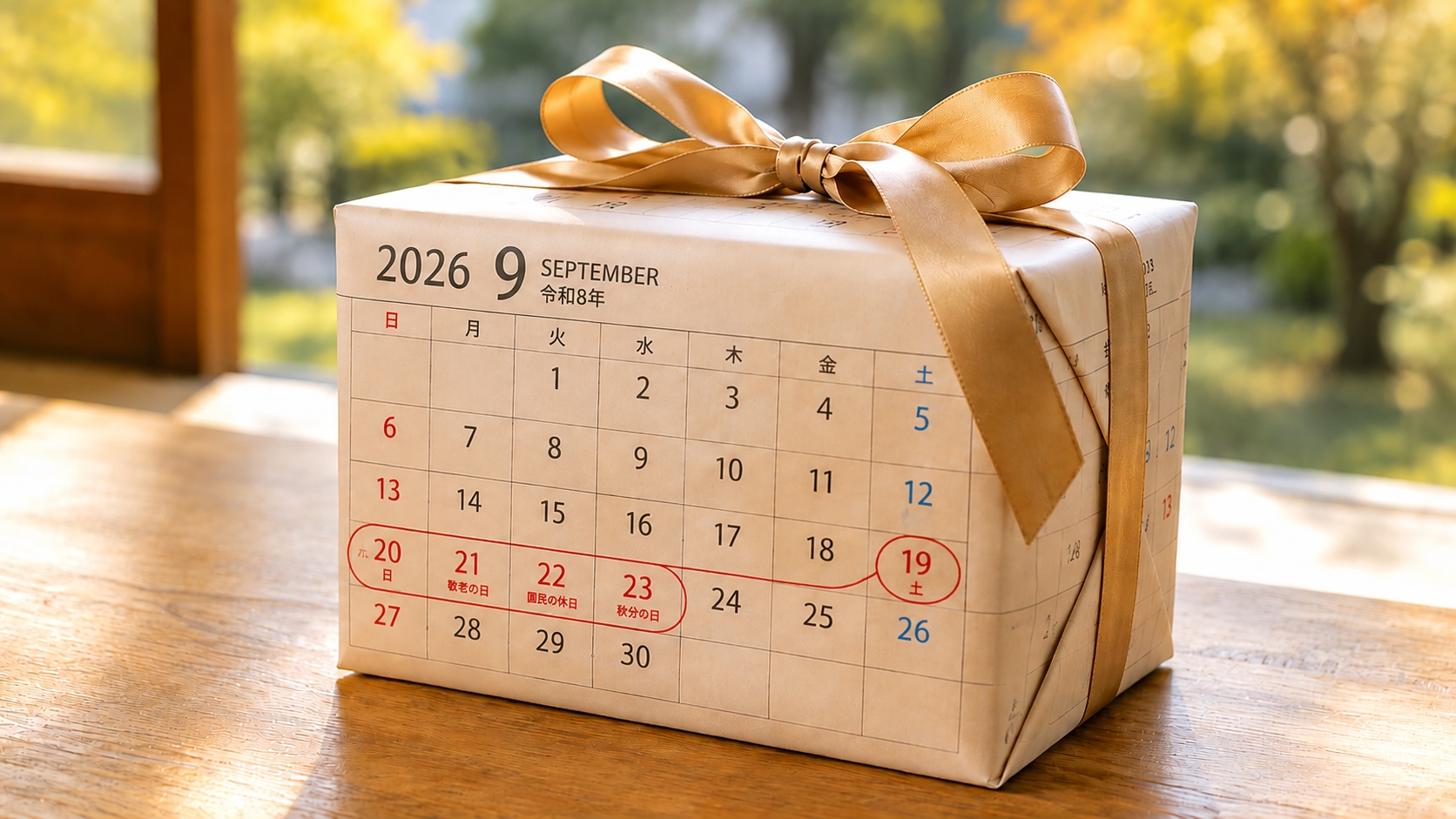
Summer Sonic returns to Expo ’70 Commemorative Park August 14–16, 2026, celebrating its 25th anniversary with the scale expected of a milestone year. Expanding to three days for only the third time in its history, the festival brings together artists from different countries, genres, and generations across multiple stages. L’Arc-en-Ciel, The Strokes, and Ado headline the Air Stage on successive nights, joined by an international lineup that includes Jamiroquai, David Byrne, Jon Spencer, FKA twigs, JENNIE, LE SSERAFIM, BABYMETAL, Steve Lacy, Sakanaction, and many more.
More importantly, 2026 marks a milestone that belongs to Osaka every bit as much as it does to Tokyo.
Summer Sonic was never a Tokyo festival that later expanded west. From its very first edition in August 2000, Osaka stood alongside the eastern venue as one half of an ambitious new idea: a major international music festival staged simultaneously across Japan’s two largest regions, with artists traveling between them over a single weekend.
Twenty-five editions later, the venues have changed, the music has evolved, and the audience now spans generations. Yet the original promise remains remarkably familiar.
The Origin Story
At the turn of the millennium, while many Japanese music fans dreamed of traveling overseas to experience the world’s great festivals, promoter Creativeman imagined bringing those festivals to Japan instead. The concept became known as “Travelling Without Moving.”
Summer Sonic was conceived as a festival shared between eastern and western Japan. Artists performed in one region, traveled overnight, and appeared in the other the following day, allowing audiences hundreds of kilometers apart to experience essentially the same festival over a single weekend. Osaka wasn’t added later or treated as a regional version of Tokyo—it was one half of the festival from the very beginning.
The inaugural Summer Sonic took place on August 5 and 6, 2000. Compared with today’s sprawling event, the first edition was modest in scale, but its identity was already clear. Green Day led a lineup that also featured James Brown, Weezer, The Flaming Lips, while Coldplay and Sigur Rós made their Japanese debuts. Even then, Summer Sonic was introducing audiences to artists who would later become some of the biggest names in music.
By 2003, the festival had sold out for the first time. That year’s lineup remains one of Summer Sonic’s most celebrated, led by Radiohead and Blur alongside TheStrokes, Travis, Blink-182, Interpol, KingsofLeon, AsianKung–FuGeneration, OrangeRange and many more. For Osaka fans, Radiohead’s surprise encore of “Creep” became one of the defining moments in the festival’s history.
Twenty-five editions later, the artists, venues and musical trends have all evolved, but the original vision remains remarkably intact. Summer Sonic continues to bring the world to Japan while keeping Osaka at the heart of one of Asia’s great music festivals.
The Osaka Scene
Summer Sonic may have begun with a bold concept, but its success in Osaka has always depended on something far less predictable: the city itself.
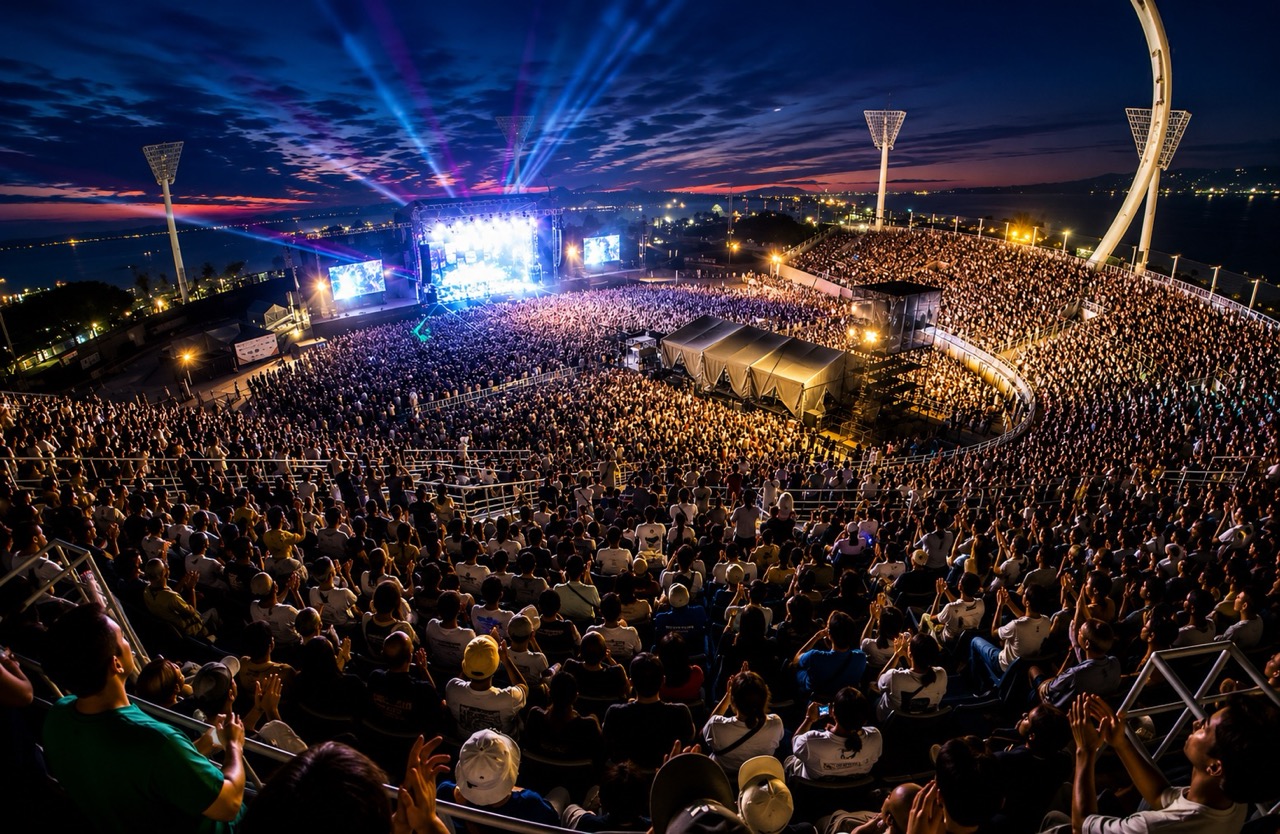
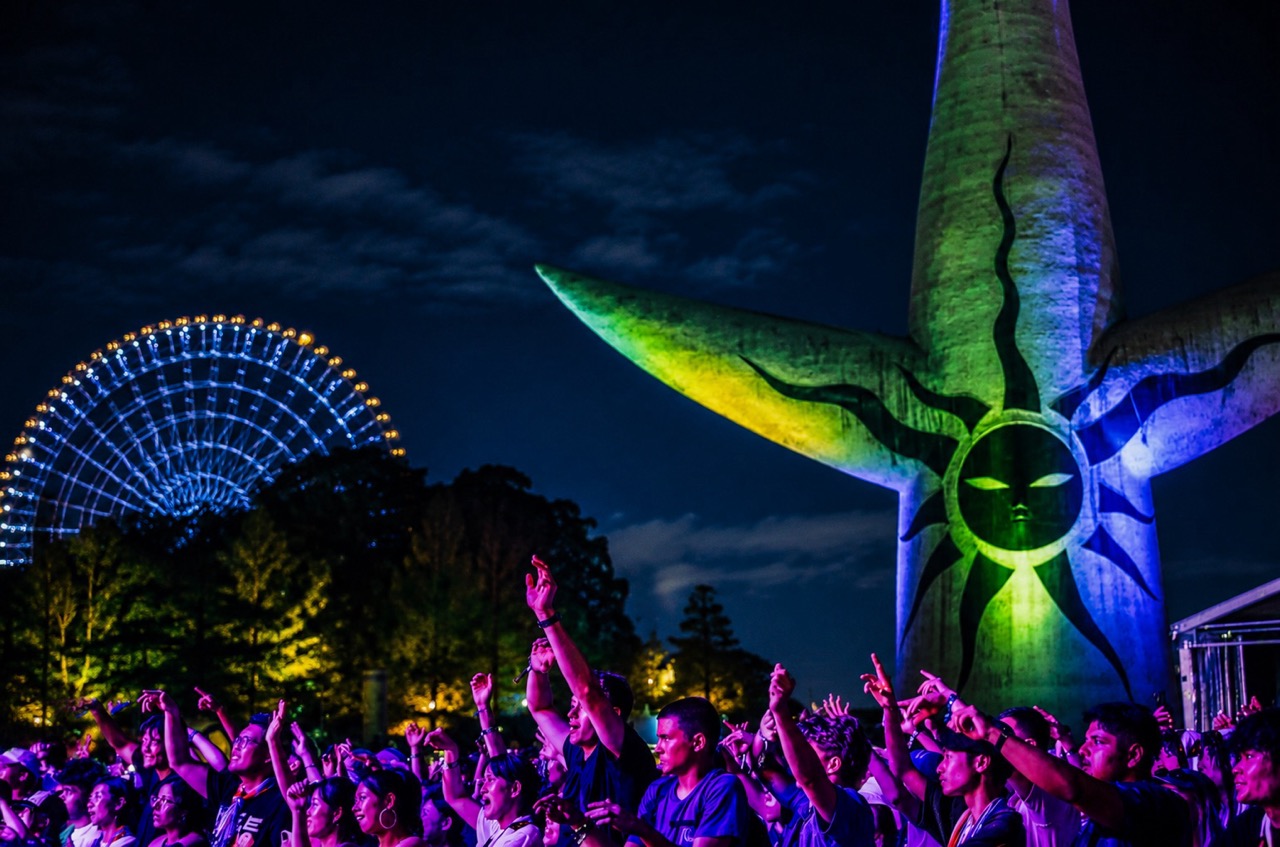
Over the past quarter century, the festival has called several venues home, each reflecting a different chapter in Osaka’s own evolution. WTC Open Air Stadium (2000–2002) marked the pioneering years, with open-air stages overlooking Osaka Bay. IntexOsaka (2003–2006) witnessed the festival’s rapid rise as Summer Sonic grew into one of Japan’s premier music events. Maishima (2007–2023) became home for an entire generation of Summer Sonic fans, synonymous with blazing summer afternoons, ocean breezes, and marathon days spent moving between stages. Today, Expo ’70 Commemorative Park (2024–present) surrounds the music with broad lawns, mature trees, and the unmistakable silhouette of the Tower of the Sun. Every move has reshaped the experience while preserving the festival’s enduring identity.
Yet no matter where the stages have stood, the rhythm has remained unmistakably Osaka. Fans fill trains before sunrise carrying towels and festival shirts. Convenience stores do brisk business supplying ice, drinks, and sunscreen. By evening, stations are packed with exhausted concertgoers swapping stories about surprise sets, unforgettable performances, and the artists they accidentally discovered along the way.
The Soundtrack
Every Summer Sonic lineup captures a moment in music. Looking back through 25 editions is like flipping through a living timeline of the past quarter century, where legendary performers, breakthrough artists, and future superstars often shared the same bill.
From Green Day, Radiohead, Metallica, Oasis, Beyoncé, Coldplay, Red Hot Chili Peppers, Nine Inch Nails, and Kendrick Lamar to Blur, Billie Eilish, The Strokes, Arctic Monkeys, Muse, and countless others, the festival has consistently brought some of the world’s biggest artists to Osaka. Just as importantly, it has introduced Japanese audiences to emerging talent years before many became household names.
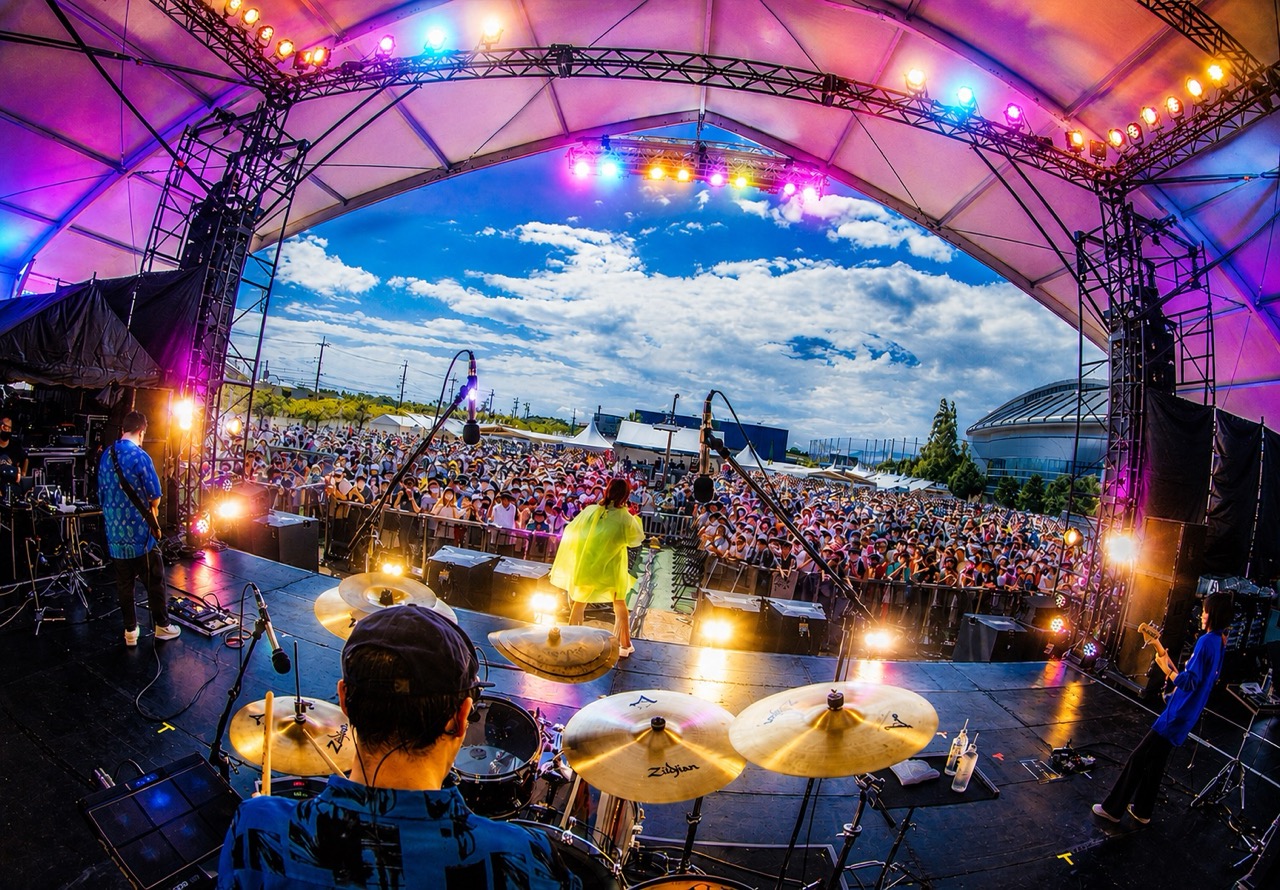
Summer Sonic has also become one of the few places where Japanese and international artists truly share the spotlight. Rather than separating domestic and overseas acts, the festival presents them on equal footing, creating lineups where established stars, rising performers, and local favorites naturally coexist. The result is a festival that feels as much about discovery as nostalgia.
That spirit of discovery may be Summer Sonic’s greatest legacy. Every fan remembers arriving to see one favorite artist and leaving with several new ones. For 25 summers, the festival has rewarded curiosity, turning unfamiliar names on a timetable into lifelong favorites.
The Festival Scene
There is no single way to experience Summer Sonic.
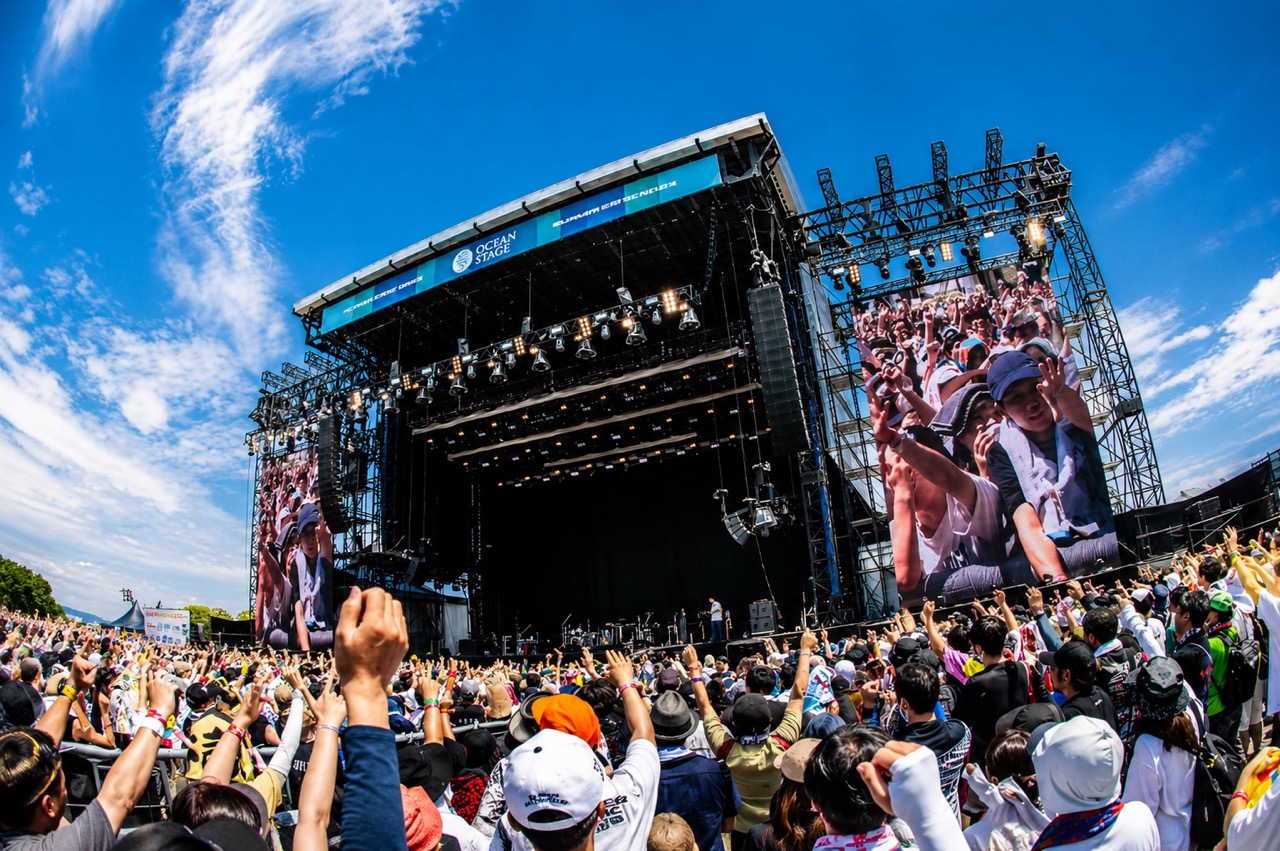
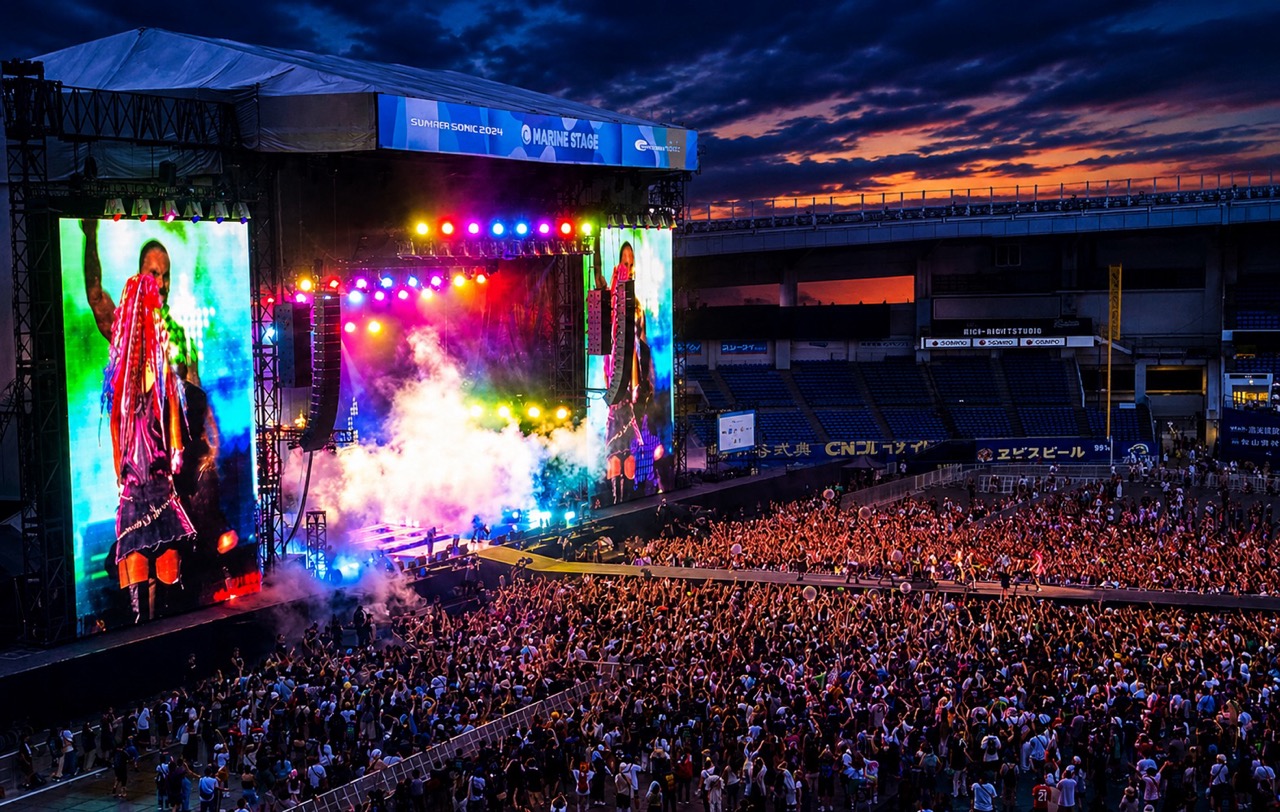
Some fans arrive before the gates open, determined to secure a spot for their favorite headliner. Others wander freely between stages, following the music wherever it leads. Throughout the day, thousands of festivalgoers flow between performances, food vendors, merchandise stands, and shaded rest areas, creating an atmosphere that feels as much like a summer celebration as a concert.
One moment you’re standing shoulder to shoulder with thousands of fans singing every lyric. Minutes later, you’re discovering an artist you’ve never heard before, grabbing a bite to eat, or cooling off before racing across the grounds for the next set. Every festival unfolds differently, shaped by spontaneous decisions as much as carefully planned schedules.
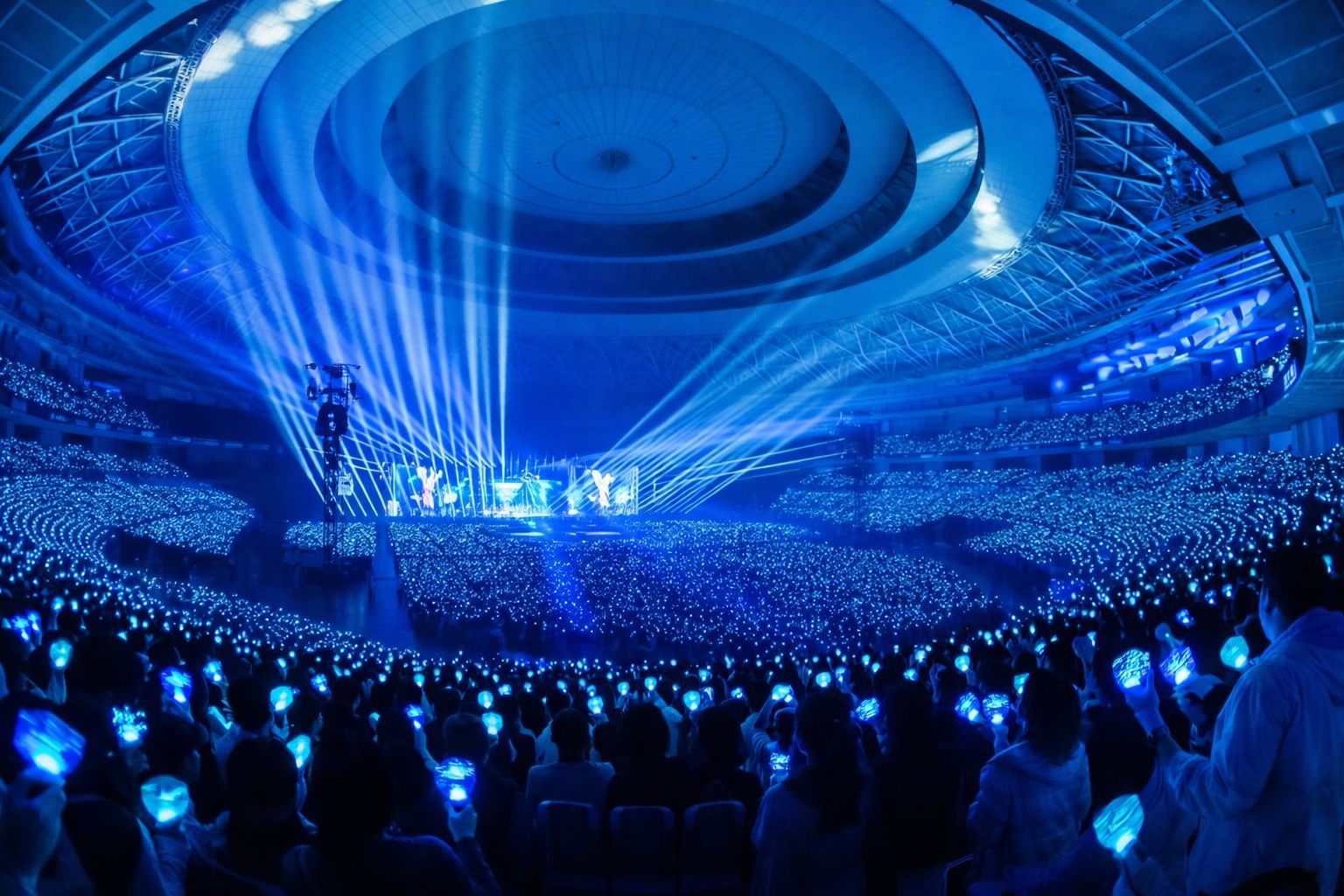
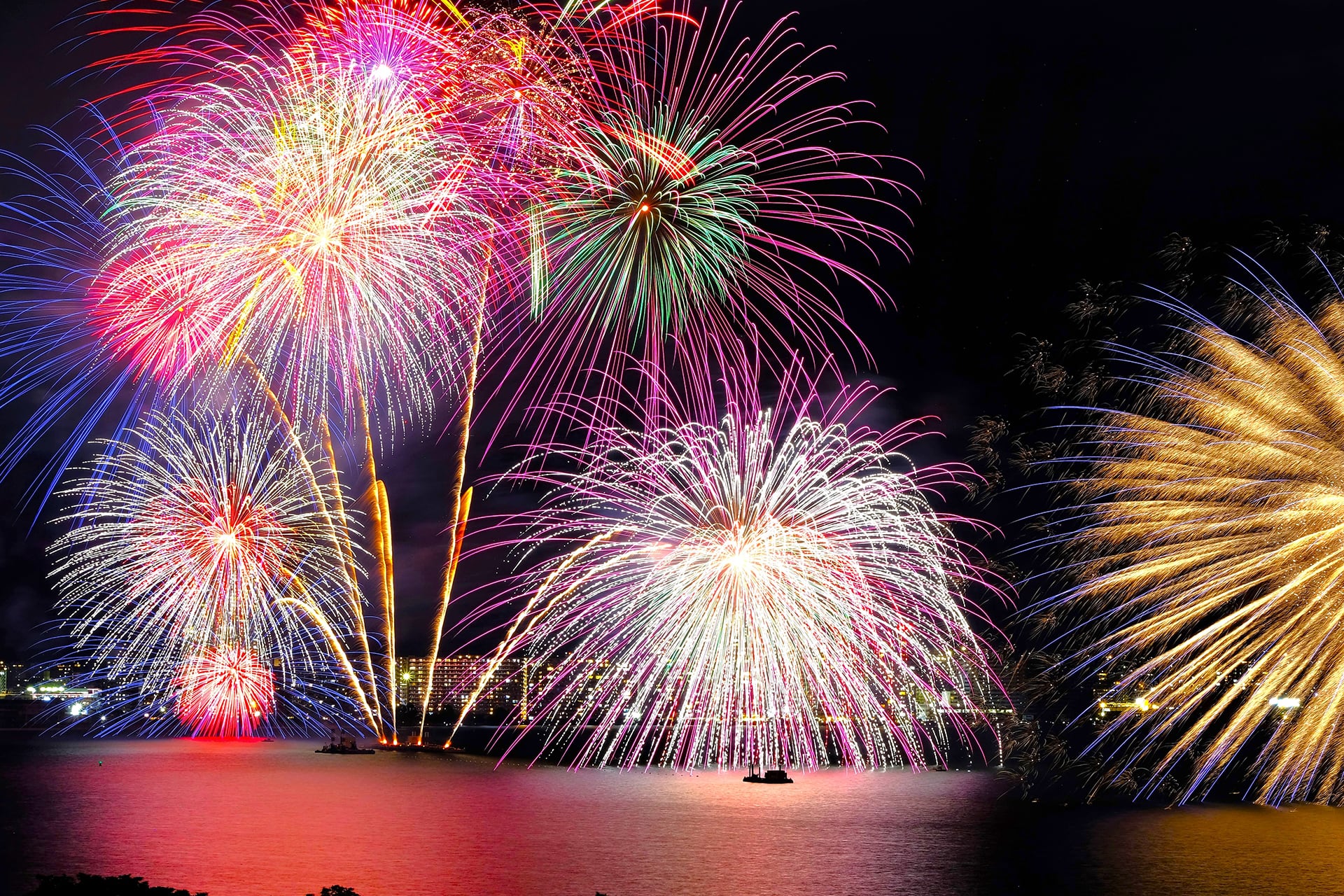
As the sun begins to set, the energy shifts. Headlining performances transform the festival into a sea of lights, voices, and shared moments that linger long after the final encore. It’s these memories—often unexpected—that bring fans back year after year.
That has always been Summer Sonic’s magic. The lineup may draw you in, but the experience is what stays with you.
The Next Chapter
Twenty-five summers have passed since the first crowds gathered on Osaka’s waterfront, but Summer Sonic has never stood still. Every edition brings new artists, new audiences, and new memories while staying true to the vision that started it all. Along the way, the festival has introduced future superstars, reunited lifelong friends, inspired countless new fans, and created unforgettable summer memories for generations of music lovers.
The lineup will change. New stars will emerge. Another generation will discover its next favorite band.
And somewhere in Osaka, another Summer Sonic story will begin.
Planning to attend Summer Sonic? Read our complete 2026 Summer Sonic Event Story for schedules, tickets, access, venue maps, transportation, and visitor tips.