Upcoming Osaka Sports:



Baseball in Japan runs from late March through October, and in Kansai it borders on religion—nowhere more visible than with the Hanshin Tigers. Based just outside Osaka at historic Koshien Stadium, the Tigers boast one of Japan’s most passionate fan bases. Throughout spring and summer, and into the crisp air of early autumn, their season builds toward climactic pennant races and postseason drama. Chants echo in unison, yellow balloons burst into the sky during the famous Lucky 7 ritual, and fans bang drums and horns like a full-blown orchestra of loyalty.
In 2023, the Tigers captured their first Japan Series championship in 38 years, ending the famous “Curse of the Colonel” and sparking euphoric celebrations across Osaka. Dotonbori flooded with fans, chants echoed for days, and even caution from police couldn’t stop supporters from leaping into the canal. It was less like baseball and more like a rock concert stretched over nine innings.

Osaka also celebrates another powerhouse: the Orix Buffaloes, whose season runs parallel from spring through early autumn. Playing at Kyocera Dome Osaka, the Buffaloes carved out their own championship era with three straight Pacific League pennants from 2021–2023 and the 2022 Japan Series title. Their third pennant set up an all-Kansai showdown with the Tigers in the 2023 Japan Series, bringing Osaka’s two baseball worlds face-to-face on the sport’s biggest stage. Games at Kyocera Dome feel modern and electric, contrasting sharply with Koshien’s old-school baseball cathedral vibe.
Together, the Tigers and Buffaloes make Osaka a rare two-team baseball city with dynasties past and present.

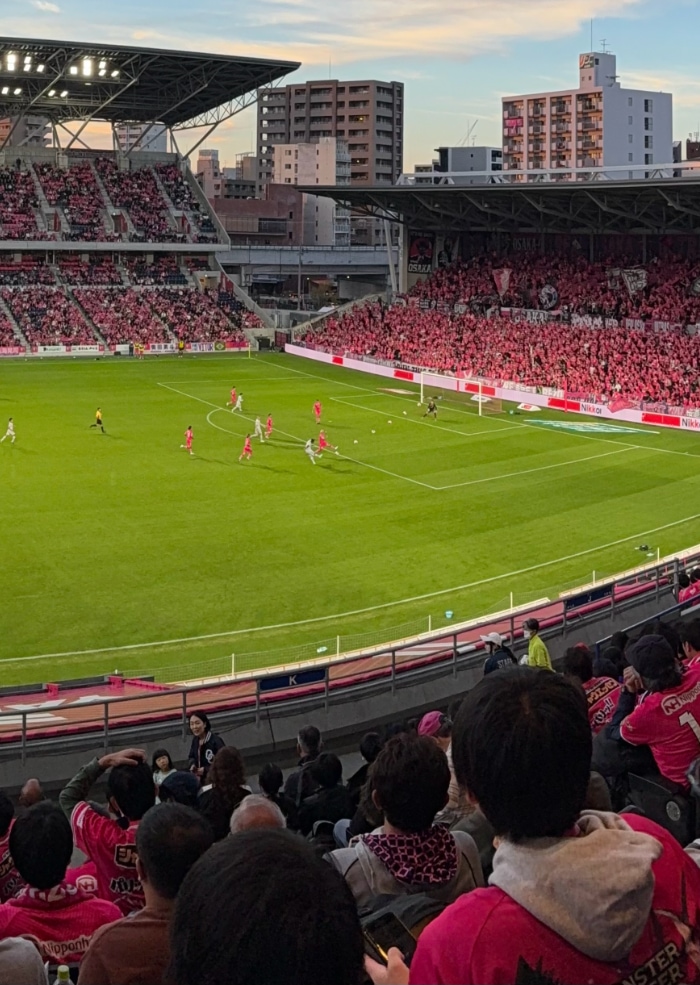
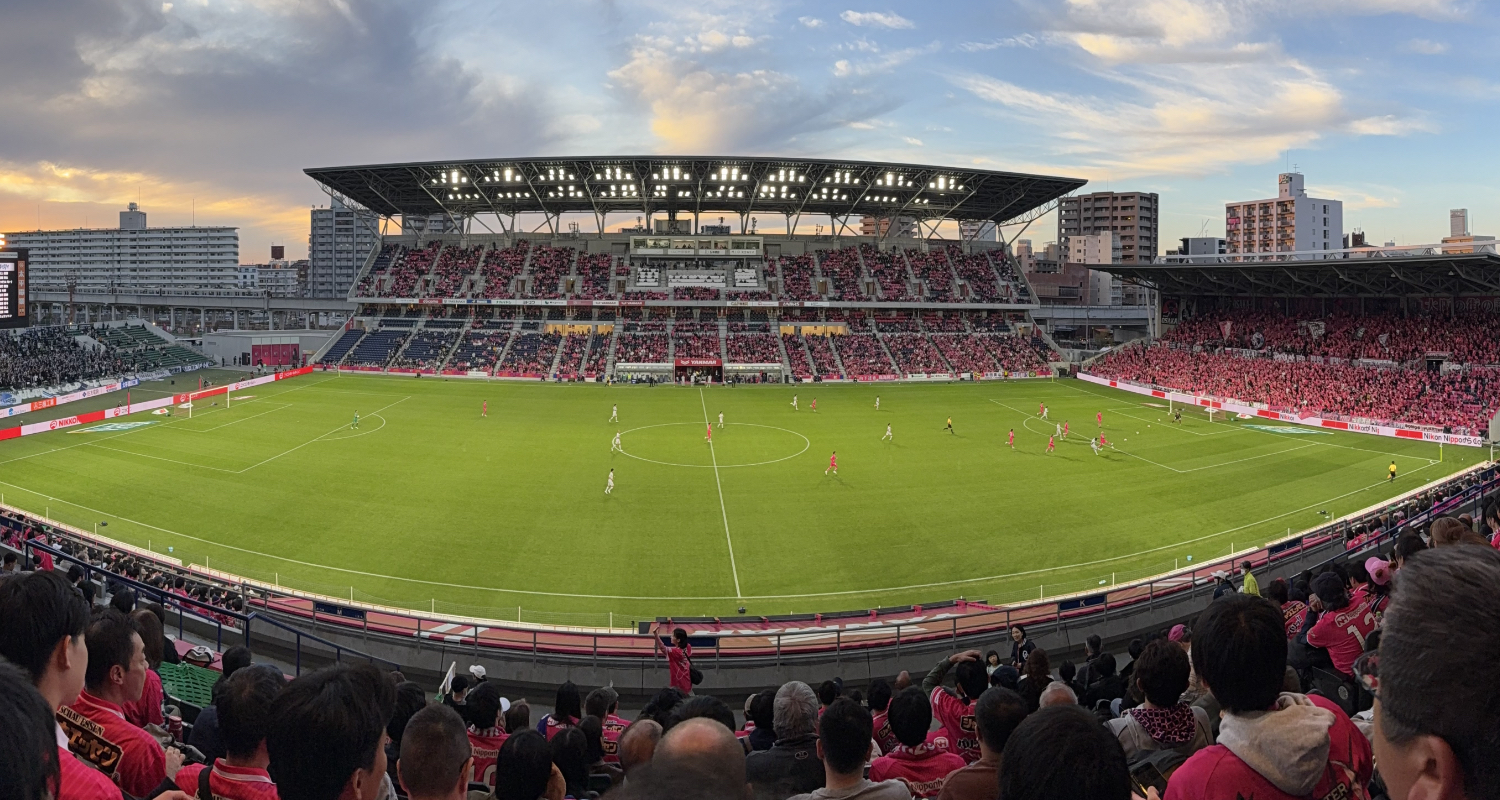
Soccer gives Osaka one of its great sporting divides. Cerezo Osaka wear pink; Gamba Osaka wear blue and black, and when the two meet, neighborhood loyalties and supporter cultures collide in the Osaka Derby. Cerezo plays at Yodoko Sakura Stadium, where steep stands bring supporters close to the pitch and pink fills the ground with flags, songs and coordinated chants.

Across the city, Gamba Osaka brings a very different identity. One of Japan’s historically successful clubs, Gamba plays at Panasonic Stadium Suita, a modern football-specific stadium where the blue-and-black supporter wall rises behind the goal. When Cerezo and Gamba meet, the contrast becomes the attraction: pink against blue, south Osaka against the northern side of the city, with singing, drums, choreographed flags and local pride carrying through the match.
Beyond the city’s two J1 League clubs, Osaka is also home to FC Osaka, a professional club based in Higashiosaka that competes in Japan’s national league system and plays home matches at Hanazono Rugby Stadium. Together, these clubs give the region one of the deepest football cultures in the country.
Osaka is one of Japan’s great volleyball regions, with a concentration of successful clubs that makes the sport part of the city’s sporting identity.

On the men’s side, Suntory Sunbirds Osaka are one of Japan’s most successful clubs, representing Osaka City and Minoh while playing home matches at arenas across the prefecture.

To the northeast, Osaka Bluteon, formerly the Panasonic Panthers, are based in Hirakata and carry their own championship history. When the two meet, Osaka gets one of the biggest local matchups in Japanese club volleyball.
The region is also home to the historic Nippon Steel Sakai Blazers, based in Sakai City, whose roots stretch back decades and have helped shape volleyball’s popularity in Kansai.
Women’s volleyball is equally strong. Osaka Marvelous are one of Japan’s premier women’s clubs, adding another top-level team to an unusually deep local volleyball scene. Together, these clubs give residents and visitors opportunities to see elite volleyball at arenas throughout Osaka Prefecture.
Osaka’s volleyball credentials extend beyond the club game. Asue Arena Osaka regularly hosts major international competition, including Volleyball Nations League matches, bringing national teams and some of the world’s biggest players to the city. Between international tournaments and a remarkably deep professional club scene, volleyball has become one of the easiest elite sports to experience up close in Osaka.

Basketball has carved out its own place in Osaka’s sports scene, with Osaka Evessa bringing fast-paced indoor action to Ookini Arena Maishima. The smaller arena changes the scale completely: the court, players, entertainment and supporters are compressed into one loud space, making basketball one of the easiest Osaka sports to experience up close.
Evessa has been part of Japanese professional basketball from the beginning. The club helped launch the bj-league in 2005 and immediately became its first powerhouse, winning the league’s first three championships. More than two decades later, Japanese basketball is reinventing itself again with the launch of B.PREMIER in 2026–27, putting Evessa at the beginning of another new era for the sport.
Even the name is pure Osaka. Evessa comes from “Ebessan,” the affectionate local name for Ebisu, the god of prosperity and commerce whose presence runs deep through Osaka’s merchant culture. It gives the club an identity rooted in the city long before the first ball goes up.

Every March, the ancient world of sumo takes over EDION Arena Osaka for one of the six official Grand Sumo tournaments held each year. For 15 days, the arena just south of Namba fills with the rituals, rivalries and enormous personalities of Japan’s national sport, culminating each afternoon with the highest-ranked wrestlers stepping onto the dohyo.
Sumo’s connection to Osaka runs much deeper than the modern tournament. Osaka once had its own sumo organization, part of a tradition that developed separately from Tokyo before the two associations merged in 1927. The March tournament found its permanent Osaka home when the Osaka Prefectural Gymnasium opened in 1953, beginning a tradition that has made Grand Sumo one of the city’s great signs of spring.
For spectators, the experience unfolds slowly across an entire day. Lower-ranked wrestlers begin in the morning before the arena gradually fills, the bouts grow more consequential and the atmosphere builds toward the top divisions in the afternoon. Between the ceremonial entrances, salt throwing, referee calls and sudden bursts of physical power, even a bout lasting only seconds can feel like the climax of a much longer ritual.

American football might be one of Osaka’s more surprising spectator sports, but Japan has been playing the game for nearly a century. Today, the X-League represents the highest level of the sport in Japan, with corporate-backed clubs, former college standouts and international players competing in a distinctly Japanese version of the gridiron game.
 For Osaka, the team to know is Panasonic Impulse. Based in Kadoma, the club has been playing since 1974 and has grown into one of the country’s most successful American football programs. Impulse enters the 2026 season as back-to-back national champion, having won consecutive Rice Bowls, and its history stretches across multiple eras of Japanese football.
Seeing them play can also take you somewhere unexpected. Impulse moves among several Kansai venues, including MK Taxi Field Expo in Suita and Tsurumi Ryokuchi Stadium in Osaka City, where the smaller scale puts spectators remarkably close to the field. Cheerleaders, organized supporters and the familiar rhythm of football mix with Japanese game-day traditions, creating an experience that feels recognizable and completely different at the same time.

Rugby is a centerpiece of Osaka’s winter sports culture. Hanazono Rugby Stadium—one of Japan’s true rugby temples and a 2019 Rugby World Cup venue—hosts matches for the Hanazono Kintetsu Liners and Red Hurricanes Osaka, alongside university and other major fixtures.

Autumn brings preseason matches and warm-ups as teams sharpen tactics and test combinations, while winter delivers peak scrums, lineouts and hard-hitting League One action. Hanazono is perhaps most famous for hosting the National High School Rugby Tournament each winter, an iconic event that draws nationwide attention and cements the stadium’s place at the heart of Japanese rugby culture.