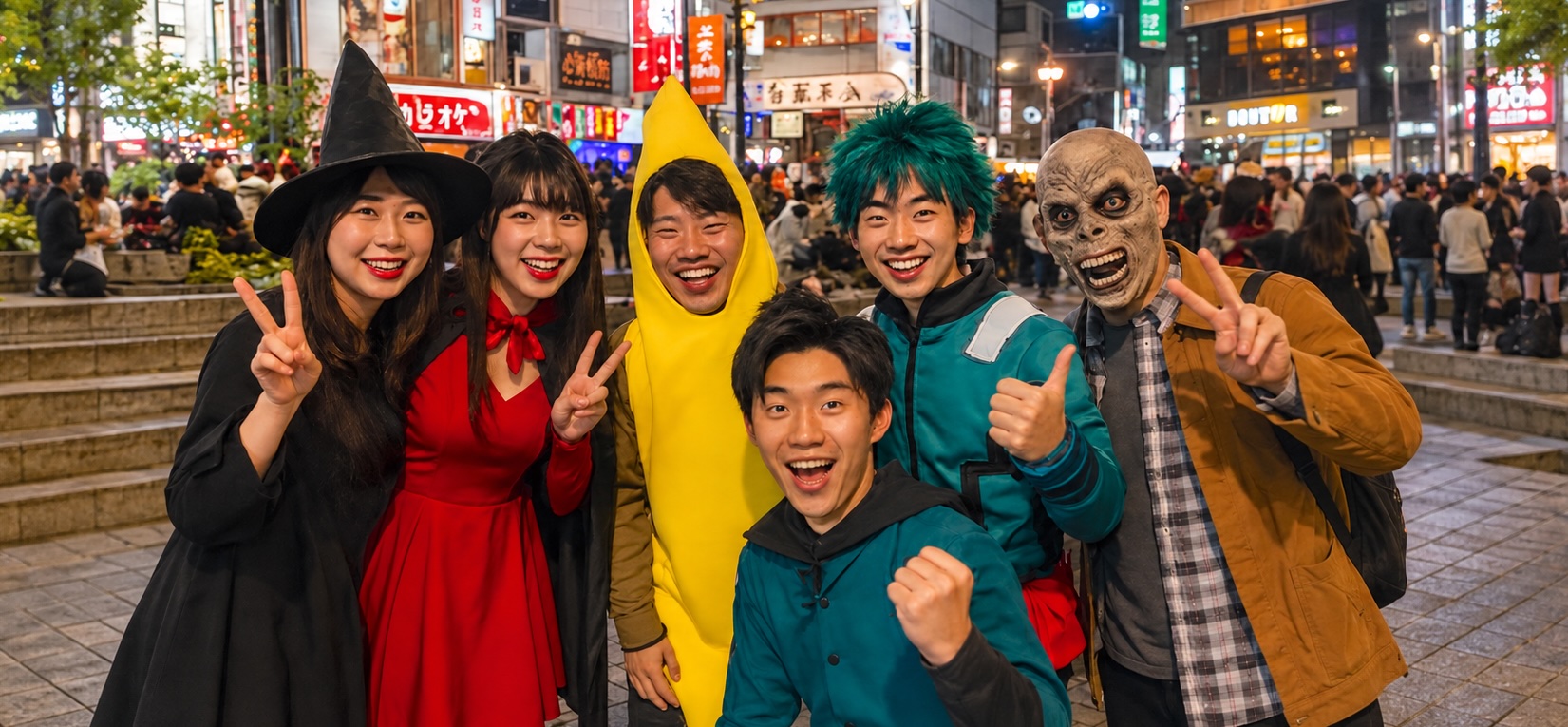
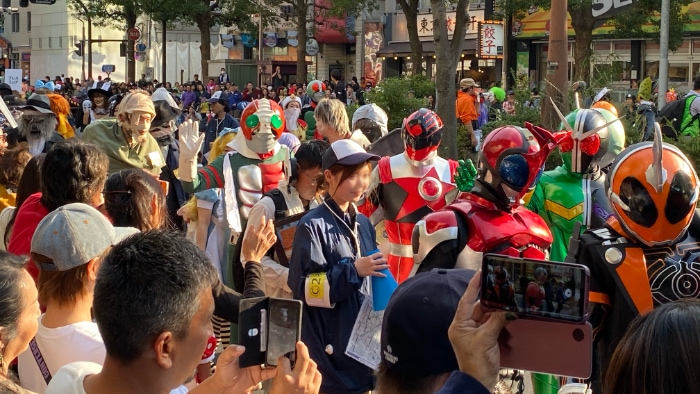
One of Japan’s earliest documented Halloween traditions began in Harajuku. Kiddy Land had started promoting Halloween merchandise in the 1970s, when the holiday was still unfamiliar to most Japanese shoppers. In 1983, the store invited people to dress up and parade along Omotesando. About 100 people participated, many of them foreigners, in what Kiddy Land identifies as Japan’s first Halloween parade. By 1986, the parade was attracting television coverage and hundreds of costumed participants.
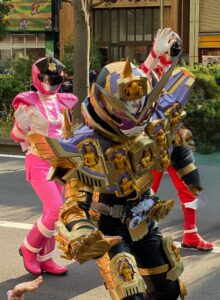 Then came Kawasaki. Launched in 1997 near Kawasaki Station, KAWASAKI Halloween started with a deliberately unconventional idea: a costumed dance parade moving through the streets to booming club music. It grew spectacularly. By the 2010s, around 3,000 costumed participants could take part in the parade while as many as 120,000 spectators gathered from Japan and abroad, making it one of the country’s largest Halloween events. For more than two decades, Kawasaki demonstrated just how thoroughly Japan had embraced Halloween before ending its 24-year run in 2021.
Theme parks pushed Halloween further into the mainstream. Tokyo Disneyland began its Halloween programming in the late 1990s, while Universal Studios Japan, right here in Osaka, made Halloween an increasingly important part of autumn after opening in 2002.
At the same time, Japan’s enthusiasm for character culture, fashion and cosplay gave the imported holiday a language it could make its own. What emerged was never simply an imitation of American Halloween. Trick-or-treating remained relatively uncommon outside organized events, while decorating homes and neighborhoods never became widespread. Instead, dressing up moved toward the center of the celebration. Costumes became social, photographs became part of the experience, and entertainment districts, theme parks, shopping centers and community events provided the stage.
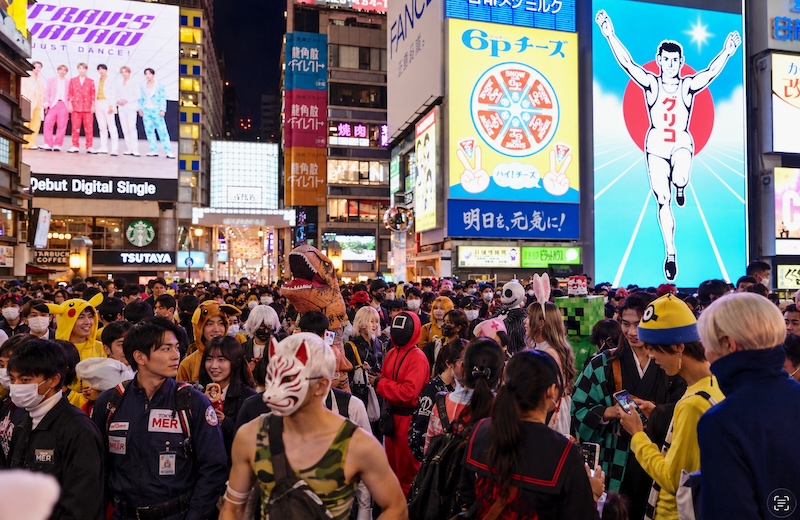
As Halloween grew into a celebration built around costumes, characters and being seen, Osaka’s young people found the perfect stage for it. By the 2010s, October 31 was increasingly spilling into the streets of Minami, where Dōtonbori and Amerikamura already had all the ingredients: neon, nightlife, street fashion, music and crowds.
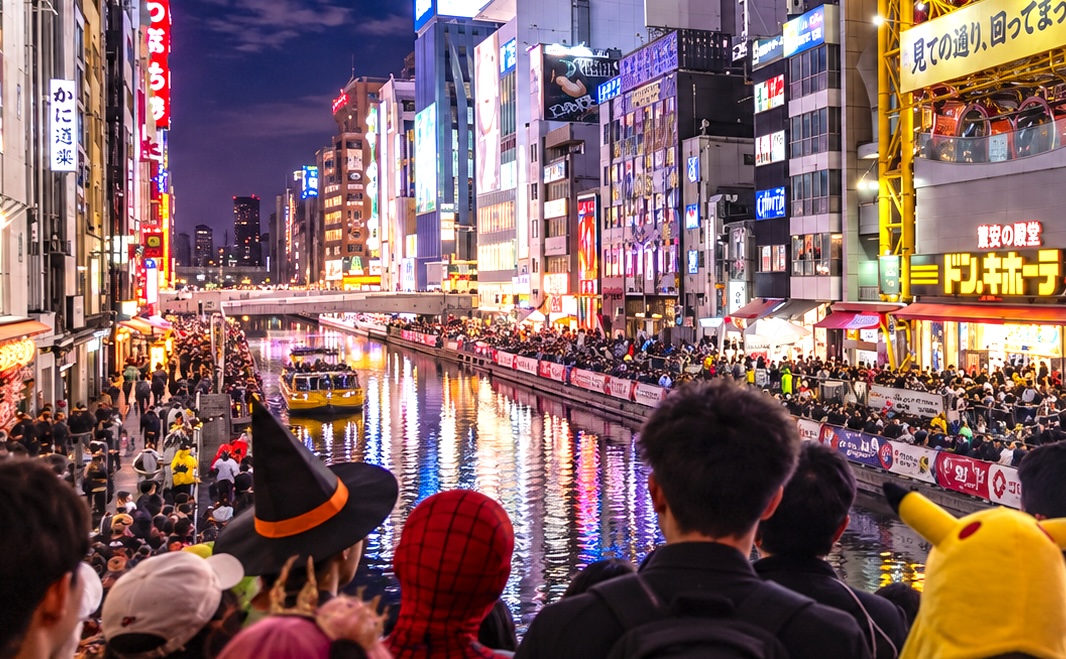
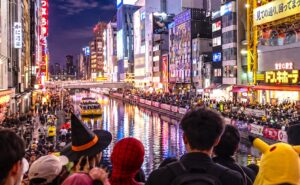 Dōtonbori became the biggest spectacle. On Halloween night, tens of thousands of people have descended on the entertainment district, with the greatest concentration around Ebisubashi and the Glico sign. Anime and game characters mix with monsters, movie villains, pop-culture references and elaborate group costumes.
 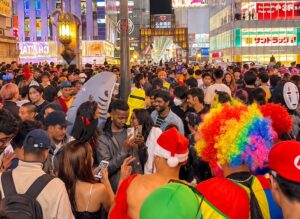 Some people spend weeks preparing; others seem to have designed an entire costume around a single joke. Photographers arrive to document it, spectators come just to watch, and for a few hours the crowd itself becomes the entertainment. And while there really is no “Dōtonbori Halloween” — no organizer, admission gate, parade route or official starting time — people simply began gathering there, and over time the gathering became a tradition of its own.
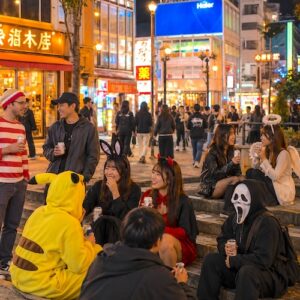 A short walk away, Amerikamura developed a Halloween personality of its own. Amemura had already spent decades at the center of Osaka’s youth culture, fashion, music and nightlife, so Halloween fit naturally into the neighborhood. Costumed crowds gather around Triangle Park and spread through the surrounding streets, bars, clubs and live houses. Where Dōtonbori feels like an enormous public stage, Amemura feels closer to the street culture and subcultures that helped make dressing up such an important part of Halloween in Japan.
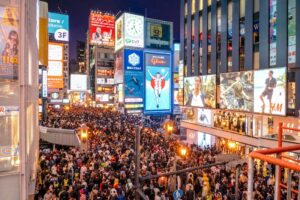 In 2026, all of this lands on Saturday, October 31. That doesn’t guarantee how large the crowds will be, but it puts Halloween itself squarely on the weekend, when both neighborhoods are already at their liveliest. Revelers come in costume or simply come to watch. Amemura’s clubs, bars and live houses add another layer after dark, with individual Halloween programs announced as October approaches.
Together, Dōtonbori and Amemura represent perhaps the most distinctly Osaka chapter in Halloween’s Japanese evolution. Osaka took that enthusiasm and carried the party into the streets.
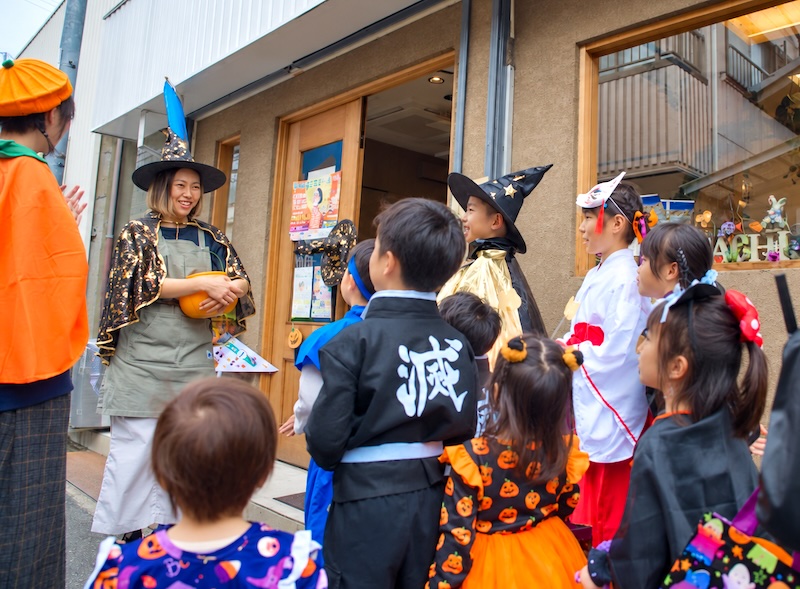
For kids and families, the traditional Halloween spirit of costumes, candy and trick-or-treating is alive and well in Osaka. And the fun begins well before October 31.
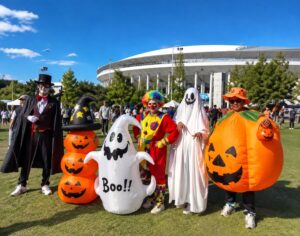 NAGAI Halloween Party 2026 starts the season on October 10 at Nagai Park, filling the Central Square with games, workshops, dancing and costume-friendly activities. Children may even encounter ghosts willing to surrender some candy after hearing the appropriate magic words: “Trick or Treat!”
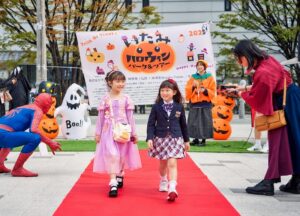 Families looking for something closer to the Halloween many overseas visitors remember from childhood have another option just beyond Osaka Prefecture. Itami Halloween Park & Tour 2026 takes over central Itami on October 31. Costumed children follow organized routes through town, stopping at participating businesses and collecting candy along the way. Five routes are planned for 2026, with children ages 2 through elementary school participating alongside a parent or guardian.
 And 2026 adds an extraordinary encore. When trick-or-treating finishes, families can remain in Itami for the separately organized Itami City Fireworks Festival, which also happens to fall on October 31 this year. Fireworks are scheduled to rise over the Inagawa after dark. The two events aren’t connected, but the coincidence creates a wonderfully strange Halloween progression: costumes and candy in the afternoon, fireworks after dark.
 The Halloween spirit reaches into Osaka’s neighborhoods too. Kita-ku Children & Parenting Plaza holds Halloween activities from October 29–31, with costumes, games and photo opportunities for young children and their families. It’s a much smaller celebration than Nagai or Itami, but perhaps an even better example of how thoroughly Halloween has worked its way into everyday community life in Japan.
These are exactly the kinds of Halloween traditions that have flourished in Japan — organized, communal and built around shared activities rather than children simply knocking unannounced on neighborhood doors. Trick-or-treating may never have become an everyday Japanese tradition, but events like these have found a way to give children their own version of it.
 At the other end of the spectrum, Osaka goes very big. Universal Studios Japan has helped make Halloween one of the city’s most visible autumn attractions, with a highly produced world of zombies, horror and pop culture that draws visitors from Japan and abroad.
In 2026, Halloween Horror Nights celebrates its 15th anniversary, running from September 11 through November 8 with its largest zombie horde yet and attractions drawing on Resident Evil, Sadako and other Japanese and international horror.
The scale may be commercial, but its place in Osaka’s Halloween story is hard to ignore. Horror Nights has lasted long enough to become an autumn tradition of its own, reflecting the same transformation seen throughout Japan: an imported celebration reshaped through horror, anime, games, music and character culture until the result becomes something distinctly its own.