Ancient Naniwa Arrives Again
Colorful parades, K-pop group AIMERS performs, and sizzling street food bring Osaka’s ancient crossroads back to life at the historic Shitennoji Temple.
 Every autumn, the grounds of Naniwa Palace transform into a living history pageant that celebrates Osaka’s roots as Japan’s international gateway. Known as Shitennoji Wasso, this vibrant cultural festival recreates the days when Osaka — then called Naniwa — was a hub of diplomacy and exchange with Korea and other parts of East Asia.
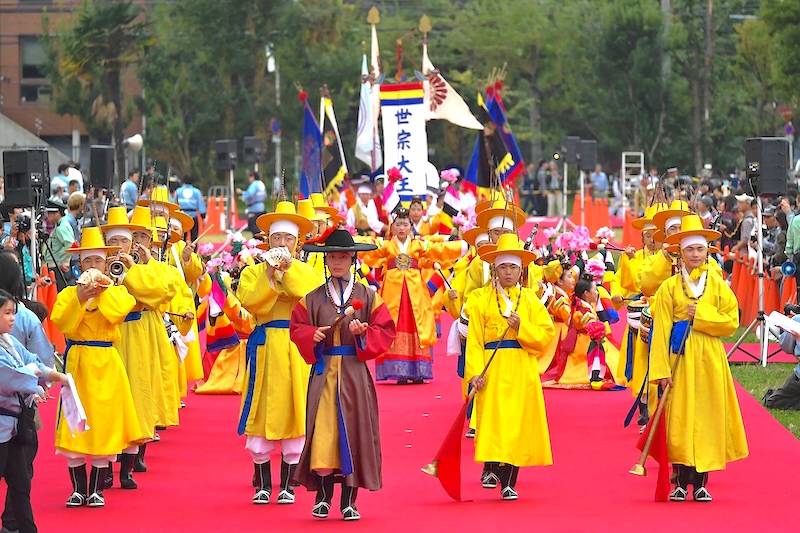
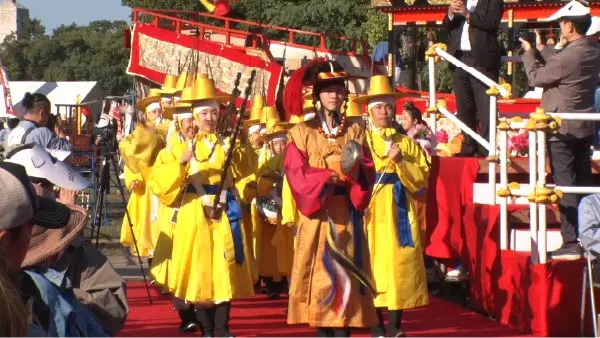
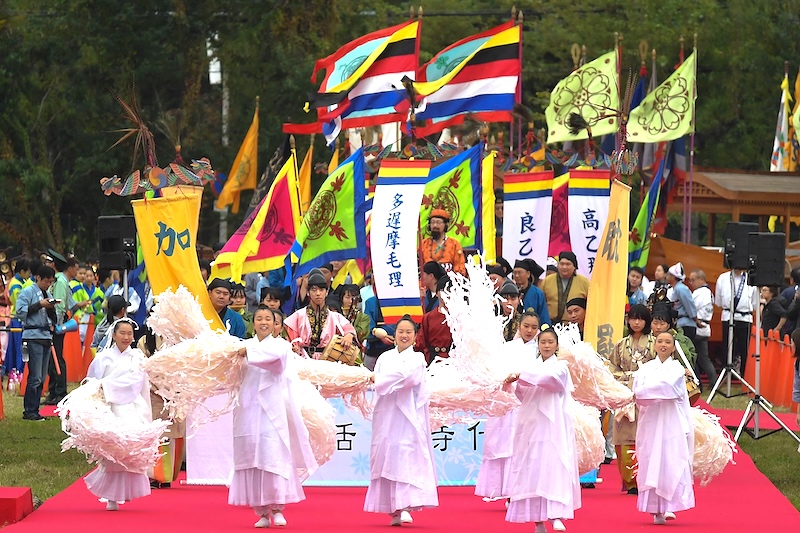
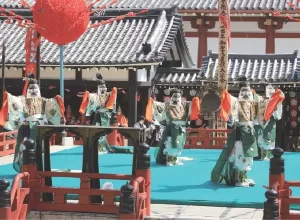
Across the open grounds, musicians sound the arrival of delegations as dancers lead a procession of historical figures in elaborate period dress. Palanquins and boat-shaped danjiri move through the former imperial grounds, surrounded by a cast that can number more than 1,000. The name itself captures the moment: “Wasso” comes from the modern Korean word meaning “came” or “has arrived,” used here as a celebratory cry welcoming the delegations.
 The grand historical procession is the heart of the festival, with musicians, dancers and dignitaries representing Tamna and Gaya, Baekje, Goguryeo, Silla and the Joseon dynasty. Historically researched costumes, palanquins and ornate boat-shaped floats turn the former palace grounds into a moving recreation of the people and cultures that once arrived through ancient Naniwa. The effect is both theatrical and deeply rooted in place — a reminder that this part of Osaka once stood at Japan’s gateway to East Asia.
 But the festival isn’t only about heritage. Around the grounds, the Manpuku Yatai Hiroba food area gives visitors a place to eat and gather between performances, while the Wakuwaku Experience Plaza adds hands-on activities particularly suited to younger visitors. Red-ship and palanquin displays offer a closer look at some of Wasso’s most striking historical imagery, while contemporary music and performance bring modern international culture into the mix.

For 2026, Wasso leans deliberately into the connection between past and present. Under the theme “Leap Toward the Future: A Circle of Exchange,” the main program travels through mythology and the Kofun, Asuka and Nara periods before moving into ancient theater, Korean court performance and a second act devoted to modern international exchange. K-pop artist YEEUN, best known from CLC and EL7Z UP, joins Osaka Tensuiren’s Awa Odori and closing taiko, while the morning program adds K-pop cover dance, brass band, dance baton, wadaiko and Korean traditional arts.
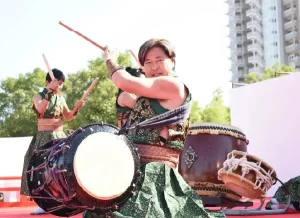 It’s a broad sweep of performance built around the same idea that inspired Wasso in the first place: cultures meeting, exchanging and carrying something new forward.
For families, Wasso is especially welcoming. Kids can watch the bright costumes and drumming before trying activities in the experience area, while parents can browse the food stalls, explore the historical displays or settle in for the stage program. And there is something particularly fitting about experiencing all of it at Naniwa Palace: rather than encountering ancient international Osaka behind museum glass, visitors spend a day surrounded by a colorful recreation of it on the grounds where part of that history unfolded.

 Living History – Watch more than 1,000 participants bring ancient Naniwa’s international past to life.
Grand Procession – See musicians, dancers, palanquins and boat-shaped danjiri cross the former palace grounds.
Past Meets Present – Move from ancient court culture to K-pop, Awa Odori and Korean traditional performance.
Food & Discovery – Explore festival food stalls, historical displays and hands-on activities for younger visitors.
Naniwa’s Gateway – Experience East Asian history on the grounds where ancient Osaka once welcomed the world.
Photos: Official Website
WHAT ELSE IS HAPPENING IN OSAKA?
Discover events, exhibitions, festivals, concerts, culture & more.

Follow @osakascene on Instagram

Opening Hours
THE SCENE: FAQ’s
ACCESS
Naniwa Palace Site
Hoenzaka 1, Chuo-ku, Osaka
Trains
JR Osaka Loop Line → Morinomiya Station
The festival grounds are about a 15-minute walk west from the station.
Subways
Metro Tanimachi / Chuo Lines → Tanimachi 4-chome Station
Use Exit 10. The Naniwa Palace Site is about a 2-minute walk.
Tanimachi 4-chome is the simplest public-transport option, bringing visitors directly to the west side of the historic Naniwa Palace grounds.
SCHEDULE
November 1, 2026
10:30 — Festival opens
11:00 — Pre-Stage Program
K-pop cover dance
Brass band
Dance baton
Wadaiko
Korean traditional performing arts
12:50 — Opening Program
Opening ceremony
Ise Daikagura
13:15 — Grand Historical Procession & Ancient Exchange
The festival’s marquee historical program brings costumed delegations, musicians, dancers, palanquins and boat-shaped danjiri into the story of ancient Naniwa’s connections with East Asia.
The program moves through mythology and the Kofun, Asuka and Nara periods, followed by ancient theater, a peace declaration and Joseon dynasty performance.
15:00 — Modern International Exchange
Osaka Tensuiren Awa Odori
K-pop performance by YEEUN (CLC / EL7Z UP)
Closing taiko
17:00 — Festival closes
TICKETS
Admission to Shitennoji Wasso is free.
No advance ticket or reservation is required for general festival admission.
Food and other purchases at the festival are separate.
The event takes place outdoors at the Naniwa Palace Site and is cancelled in case of rain.
THE EXPERIENCCE
Shitennoji Wasso turns the historic Naniwa Palace grounds into a day of procession, performance and hands-on cultural discovery.
- Watch historically dressed delegations arrive with musicians, dancers, palanquins and boat-shaped danjiri.
- Follow the stage program from ancient mythology and international exchange through contemporary K-pop, Awa Odori and taiko.
- Explore the Manpuku Yatai Hiroba for festival food between performances.
- See the red ship and palanquin displays up close.
- Visit Wakuwaku Experience Plaza for hands-on activities aimed particularly at younger visitors.
The scale and movement make Wasso especially accessible to visitors who want to experience history rather than simply read about it.
INFO & TIPS
Weather
Shitennoji Wasso is an outdoor event and will be cancelled in case of rain. Check the official event site if poor weather is forecast for November 1.
Best Time to Arrive
For the fullest experience, arrive before the 12:50 opening program. That gives you time to explore the grounds and food area before the historical portion begins at 13:15.
This is useful advice we can derive directly from the published timetable without pretending the organizer has declared an official “best time.”
Don’t Miss the Procession
The marquee historical program begins at 13:15. Arrive before the 12:50 opening program to get settled and explore the festival grounds before the main spectacle begins.
Families
The Wakuwaku Experience Plaza includes hands-on activities intended particularly for younger visitors, making this more than a watch-the-stage festival for families.
Food
The Manpuku Yatai Hiroba food area operates as part of the festival. Specific 2026 vendors and menus have not yet been announced, so we should not promise the noodles, skewers and Korean snacks described in the old article.
Seating / Viewing
I would say nothing yet. I haven’t established a sufficiently authoritative 2026 rule about reserved viewing, chairs, picnic sheets or where spectators should stand. Better silence than plausible advice.
Accessibility
Likewise, I would not manufacture an accessibility statement simply because the event is held on open parkland. If the organizer publishes specific barrier-free arrangements, we can add them.
Parking
I would encourage public transportation rather than imply event parking exists. The site is only minutes from Tanimachi 4-chome.
Organizer
NPO Osaka Wasso Cultural Exchange Association
Official Site: https://www.wasso.net/
Contact: https://www.wasso.net/contact/