
Mozu Hachiman Autumn Festival
Towering futon-daiko, pounding drums and the cries of their bearers fill Mozu Hachiman Shrine as Sakai’s historic Moon-Viewing Festival returns September 26–27.
Under the harvest moon, towering futon-daiko move through the grounds of Mozu Hachiman Shrine to pounding drums and the cries of their bearers.
Sakai’s Mozu Hachiman Autumn Festival returns September 26 and 27, bringing one of the city’s most spectacular traditional celebrations back to the shrine. Known as the Tsukimi Matsuri, or Moon-Viewing Festival, the event centers on the arrival and departure of enormous futon-daiko carried by the shrine’s nine parish neighborhoods.
The name comes from more than autumn atmosphere. The shrine’s rites are traditionally associated with the 15th day of the eighth month of the old lunar calendar—the harvest moon. The festival combines prayers for a successful harvest with the shrine’s Hōjō-e tradition and customs celebrating the full moon.
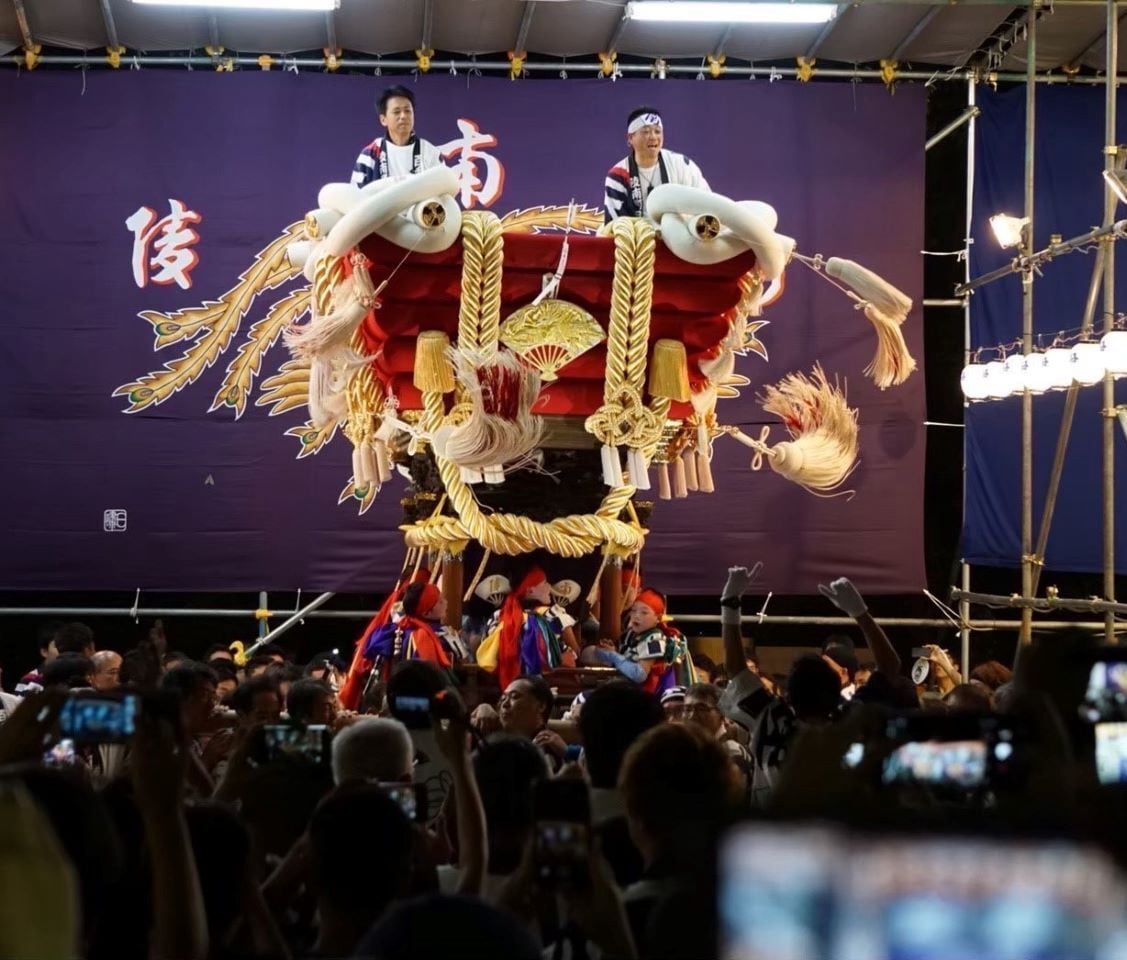
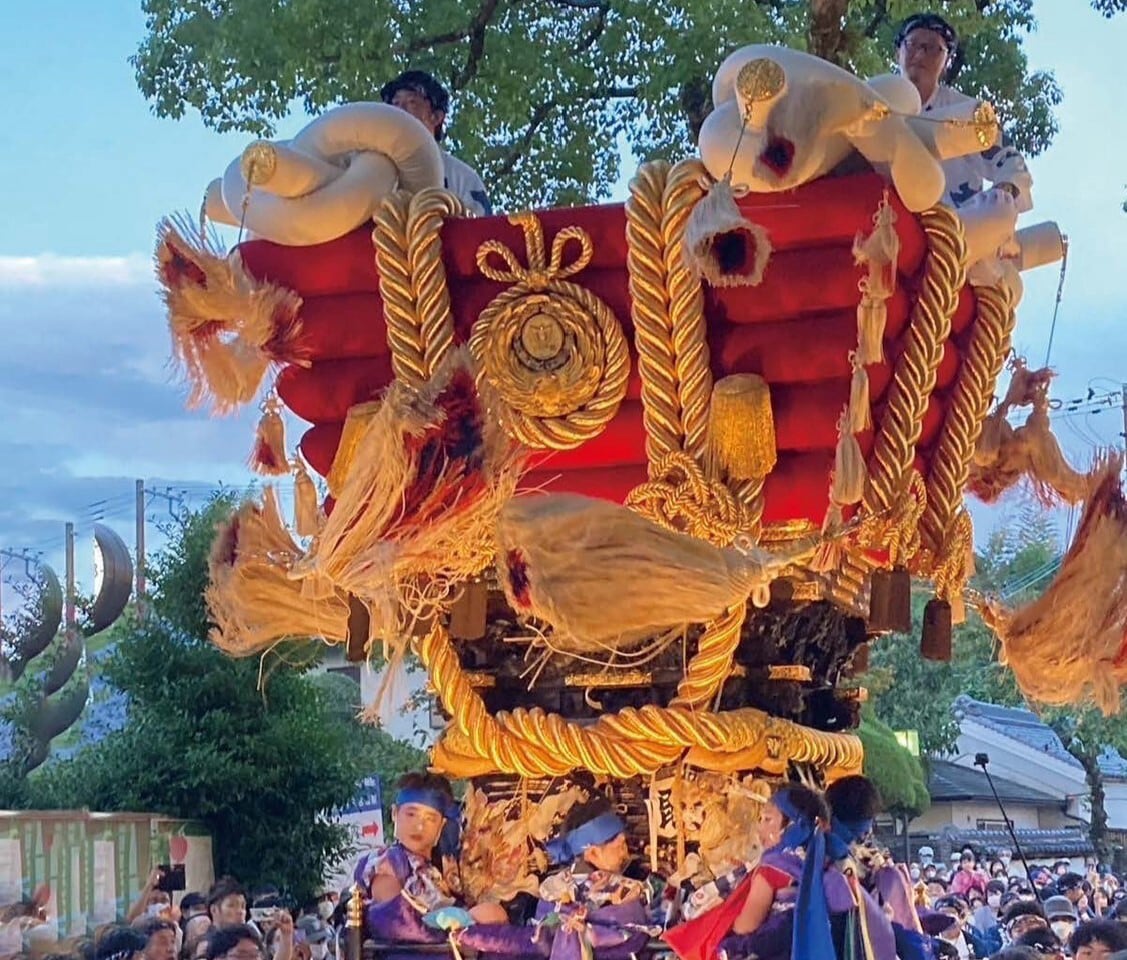
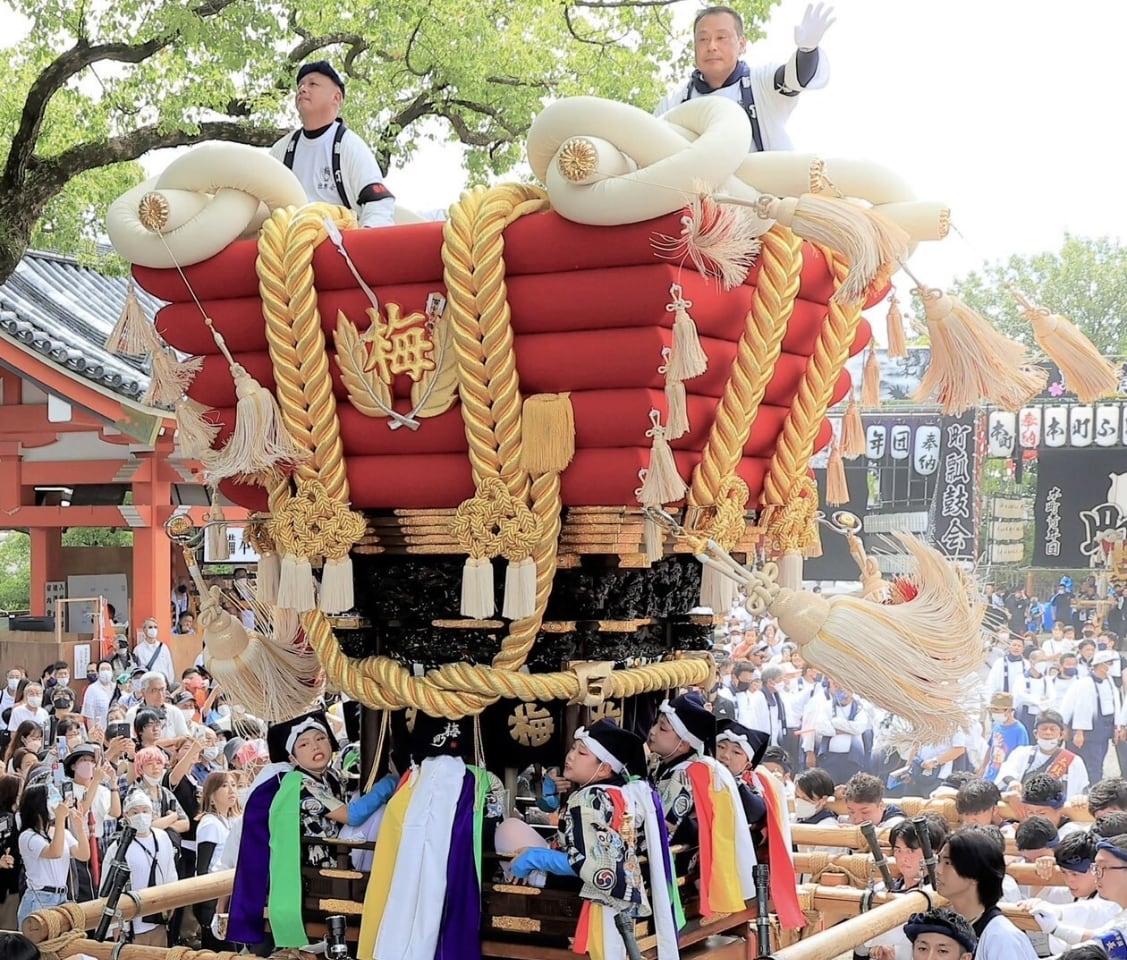
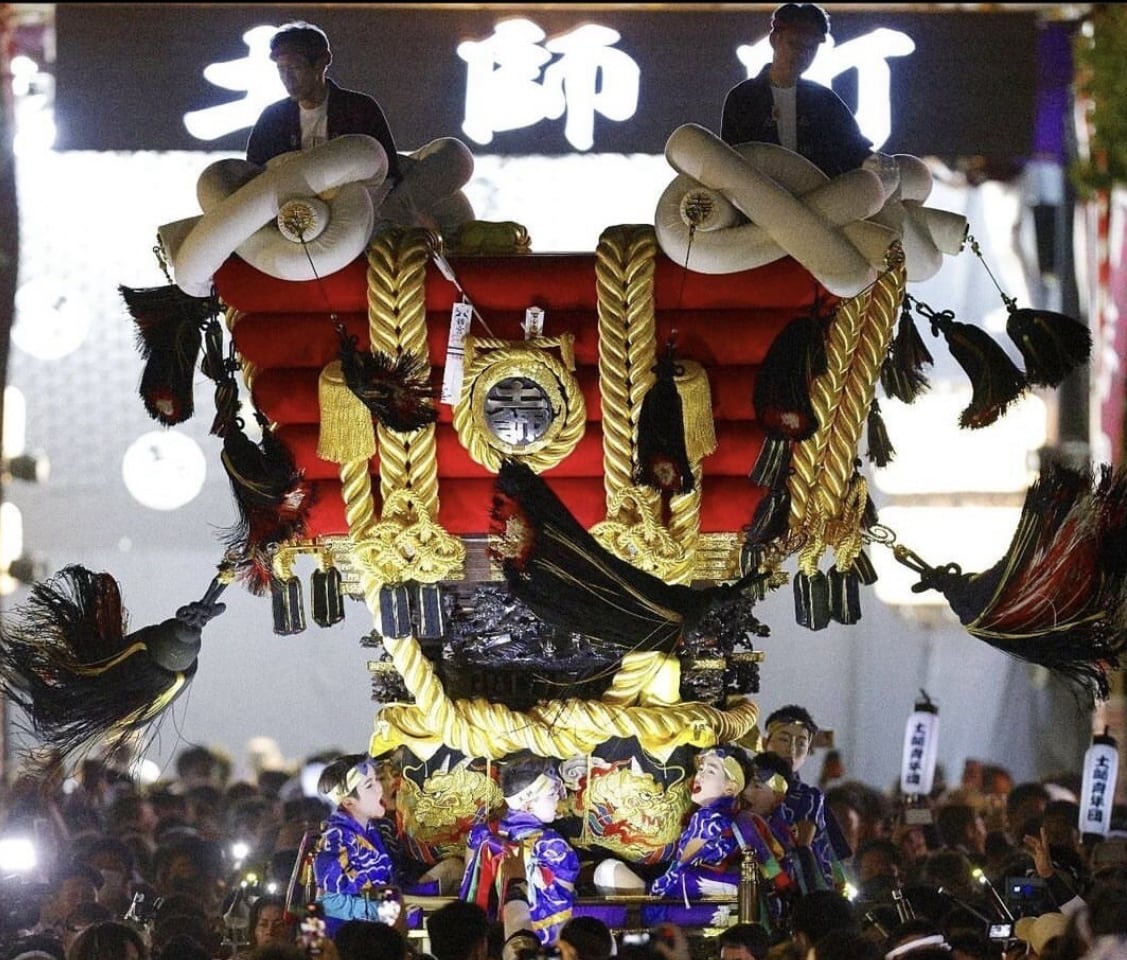
The futon-daiko make that tradition impossible to miss. Each carries a taiko inside an elaborately carved wooden base topped by five stacked red cushions, decorated with gold rope and tassels. During the procession, a futon-daiko stands approximately four meters high and weighs around two tons, requiring some 60–70 bearers to move it through the shrine grounds. Their distinctive cries of “bera-bera-bera-sho-shoi” join the beat of the drum as each neighborhood takes its turn.
This is a tradition with deep local roots. Sakai City’s historical research points to a surviving futon-daiko from the Bunsei era (1818–1829) as evidence that the festival was already being celebrated more than 200 years ago. The procession itself has evolved: danjiri once participated alongside futon-daiko before the neighborhoods shifted toward the towering drum floats seen today.
Saturday is miya-iri, when the nine neighborhoods bring their futon-daiko into Mozu Hachiman Shrine one by one from 11:00 into the night. Sunday reverses the movement with miya-de, beginning at 9:00 and continuing until 22:00.
For visitors, this is not a festival that needs much interpretation. Come for the scale of the floats, the rhythm of the drums and the energy of dozens of people moving two tons together. Stay into the evening, when the procession, shrine and sound of the festival make the centuries-old tradition feel very much alive.

 Towering Futon-Daiko – See elaborately decorated drum floats rise approximately four meters above the procession.
Feel the Rhythm – Hear the taiko and distinctive calls of 60–70 bearers moving each massive float through the shrine.
Nine Neighborhoods – Watch each of Mozu Hachiman’s nine parish communities bring its own futon-daiko into the festival.
Miya-Iri & Miya-De – Saturday’s arrivals and Sunday’s departures offer two different ways to experience the procession.
More Than 200 Years of Tradition – Experience a Sakai festival whose history can be traced through surviving futon-daiko to at least the early 19th century.
Photos & Video: Official Website
WHAT ELSE IS HAPPENING IN OSAKA?
Discover events, exhibitions, festivals, concerts, culture & more.


Opening Hours
THE SCENE: FAQ’s
ACCESS
Venue
Mozu Hachiman Shrine
Address
5-706 Mozu Akahatacho, Kita-ku, Sakai, Osaka 591-8037
Trains
JR Hanwa Line → Mozu Station → about 10 min. walk
Nankai Koya Line → Mozu-Hachiman Station → about 10 min. walk
Subways
Metro Midosuji Line → Nakamozu Station → Exit 6 → about 20 min. walk
Walking Directions
From JR Mozu Station or Nankai Mozu-Hachiman Station, allow about 10 minutes on foot to Mozu Hachiman Shrine. From Metro Nakamozu Station, use Exit 6 and allow about 20 minutes on foot.
From Nakamozu, there is also a bus option: from Exit 6, take a Nankai Bus toward Tsukuno Station/Fuseo and get off at Mozu Hachiman-mae, about a five-minute walk from the shrine.
Festival Access
Traffic restrictions are in effect around the shrine during the Autumn Festival, so public transportation is recommended. The shrine specifically warns that its normal parking arrangements are affected by festival traffic restrictions.
SCHEDULE
September 26 (Saturday) — Miya-Iri
11:00–22:30 — Futon-Daiko Processions Into the Shrine
11:00–12:00 — Akahata-chō (赤畑町) + Children’s Taiko
12:10–13:10 — Children’s Futon-Daiko Joint Procession — 8 floats
13:20–14:20 — Ume-chō (梅町)
14:30–15:30 — Nakamozu-chō (中百舌鳥町)
15:40–16:40 — Dōtō-chō (土塔町)
16:50–17:50 — Honmachi (本町)
18:00–19:00 — Haze-chō (土師町)
19:10–20:10 — Nishino-chō (西之町)
20:20–21:20 — Ryonan-chō (陵南町)
21:30–22:30 — Umekita-chō (梅北町)
Each neighborhood’s futon-daiko enters the shrine grounds for its scheduled procession before making way for the next.
September 27 (Sunday) — Miya-De
9:00–22:00 — Futon-Daiko Processions Out of the Shrine
9:00–9:25 — Nine-Neighborhood Joint Soroi-uchi (揃い打ち)
9:30–11:00 — Children’s Futon-Daiko Joint Procession — 9 floats
11:05–11:35 — Children’s Ceremony / Procession
11:40–12:40 — Haze-chō (土師町)
12:50–13:50 — Dōtō-chō (土塔町)
14:00–15:00 — Umekita-chō (梅北町)
15:10–16:10 — Nishino-chō (西之町)
16:20–17:20 — Honmachi (本町)
17:30–18:30 — Ryonan-chō (陵南町)
18:40–19:40 — Nakamozu-chō (中百舌鳥町)
19:50–20:50 — Ume-chō (梅町)
21:00–22:00 — Akahata-chō (赤畑町)
Hōjō-sai
September 27, 11:00–11:30
Children dressed for the shrine ceremony take part in the Hōjō-sai (放生祭). The shrine confirms that young fish are released into its Hōjō pond as a prayer for the growth of living things. In rain, the shrine modifies the procession and ceremonial clothing arrangements.
Reitaisai
September 25 (Friday)
The shrine’s annual Reitaisai takes place the day before the public futon-daiko weekend. The shrine confirms that an envoy from Iwashimizu Hachimangu participates in the ceremony.
Notes
The shrine describes September 26 as miya-iri, when the futon-daiko enter, and September 27 as miya-de, when they depart. The published times are scheduled procession slots and may be affected by festival operations.
TICKETS
Admission
Free
No ticket or general admission reservation is required to watch the futon-daiko processions or enter the public festival area.
Participation in the children’s Hōjō-sai procession is separate from general festival attendance and requires advance registration and a participation fee. The shrine lists the 2026 fee as ¥12,000, with registration from August 29–September 13. This is only for participating children; spectators do not need to register.
THE EXPERIENCE
Mozu Hachiman’s Moon-Viewing Festival is at its best when you give yourself time to watch the futon-daiko arrive, move through the shrine and disappear back into the surrounding neighborhood.
- Stand near the shrine grounds as the massive futon-daiko make their scheduled miya-iri or miya-de.
- Listen for the taiko and distinctive calls of the bearers as each neighborhood takes its turn.
- Look closely at the carved wooden bases, gold decoration, tassels and five stacked red cushions that give the floats their distinctive shape.
- Visit later in the day if you want to experience the processions continuing into the evening.
- Allow time to explore Mozu Hachiman Shrine itself rather than treating the festival only as a parade.
Saturday’s miya-iri is the natural choice for a first visit, particularly if you can stay into the evening, while Sunday offers another full day of processions as the futon-daiko make their miya-de.
INFO & TIPS
Expect Crowds
This is one of the major traditional festivals of the Mozu area, and the shrine grounds become extremely busy. Give yourself extra time around the shrine and do not expect to move quickly when a futon-daiko is approaching. Sakai City describes the normally quiet shrine as filling with large crowds during the festival.
Getting Around
Roads around Mozu Hachiman Shrine are restricted during the festival. Do not come by bicycle; Sakai City specifically requests that visitors refrain from cycling to the event.
Parking
Although Mozu Hachiman Shrine normally operates free visitor parking, the shrine warns that traffic restrictions are in place during the Autumn Festival. Public transportation is the better choice for festival visitors.
Food & Festival Stalls
I would leave any claim about food stalls or yatai out for now. They may well be part of the festival experience, but I haven’t found sufficiently clear current official 2026 information to tell readers what will be available.
Weather
The futon-daiko processions take place outdoors. A specific 2026 cancellation or severe-weather policy has not been published in the official information reviewed, so check the shrine’s latest announcements if poor weather is expected.
Best Time to Go
If this is your first visit, Saturday afternoon into evening is an easy choice: the miya-iri continues until 22:30, allowing you to see several neighborhoods and experience the festival after dark. This is OSAKA SCENE planning advice rather than an organizer-designated “best time.”
Official Contact
Mozu Hachiman Shrine
TEL: 072-252-1089
Telephone Hours: 9:00–17:00
Official Site:
https://www.mozu8.com/
Access Information:
https://www.mozu8.com/koutuu
2026 Futon-Daiko Schedule:
https://www.mozu8.com/futondaiko