
Login Sign Up
  • Scenes
    • The Sakura Scene
    • The Festival Scene
    • The Music Scene
    • The Food & Drink Scene
    • The Sports Scene
    • The Museum Scene
    • The Anime & Manga Scene
    • The Shopping Scene
    • The Arts & Crafts Scene
    • The Illuminations Scene
    • The Fireworks Scene
  • Events
    • March 2026
    • April 2026
    • May 2026
  • Guides
    • Spring Blossoms Guide
    • Osaka Castle Guide
    • Concert Guide
    • Sports Guide
  • Magazine
    • April Magazine
      • April Sounds: Legends & K-Pop
      • Golden Week in Osaka: Why the City Empties
      • Osaka Beer Festival Season: A Citywide Guide
    • March Magazine
      • Hello Osaka! Hello World!
      • Baseball Is Back
      • March Music Month
      • Sumo: The Power of the Haru Basho
      • When Will Osaka Bloom?
    • February Magazine
      • February in Osaka: Winter in Full Swing
      • Valentine’s Day, the Japanese Way
      • Setsubun: Chasing Away Winter
      • Plum Blossom Season in Osaka
      • Osaka’s Late‑Winter Comfort Foods
    • January Magazine
      • The World’s No.1 Trending Destination
      • Expo’s 2026 Afterglow
    • December Magazine
      • Osaka in Lights
      • Countdown Osaka 2026
    • November Magazine
      • Life After the Expo
      • Peak Foliage in Osaka
      • One Day at Osaka Castle
      • Nakazaki-cho: Osaka’s Retro Village
    • October Magazine
      • Fall Sports in Season
      • Summer Sky’s Last Glow
      • Expo’s Grand Finale
      • Osaka’s Halloween Twist
  • Trip Planner
    • One Day in Osaka
    • Two Days in Osaka
    • Three Days in Osaka
    • Dawn to Dusk: A Full Day at Osaka Castle
  • 英語
    • 翻訳はまもなく公開されます。公開までの間はブラウザ翻訳をご利用ください。
    • 翻译即将发布,期间请使用浏览器翻译功能。
    • 번역은 곧 제공됩니다. 제공 전까지는 브라우저 번역 기능을 사용해 주세요.
    • Translation coming soon. Please use your browser’s translation function in the meantime.
Osaka Scene
  • Art Scene Art Scene
  • Craft Beer Scene Craft Beer Scene
  • Culture Scene Culture Scene
  • Expo Scene Expo Scene
  • Holiday Scene Holiday Scene
  • Movie Scene Movie Scene
  • Neighborhood Scene Neighborhood Scene
  • Sakura Scene Sakura Scene
  • The Game Scene The Game Scene
  • Theater Scene Theater Scene
  • Scenes
    • The Sakura Scene
    • The Festival Scene
    • The Music Scene
    • The Food & Drink Scene
    • The Sports Scene
    • The Museum Scene
    • The Anime & Manga Scene
    • The Shopping Scene
    • The Arts & Crafts Scene
    • The Illuminations Scene
    • The Fireworks Scene
  • Events
    • March 2026
    • April 2026
    • May 2026
  • Guides
    • Spring Blossoms Guide
    • Osaka Castle Guide
    • Concert Guide
    • Sports Guide
  • Magazine
    • April Magazine
      • April Sounds: Legends & K-Pop
      • Golden Week in Osaka: Why the City Empties
      • Osaka Beer Festival Season: A Citywide Guide
    • March Magazine
      • Hello Osaka! Hello World!
      • Baseball Is Back
      • March Music Month
      • Sumo: The Power of the Haru Basho
      • When Will Osaka Bloom?
    • February Magazine
      • February in Osaka: Winter in Full Swing
      • Valentine’s Day, the Japanese Way
      • Setsubun: Chasing Away Winter
      • Plum Blossom Season in Osaka
      • Osaka’s Late‑Winter Comfort Foods
    • January Magazine
      • The World’s No.1 Trending Destination
      • Expo’s 2026 Afterglow
    • December Magazine
      • Osaka in Lights
      • Countdown Osaka 2026
    • November Magazine
      • Life After the Expo
      • Peak Foliage in Osaka
      • One Day at Osaka Castle
      • Nakazaki-cho: Osaka’s Retro Village
    • October Magazine
      • Fall Sports in Season
      • Summer Sky’s Last Glow
      • Expo’s Grand Finale
      • Osaka’s Halloween Twist
  • Trip Planner
    • One Day in Osaka
    • Two Days in Osaka
    • Three Days in Osaka
    • Dawn to Dusk: A Full Day at Osaka Castle
  • 英語
    • 翻訳はまもなく公開されます。公開までの間はブラウザ翻訳をご利用ください。
    • 翻译即将发布,期间请使用浏览器翻译功能。
    • 번역은 곧 제공됩니다. 제공 전까지는 브라우저 번역 기능을 사용해 주세요.
    • Translation coming soon. Please use your browser’s translation function in the meantime.
Login Sign Up
Golden Week Hero
Magazine

Golden Week in Osaka: Why the City Empties — and Where Everyone Goes

The Week Japan Moves

Each year, Golden Week sets off one of the largest movements of people across Japan — and in Osaka, the shift is immediate, as locals return home and visitors arrive in their place. Here’s what’s happening, why it matters, and how to experience it for yourself.

Trains fill first. Shinkansen reservations disappear days in advance, platforms crowd early, and luggage starts to stack near the doors. Airports follow. Highways slow. What begins as a few scattered holidays quickly becomes something larger: a coordinated movement across the country. For many, this is the time to return home.


Cities like Osaka and Tokyo begin to empty in subtle ways. Offices quiet down, commutes thin out, and the daily rhythm softens. At the same time, the opposite flow begins — travelers, tourists, and visitors moving in, filling stations, hotels, and major attractions.


For locals, it often shows up in smaller, more immediate ways. A favorite neighborhood restaurant suddenly has its shutters down for the week. Independently run shops close without much notice. Even some supermarkets adjust hours or take days off. The routines people rely on quietly disappear, replaced by a different pace.


It’s not just busy. It’s directional. People aren’t moving randomly — they’re going somewhere specific. Back to family homes, to hometowns, to places tied to routine and memory. That purpose changes the feel of the week. Even in crowded stations or packed trains, there’s a sense of intention behind the movement. For visitors, it can be surprising. The scale is immediate, but the reason behind it isn’t always obvious at first.


Then it clicks.  Golden Week.


One of the few moments each year when the entire country moves at once.

What Golden Week Actually Is

Golden Week isn’t a single holiday — it’s a cluster. At the end of April and into early May, four national holidays fall within days of each other: Showa Day (April 29), Constitution Memorial Day (May 3), Greenery Day (May 4), and Children’s Day (May 5). With a few days of leave added on either side, it becomes one of the longest continuous breaks in the Japanese calendar.


That timing is what turns it into something bigger. Instead of isolated days off, Golden Week functions as a shared window — one where companies close, schools pause, and travel plans line up across the country. Once it begins, you feel it.


In Osaka, some of the usual patterns ease off. Office districts grow quieter, weekday routines loosen, and parts of the city that normally revolve around work take a step back. But that space doesn’t stay open for long.


Visitors fill it.


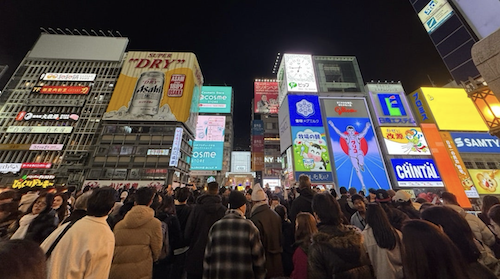
Around Namba, Shinsaibashi, and Dotonbori, the crowds hold steady throughout the day. Suitcases roll out of station exits, hotel check-ins run continuously, and restaurants move through a constant line of customers. At the same time, step a few streets away and the pace softens. Cafés open as usual, local shops run on adjusted hours, and the city feels closer to its everyday self.
The Great Return Home

Homecoming

Across Japan, Golden Week creates one of the few periods in the year when people leave the cities they work in and go back to where they’re from — places tied to family, routine, and memory.


What makes it possible is timing. Work pauses. Schools close. Schedules align. Systems that normally run independently move together, creating a rare window where people can travel at the same time, for the same reason. And once that window opens, the country moves.


The trips themselves are planned with precision. Shinkansen tickets are booked well in advance. Highway routes are checked against traffic forecasts. And before departure, there’s one more essential stop: the purchase of omiyage — regional gifts, carefully chosen and, in practice, expected. Department store food halls and station shops fill with neatly packaged sweets and local specialties, each tied to a place and meant to be shared upon arrival.


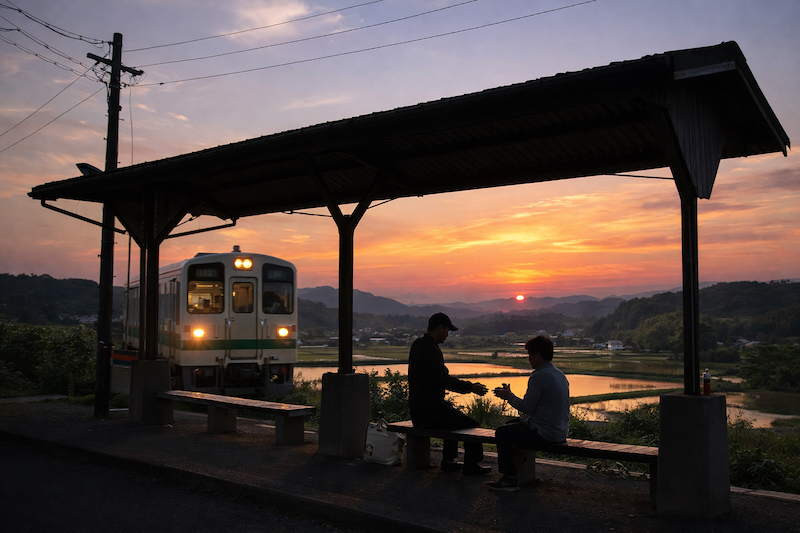
Then the scene changes. The scale compresses. The pace slows. Long platforms and packed commuter lines give way to smaller stations, quieter streets, and in some places, single-car or two-car trains moving through open countryside — the kind of scenes that feel closer to a moment from the well-known anime film Your Name than anything in the city.


At home, families gather. Meals stretch longer. Conversations pick up where they left off. Some visit family graves, a common practice during major holidays. Others simply settle back into familiar routines — local shops, neighborhood walks, the small patterns of daily life that don’t exist in the city.


For many, this return becomes part of a yearly cycle, a moment to reconnect with people and places that remain constant even as work and life continue elsewhere.  And when it ends, the movement reverses. Trains fill again. Highways back up. The city refills. Routine resumes.


But for a few days, the direction changes — and with it, the shape of everyday life.

Golden Week, Day by Day

Shinsekai Tsutenkaku

Showa Day (April 29)

Golden Week begins with Showa Day, a holiday tied to the reign of Emperor Showa — a period that spans pre-war expansion, wartime devastation, and Japan’s post-war recovery.


For most people, though, it marks something more immediate: the start.  It’s the first day the calendar opens up. Travel begins. Bags are packed, tickets are already in hand, and the early wave of movement starts to build.


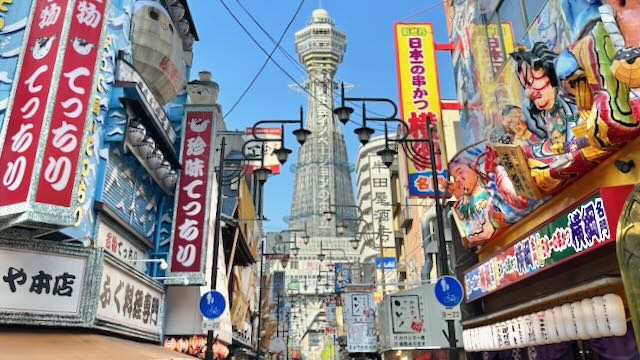
In Osaka, that history doesn’t feel distant. Large parts of the city continue to carry the texture of the Showa era — not as nostalgia, but as something lived in. Underground shopping arcades, neighborhood shotengai, and older entertainment districts all reflect a version of Osaka that developed during that time and never fully disappeared. Even as areas like Umeda have pushed forward, other pockets remain grounded in that earlier rhythm.


Nowhere is that more visible than Shinsekai. With its retro signage, old-school game centers, kushikatsu counters, and the looming presence of Tsutenkaku, the district feels less like a recreation and more like a continuation. It’s one of the few places in the city where the atmosphere still closely reflects the era Showa Day is meant to remember. If there’s a way to experience the meaning of the holiday directly, this is it – walking through a neighborhood that never fully left it behind.

Constitution Memorial Day (May 3)

Observed on the anniversary of Japan’s post-war constitution — first enacted in 1947 — this day is officially about reflection: on governance, rights, and the structure of modern Japan. Unlike other national holidays, there are no large public festivals or city-wide events. Instead, the day tends to pass quietly, marked by occasional lectures, museum exhibitions, and broader conversations about the role the constitution continues to play in Japanese society.


In practice, though, it sits at the center of Golden Week. By this point, the movement has already happened. Trains have emptied into destinations, travel plans are underway, and people have settled into wherever they’re spending the break. The urgency of getting there fades, replaced by something more open-ended – time.


In Osaka, that often shows up in how people use the city. There’s less rush, more lingering. Cafés fill slowly, conversations stretch, and plans feel less fixed. It’s a day that isn’t defined by a specific activity so much as the freedom to choose one.


For a more direct connection to the period that shaped the holiday, spend time at the Osaka Museum of History. Its exhibits trace the city through wartime destruction and into the post-war rebuilding that followed, using large-scale models and immersive displays to show how Osaka transformed during the same era that gave rise to the current constitution. It’s one of the clearest ways to understand not just the document itself, but the world it emerged from.

Greenery Day (May 4)

Greenery Day is dedicated to nature — a holiday meant to appreciate the environment and the natural world. But in practice, it’s also the day when a lot of people realize just how much of the city has quietly gone offline.


By this point in Golden Week, closures are fully in effect. Independent restaurants are on break, neighborhood shops have their shutters down, and even some larger supermarkets adjust hours or close entirely. If you’re staying local, this is often the day you feel it most. So people head outside.

Parks, open spaces, and riverside areas fill early, not because of organized events, but because they remain reliably open. It becomes a day of default gathering — friends meeting in wide spaces, families spreading out on the grass, and groups settling in for long, unstructured afternoons.


In Osaka, that can mean heading out to Expo ’70 Commemorative Park for scale, staying closer to the city at Tenshiba at Tenoji Park, or simply finding a spot along the water in Nakanoshima.


If Golden Week begins with movement and builds through travel, Greenery Day is where it opens up. Find a park. Stay awhile.

Children’s Day (May 5)
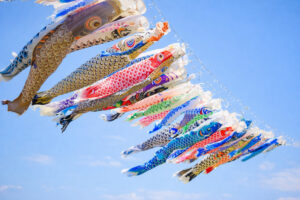
Golden Week closes with Children’s Day, a holiday celebrating the health, happiness, and growth of children. It’s also the most visible of the week.


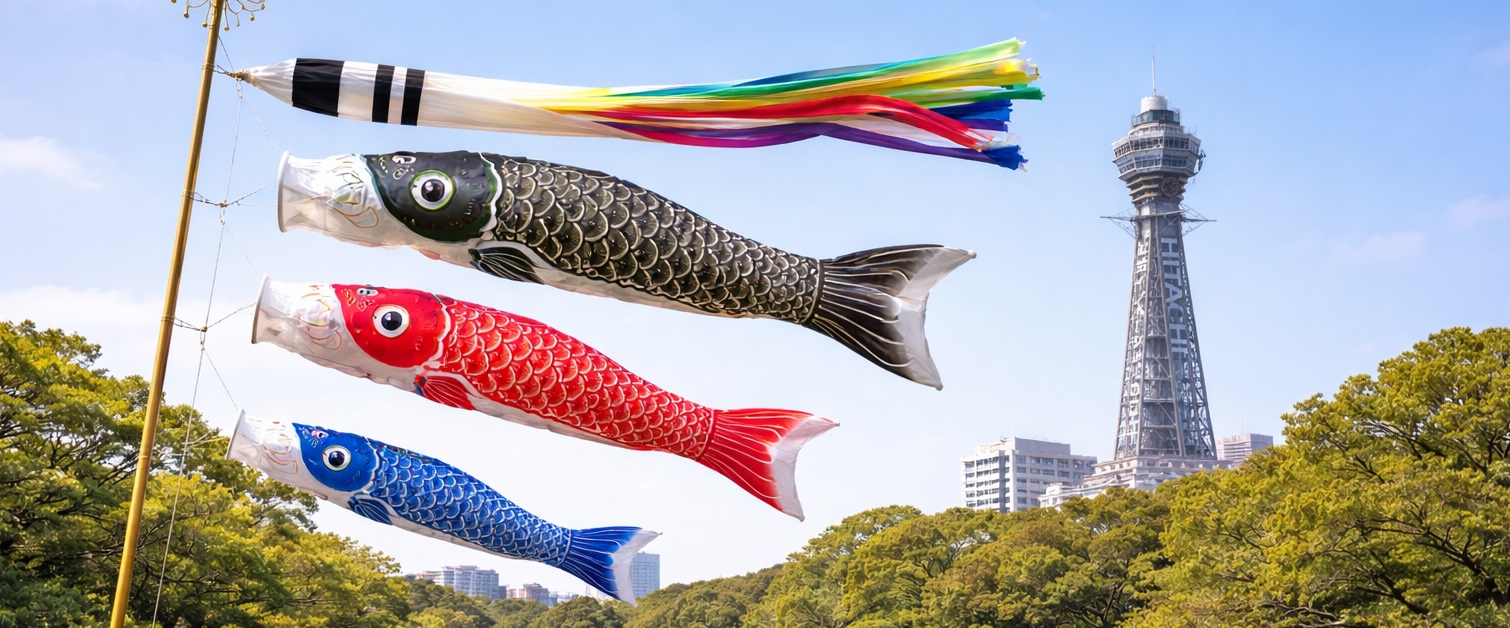
Across the city, carp streamers — koinobori — appear on balconies, outside homes, and strung across open spaces. Designed to resemble koi swimming upstream, they symbolize strength, perseverance, and the hope that children will grow up resilient and successful.


By this point in Golden Week, the pace changes again. There’s a sense that things are winding down. Some people begin preparing to return, others hold onto one last full day off.


Head back outside, and you’ll see it. Parks and open spaces fill with families, kids running freely, and the occasional kite lifting into the air. In Osaka, Tsurumi Ryokuchi Park stands out — wide, open, and well-suited for exactly this kind of day, where there’s space to move and time to stay.


Look up, and you may catch koinobori stretching across the sky, moving with the breeze above the crowds — one of the most recognizable images of the season.


If you prefer to stay indoors, especially with younger children, the Osaka City Children’s Museum offers a more structured way to spend the day, with hands-on exhibits designed around play and learning.  But outside is where the day really lives.

Letting Go — and Leaning Into G.W.'26

Golden Week isn’t just movement, parts of daily life that normally feel fixed simply stop. Post offices close. Banks shut their doors. Government offices go dark. Administrative tasks, errands, and routines that usually anchor the week are no longer available.  That shift — whether intentional or not — is part of the design. Golden Week creates a rare stretch of time where responsibility loosens its grip. What can’t be done today waits. What usually fills the schedule falls away. And in its place, something opens up.


Across the city, Golden Week consistently brings one of the densest stretches of events on the calendar. In 2026, that includes returning favorites like Gyoza Festival, large-scale outdoor programming around Osaka Castle Spring Festival, Frühlingsfest at Tennoji’s Ten-shiba, and food-driven gatherings like The Meat at Nagai Park — all running throughout the Golden Week period and overlapping across the holiday, drawing crowds into open spaces across the city.


Golden Week doesn’t tell you where to go. It removes the reasons not to.

The Big U-Turn

As Golden Week draws to a close, across Japan, what began as an outward movement reverses. The same trains & cars that carried people away now fill again.  It’s a moment so familiar it has its own name in Japanese media: the U-turn rush— the return back to city life.


Suitcases reappear. New gifts are packed. The pace picks up. In Osaka, the rhythm resets. Offices reopen. Commuter lines fill. The quieter pockets of the week give way to the city’s usual energy, as routines slot back into place. But something lingers.


Golden Week doesn’t just interrupt the year — it reframes it. A reminder of where people come from, how they move, and what pulls them back. And then, just as quickly as it began, it’s over.


Until the next return.

THE SCENE: FAQs

ACCESS

For Golden Week access is defined by Japan’s major transportation hubs, which handle the country’s largest annual movement of people.

Shinkansen (Bullet Train) → Shin-Osaka Station (JR Lines, Midosuji Line)

Primary gateway for intercity travel during Golden Week.

  • JR Tokaido & Sanyo Shinkansen stop here

  • Direct connections to Osaka Metro Midosuji Line → Shin-Osaka Station

  • Approx. 10–15 minutes to Umeda / 20 minutes to Namba

  • Expect full trains and limited seat availability — reservations often sell out several days in advance


JR Lines → Osaka Station / Shin-Osaka Station

  • JR Kyoto Line, Kobe Line, Osaka Loop Line connect major Kansai cities

  • Heavy congestion during peak outbound (early GW) and return (“U-turn”) periods

  • Platform crowding begins early morning on peak travel days


Kansai International Airport (KIX)

  • JR Kansai Airport Rapid → Tennoji / Osaka Station

  • Nankai Airport Express / Rapi:t → Namba Station

  • Increased international arrivals during GW

  • Longer immigration and baggage wait times expected


Osaka International Airport (Itami Airport, ITM)

  • Domestic hub for flights across Japan

  • Limousine buses to Umeda, Namba, and Tennoji

  • High domestic traffic volume during peak outbound and return travel days


Highways & Car Travel

  • Meishin, Chuo, and Hanshin Expressways experience significant congestion

  • Travel times can extend several hours beyond normal during peak windows

  • Service areas become part of the experience — crowded but lively

SCHEDULE

Golden Week is a cluster of national holidays that typically falls between late April and early May.

Typical Golden Week Period:

Late April – Early May (varies slightly by year depending on calendar alignment)

Core National Holidays:

  • April 29 — Showa Day (昭和の日)

  • May 3 — Constitution Memorial Day (憲法記念日)

  • May 4 — Greenery Day (みどりの日)

  • May 5 — Children’s Day (こどもの日)


When additional weekdays fall between or adjacent to these holidays, many workers take leave, creating an extended continuous break.

INFO & TIPS

Closures & Reduced Hours


  • Banks, post offices, and government offices are closed on national holidays

  • Some locally owned restaurants, shops, and services close for multiple consecutive days

  • Even supermarkets and neighborhood businesses may operate on reduced schedules


Reservations Are Essential


  • Shinkansen reserved seats sell out quickly — book as early as possible

  • Hotels in major areas (Namba, Shinsaibashi, Umeda) reach high occupancy

  • Popular attractions and restaurants may require advance booking


Expect Two Different Osakas


  • Business districts become quieter as offices close

  • Tourist areas remain busy or become more crowded due to inbound visitors

  • Step away from main areas and the city can feel noticeably calmer


Transportation Strategy


  • Travel early in the morning or late in the evening to avoid peak congestion

  • Use IC cards (ICOCA, Suica) to avoid ticket line delays

  • Allow extra time for all transfers and connections


The “U-turn Rush” (Uターンラッシュ)


  • Final days of Golden Week see a nationwide return to major cities

  • Trains, airports, and highways reach peak congestion levels

  • Plan return travel carefully — this is often the most crowded period


Embrace the Shift

Golden Week is one of the few times in the year when Japan moves together — work pauses, routines reset, and people return home. Expect disruption, but also a unique window into how the country operates beyond its usual daily rhythm.

VIDEO

Osaka Scene Staff
Guide by Osaka Scene Staff
Photos & Art: Osaka Scene Staff

You may also be interested in:

Screenshot

April Sounds: Legends, K-Pop and Electronic Legacy

Golden Week Koi

Golden Week in Osaka: Why the City Empties — and Where Everyone Goes

Beer Fests Magazine Hero Ctr

Osaka Beer Festival Season: A Citywide Guide to Craft Beer

Also read:

Countdown_Dotonbori

Osaka Crowned the World’s No.1 Trending Destination

ad

Also read:

Screenshot

April Sounds: Legends, K-Pop and Electronic Legacy

Osaka Scene: GUIDES

GSportsuideCover

Osaka Sports Guide

March Cover

March 2026

CastleGuideCover

Osaka Castle

AprilCover

April 2026

MozuFest3
COMING SOON!

Festival Guide

Guide Cover

May 2026

Biwa2
COMING SOON!

Fireworks

Displays & Festivals

What can I do TODAY in Osaka?

Instagram Facebook

Updated Daily

Company

  • About us
  • Submit an Event
  • Advertise with Us
  • Disclosure

Contact Us

  • Email: mail@osakascene.com
2026 © Osaka Scene. All rights reserved.
Log in Sign Up
Forgot your password? Reset password.

Sending login info,please wait...

Sending info,please wait...

Back to login

Sending register info,please wait...

Back to Registration
  • Anime & Manga Scene
  • Art Scene
  • Arts & Crafts Scene
  • Autumn Scene
  • Craft Beer Scene
  • Culture Scene
  • Event Scene
  • Expo Scene
  • Fashion Scene
  • Festival Scene
  • Fireworks Scene
  • Food & Drink Scene
  • History Scene
  • Holiday Scene
  • Illumination Scene
  • Kaiju Scene
  • Kids Scene
  • Market Scene
  • Motor Scene
  • Movie Scene
  • Museum Scene
  • Music Scene
  • Neighborhood Scene
  • Outdoor Scene
  • Sakura Scene
  • Shopping Scene
  • Sports Scene
  • The Game Scene
  • Theater Scene
  • Tour Scene
  • Travel Scene