Osaka’s Summer Finale at Sumiyoshi Taisha
For three days each summer, Sumiyoshi Taisha becomes one of Osaka’s largest matsuri grounds. Food stalls, dragon dances, purification rituals, and a dramatic mikoshi procession draw hundreds of thousands of visitors to the shrine before a two-ton portable shrine begins its sacred journey toward Sakai.
As Osaka’s summer festival season reaches its climax, hundreds of thousands of visitors make their way to Sumiyoshi Taisha for one of the city’s most important annual traditions. Sumiyoshi Matsuri combines ancient purification rituals, lively festival atmosphere, and one of the region’s most impressive mikoshi processions into a three-day celebration that attracts approximately 300,000 visitors.
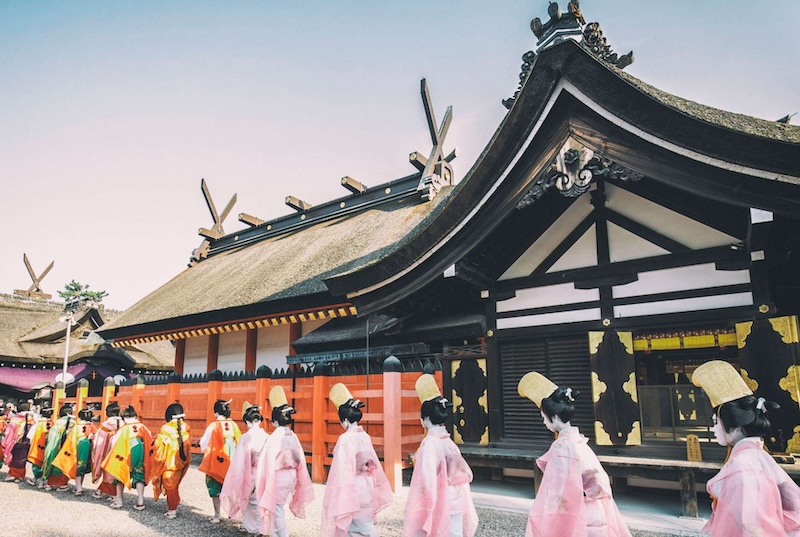
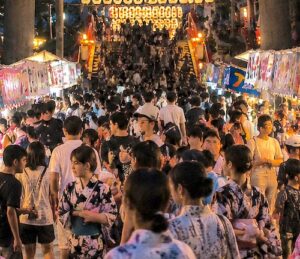 The festival begins on July 30 with Yoimiya, when the grounds of Sumiyoshi Taisha and the surrounding approaches come alive with food stalls, festival drumming, dragon dances, and evening crowds dressed in summer yukata. Around the shrine and its approaches, rows of vendors create the atmosphere of a classic Japanese matsuri, transforming one of Japan’s most important shrines into one of Osaka’s busiest summer gathering places.
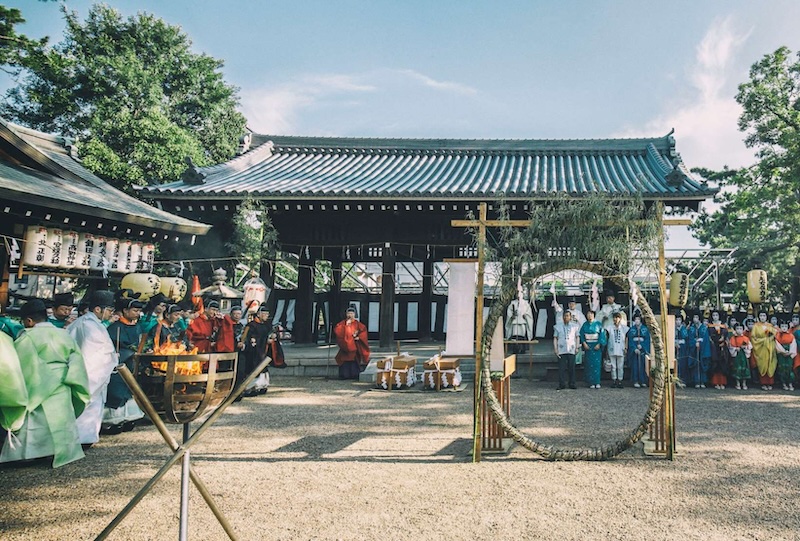
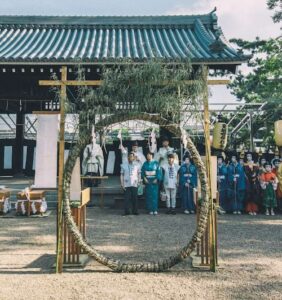 July 31 shifts attention toward the festival’s religious heart. The Nagoshi Harai purification rites and associated ceremonies draw worshippers and visitors alike, while the shrine grounds remain filled with festival energy. One of the most distinctive sights is the passage through giant chinowa grass rings, a traditional purification ritual that symbolizes leaving misfortune behind and entering the second half of the year with renewed spirit.
Throughout the festival, visitors find far more than religious ceremonies. Approximately 300 food stalls and festival vendors appear across the three-day event, creating a lively environment of food, games, and community activity. Families explore the grounds, friends gather beneath the shrine’s ancient trees, and visitors enjoy the rare combination of a major matsuri atmosphere set within one of Japan’s most historically significant shrine precincts.
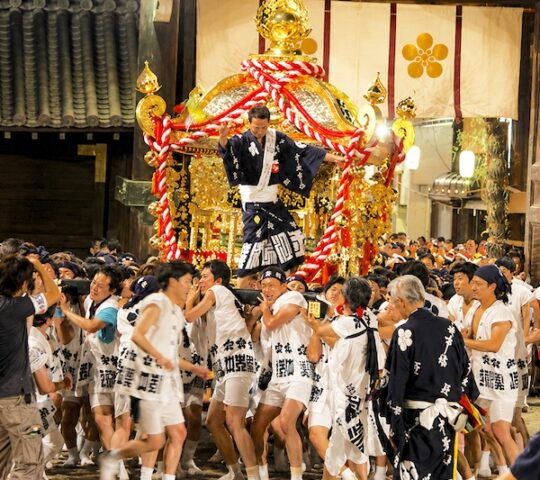
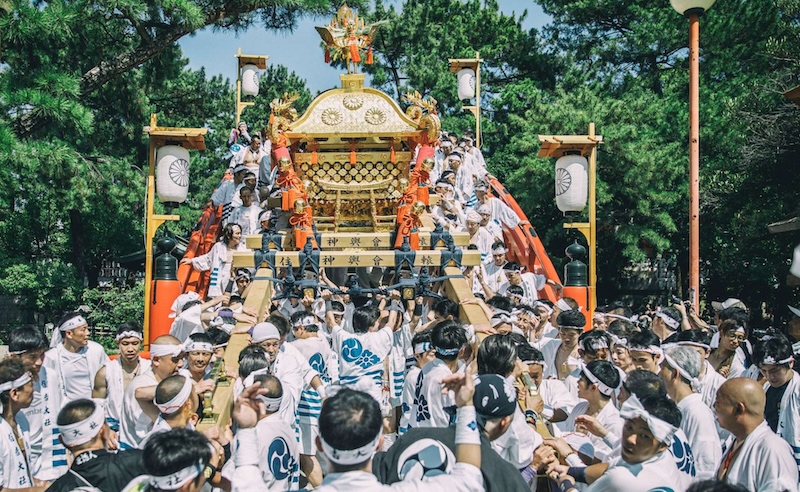
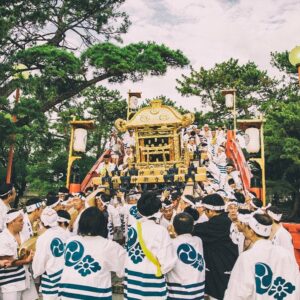 The festival reaches its climax on August 1 with the Mikoshi Togyo procession. The deity is transferred into a massive portable shrine weighing approximately two tons and carried by teams of participants through the streets. One of the most famous moments occurs as the mikoshi crosses Sumiyoshi Taisha’s iconic Sorihashi Bridge, creating one of the defining images of Osaka’s summer festival season.
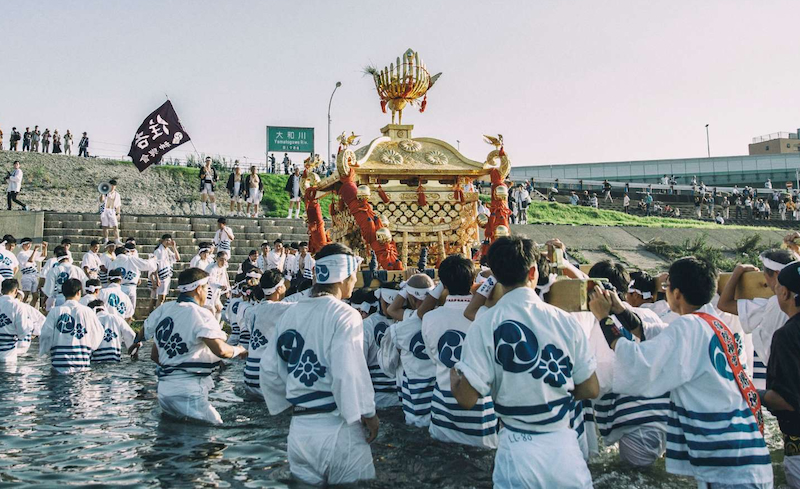
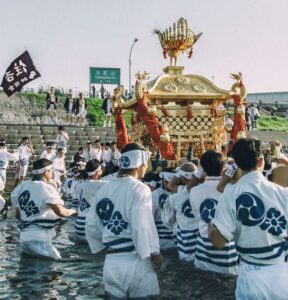 From there, the procession continues south toward Sakai. The crossing of the Yamato River remains one of the festival’s most dramatic traditions, marking the beginning of a sacred journey to Shukuin Tongū. Crowds gather to witness the procession as it moves beyond the shrine grounds and into the wider community, transforming the festival from a local celebration into a regional event linking Osaka and Sakai through centuries-old tradition.
What makes Sumiyoshi Matsuri special is its combination of scale and meaning. Visitors can spend hours enjoying festival food, traditional performances, and the bustling atmosphere of one of Osaka’s largest matsuri. At the same time, the festival remains rooted in rituals that have shaped the spiritual life of the city for generations. It is both a summer celebration and a living tradition, making it one of the most distinctive festival experiences in Osaka.

 Summer’s Grand Finale – Experience the festival that traditionally closes Osaka’s summer matsuri season.
Three Hundred Stalls – Food vendors, games, and festival treats fill the shrine grounds and approaches.
Walk Through Purification – Witness the Nagoshi Harai rites and the passage through giant chinowa grass rings.
Bridge Crossing Moment – Watch the two-ton mikoshi cross Sumiyoshi Taisha’s iconic Sorihashi Bridge.
Journey to Sakai – Follow a centuries-old procession from the shrine toward Shukuin Tongu.
Yukata Night Magic – Join thousands of visitors enjoying one of Osaka’s great summer festival atmospheres.
Photos: Sumiyoshi Taisha, Osaka Scene
Maps
Contact
Opening Hours
THE SCENE: FAQ’s
ACCESS
Venue
Sumiyoshi Taisha
Address
2-9-89 Sumiyoshi, Sumiyoshi-ku, Osaka 558-0045
Nearest Stations
Nankai Main Line → Sumiyoshi Taisha Station (Exit 1)
Exit the station and walk west toward the shrine. Approximately 3 minutes on foot.
Hankai Tramway Hankai Line → Sumiyoshi Torii-mae Station
Immediately adjacent to the main entrance of Sumiyoshi Taisha.
Nankai Koya Line → Sumiyoshi Higashi Station (Exit 1)
Approximately 5 minutes on foot to the shrine grounds.
From Central Osaka
Osaka Metro Midosuji Line → Namba Station
Transfer to the Nankai Main Line for Sumiyoshi Taisha Station.
Osaka Metro Yotsubashi Line → Tamade Station (Exit 1)
Approximately 10 minutes on foot to Sumiyoshi Taisha.
Large crowds are expected throughout the festival, particularly on August 1 during the Mikoshi Togyo procession. Public transportation is strongly recommended.
SCHEDULE
July 30
Yoimiya Festival (Eve Festival)
From Afternoon
Festival vendors begin operating around Sumiyoshi Taisha and its surrounding approaches. Visitors can explore food stalls, festival games, and the growing matsuri atmosphere.
Evening (Official Yoimiya Events from approximately 8:00 PM)
The festival officially begins with Yoimiya celebrations.
Highlights traditionally include:
- Festival drumming
- Dragon dances
- Shrine ceremonies
- Evening matsuri atmosphere
- Food stalls and festival vendors
This is one of the best evenings for visitors who want to enjoy the festival atmosphere, yukata crowds, and food stalls without the larger crowds of August 1.
July 31
Reitaisai & Nagoshi Harai
Afternoon
Festival stalls, food vendors, and matsuri activities continue throughout the shrine grounds and surrounding streets.
5:00 PM (Official Ceremony Time)
The Nagoshi Harai purification rites begin.
Highlights include:
- Reitaisai (Annual Festival Ceremony)
- Traditional processions
- Ceremonial participants in formal attire
- Passage through the giant chinowa grass rings
- Public purification rituals
The chinowa ceremony is one of the festival's most distinctive traditions and symbolizes leaving misfortune behind before entering the latter half of the year.
Evening
Festival activities continue around the shrine precincts following the ceremonies.
August 1
Mikoshi Togyo (Main Festival Day)
Afternoon
The festival reaches its climax with the Mikoshi Togyo procession.
The deity is transferred into a portable shrine weighing approximately two tons before beginning its journey toward Sakai.
Major highlights include:
- Departure from Sumiyoshi Taisha
- Crossing of the Sorihashi Bridge
- Procession through local streets
- Crossing of the Yamato River
- Journey toward Shukuin Tongu in Sakai
Late Afternoon to Evening
Crowds gather along portions of the procession route as the mikoshi continues its sacred journey.
The atmosphere combines the energy of a major matsuri with one of Osaka's most important annual religious traditions.
Throughout the Festival
Visitors can enjoy:
- Approximately 300 food stalls and festival vendors
- Traditional performances
- Festival games
- Shrine ceremonies
- Yukata-clad festival crowds
- One of Osaka's largest summer matsuri atmospheres
Some procession timings may vary and should be considered approximate until final official schedules are released.
ADMISSION
Admission: Free
Visitors may enter Sumiyoshi Taisha, enjoy the festival grounds, watch public ceremonies, experience the food stall areas, and observe the Mikoshi Togyo procession without charge.
Food & Festival Vendors
Food, drinks, games, and merchandise sold by festival vendors are individually priced.
Approximately 300 stalls and festival vendors are expected across the three-day festival period.
Reserved Seating
There are no public reserved seating areas for the festival.
Most visitors enjoy the ceremonies, shrine grounds, and procession from public viewing locations.
Special Participation
Attendance does not require advance registration.
Certain ceremonial roles or mikoshi-carrying opportunities may require advance application through Sumiyoshi Taisha or associated organizations.
Best Value
Because admission is free, visitors can experience as much or as little of the festival as they like. Many people spend several hours exploring the food stalls, shrine grounds, and evening festival atmosphere before watching the major ceremonies or procession events.
THE EXPERIENCE
Arrive in the late afternoon and you’ll find Sumiyoshi Taisha transformed from a historic shrine into one of Osaka’s largest summer matsuri grounds. Food stalls line the approaches, families gather beneath the trees, and visitors in yukata fill the pathways leading toward the shrine.
Expect:
- Approximately 300 food stalls and festival vendors
- Dragon dances and festival drumming during Yoimiya
- Traditional purification ceremonies and giant chinowa grass rings
- One of Osaka’s most atmospheric summer shrine festivals
- The dramatic crossing of Sorihashi Bridge by a two-ton mikoshi
- A sacred procession continuing from Osaka toward Sakai
- A mix of locals, worshippers, photographers, and festival-goers
Unlike Tenjin Matsuri, where much of the experience centers on watching a procession or fireworks spectacle, Sumiyoshi Matsuri rewards wandering. Spend time exploring the shrine grounds, sampling festival food, watching ceremonies unfold, and following the changing atmosphere as each day builds toward its main events.
INFO & TIPS
Arriving in the late afternoon provides the best balance between exploring the food stalls, enjoying the festival atmosphere, and seeing the major ceremonies or procession events.
July 30 is ideal for visitors primarily interested in food stalls, yukata crowds, dragon dances, and classic summer matsuri atmosphere. August 1 is the best day for those hoping to experience the Mikoshi Togyo procession and the festival's largest crowds.
The food stall areas can become extremely busy during the evening hours, particularly around the shrine approaches. Visitors hoping to sample popular vendors may wish to arrive before peak dinner time.
Photographers should consider visiting on multiple days. The giant chinowa grass rings and purification ceremonies on July 31 provide unique cultural subjects, while August 1 offers the most dramatic procession photography, including the crossing of Sorihashi Bridge.
Summer temperatures in Osaka are typically hot and humid. Bring water, sun protection, and comfortable walking shoes, especially if planning to follow portions of the procession route on August 1.
Public transportation is strongly recommended. Nankai Railway, the Hankai Tramway, and Osaka Metro all provide convenient access, while road closures, crowd controls, and limited parking can be expected throughout the festival period.
Visitors interested in the religious aspects of the festival should spend time exploring Sumiyoshi Taisha itself. As one of Japan's most important shrines, the grounds remain an attraction in their own right, even beyond the festival activities
Official Contacts
Sumiyoshi Taisha
Phone: 06-6672-0753
Official Website:
https://www.sumiyoshitaisha.net/en/rituals.html
Official Instagram:
@sumiyoshitaisha_shrine
Visitors should consult the shrine directly for ceremony updates, participation information, weather-related changes, and the latest festival announcements.