
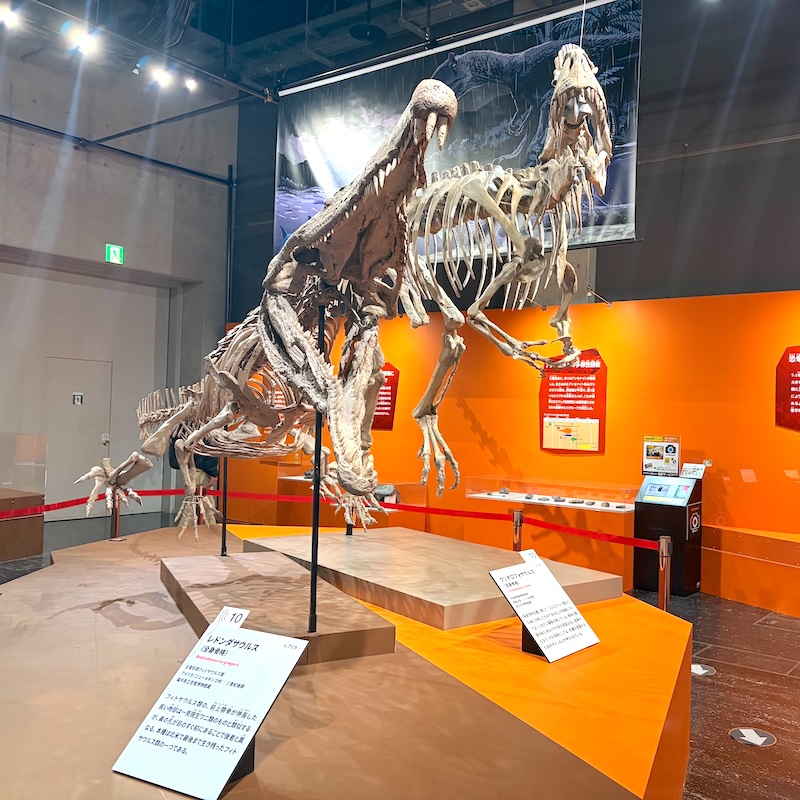
Beyond the Dinosaurs
Towering dinosaur skeletons, giant prehistoric sea predators, rare fossils from around the world, and a world-premiere skeleton reveal how life on Earth came frighteningly close to disappearing—and somehow found a way to begin again.
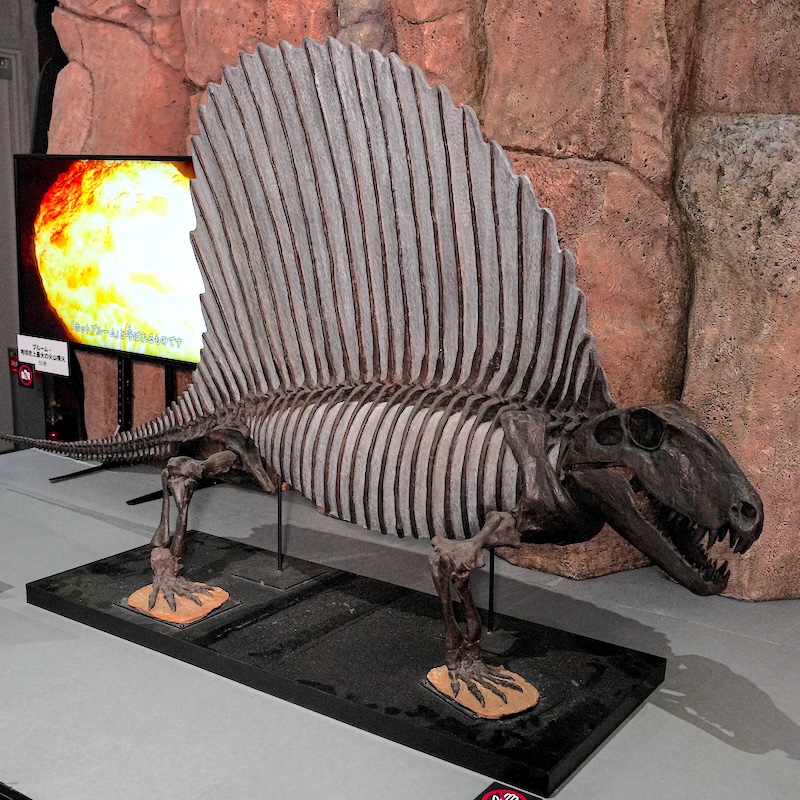
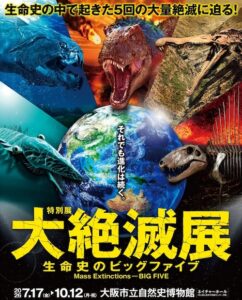 For nearly four billion years, life on Earth has endured the unimaginable. Known as “The Big Five,” five mass extinctions wiped out most life on the planet, forever changing the course of evolution. From July 17 through October 12, Mass Extinctions – BIG FIVE at the Osaka Museum of Natural History brings those dramatic turning points to life through towering dinosaur skeletons, spectacular fossils, life-size scientific reconstructions, and rare discoveries from around the world.
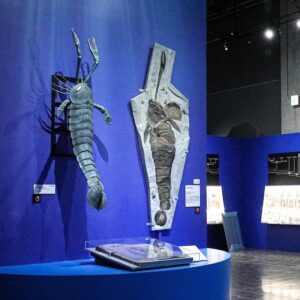 The journey begins long before dinosaurs ruled the planet. Visitors come face-to-face with bizarre prehistoric sea creatures including Anomalocaris, the two-meter-long Aegirocassis, giant sea scorpions, and the fearsome armored fish Dunkleosteus, revealing an Earth unlike anything alive today. As each extinction unfolds, the exhibition explains not only what disappeared—but why a handful of survivors inherited the planet and forever changed the course of life.
Real fossils, skeletal mounts, life-size scientific reconstructions, and ancient geological evidence reveal the science behind Earth’s greatest extinctions. Volcanic rocks, ancient seabeds, and extinction boundary layers show how researchers reconstructed events separated from us by hundreds of millions of years, while rare specimens from the Denver Museum of Nature & Science and newly unveiled research bring some of the latest discoveries to Japan.
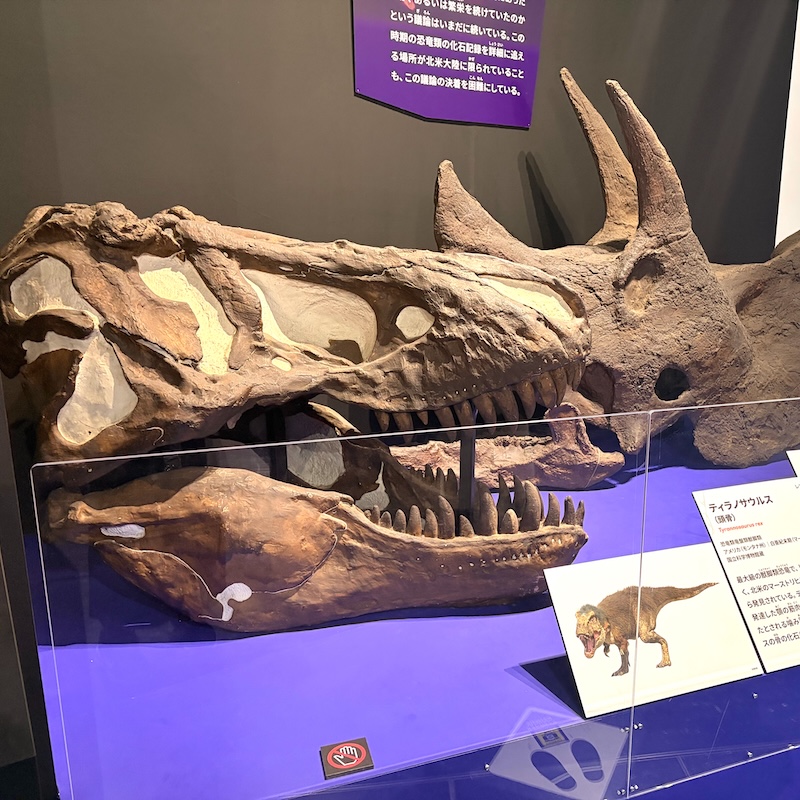
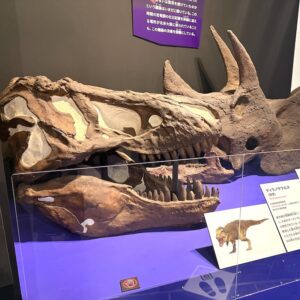
 Dinosaurs take center stage in the later galleries, where skeletons of Tyrannosaurus, Triceratops, Cryolophosaurus, and the crocodile-like Redondasaurus illustrate both the rise and fall of these prehistoric giants. The exhibition explains how volcanic eruptions, climate change, and finally an asteroid impact reshaped the planet, creating new ecological opportunities that ultimately changed the future of life on Earth.
 Some of the exhibition’s greatest treasures are the ones few visitors have ever seen. Among them is the first public exhibition of a complete fossil skeleton of Steller’s sea cow, a gentle marine mammal stretching nearly six meters (20 feet) in length that survived until the 18th century before becoming extinct. Together with rare fossils from Japan and overseas, the exhibition reminds visitors that extinction isn’t just ancient history—it’s part of an ongoing story of survival, adaptation, and change.
BIG FIVE becomes a story of resilience, showing how every catastrophe reshaped life on Earth—and how every new beginning created the world that followed.

 Stand Beneath Prehistoric Giants – Come face-to-face with towering dinosaur skeletons.
Meet Earth’s Strangest Creatures – Discover bizarre sea monsters that lived long before dinosaurs.
See a World-Premiere Fossil – See the first public display of a complete Steller’s sea cow skeleton.
Follow the Science – Learn how fossils and ancient rocks reveal Earth’s greatest extinctions.
Witness Life’s Greatest Comeback – Discover how each mass extinction gave rise to a new world.
Photos: Osaka Museum of Natural History official website & Instagram
Maps
Contact
Opening Hours
THE SCENE: FAQ’s
ACCESS
Venue
Osaka Museum of Natural History (Nature Hall)
Address
1-23 Nagai Park, Higashi-Sumiyoshi-ku, Osaka 546-0034
Nearest Stations
Osaka Metro Midosuji Line → Nagai Station (Exit 3)
Walk approximately 8 minutes (800 m) east through Nagai Park to the Nature Hall.
JR Hanwa Line → Nagai Station (East Exit)
Walk approximately 10 minutes (1 km) east through Nagai Park.
From Central Osaka
Osaka Metro Midosuji Line → Nagai Station
Direct from Shin-Osaka, Umeda, Namba, or Tennoji, then walk approximately 8 minutes through Nagai Park.
JR Osaka Loop Line → Tennoji Station
Transfer ⮕ JR Hanwa Line → Nagai Station, then walk approximately 10 minutes to the museum.
By Bus
Osaka City Bus Route 4 → Nagai Higashi
Osaka City Bus Route 24 → Nagai Higashi 2
Both bus stops are a short walk from the Nature Hall.
SCHEDULE
Exhibition Dates
July 17 – October 12, 2026
Opening Hours
09:30–17:00
Last Admission
16:30
Closed
Mondays
Holiday Schedule
- August 3: Open
- August 10: Open
- If Monday falls on a national holiday, the museum is open and closes the following weekday instead.
Featured Throughout the Exhibition
- The Big Five mass extinction galleries
- Towering dinosaur skeletons and prehistoric marine life
- World-premiere display of the complete Steller's sea cow fossil skeleton
- Masaharu Fukuyama audio guide and photography exhibition Voices of Life, Songs of the Earth
TICKETS
Same-Day Admission
Adults: ¥2,000
High School & University Students: ¥1,500
Elementary & Junior High School Students: ¥700
Preschool Children: Free
Advance Admission
Adults: ¥1,800
High School & University Students: ¥1,300
Elementary & Junior High School Students: ¥500
Advance ticket sales ended on July 16, 2026.
Included with Admission
Admission includes same-day entry to the Osaka Museum of Natural History's permanent exhibition galleries.
Audio Guide
Venue Rental: ¥650
Smartphone App: ¥800
Narrated by Masaharu Fukuyama, with bonus content available in the app version.
Ticket Notes
- High school and university students must present valid student ID.
- Visitors with qualifying disability certificates (and eligible accompanying guests) receive discounted or complimentary admission in accordance with the museum's policy.
- Tickets cannot be changed, refunded, or reissued after purchase.
- During busy periods, timed entry or numbered admission tickets may be introduced to manage visitor flow.
THE EXPERIENCE
Mass Extinctions – BIG FIVE takes visitors on a journey through nearly four billion years of Earth's history, revealing how life repeatedly survived catastrophe and evolved into entirely new worlds. Through real fossils, towering skeletons, scientific reconstructions, and immersive displays, the exhibition transforms one of science's greatest stories into an unforgettable experience.
Visitors can expect to:
- Stand beneath towering dinosaur skeletons.
- Discover bizarre prehistoric sea creatures that lived before the dinosaurs.
- See real fossils and rare specimens from museums around the world.
- View the first public exhibition of a complete Steller's sea cow fossil skeleton.
- Learn how fossils, rocks, and geological evidence reveal Earth's greatest extinctions.
- Explore the optional audio guide and Masaharu Fukuyama's special photography exhibition.
- Discover how life recovered after each of Earth's five great mass extinctions.
INFO & TIPS
The exhibition follows Earth's evolutionary history chronologically, so plan to experience the galleries in order for the story to unfold from the earliest oceans to the rise of mammals and the modern world.
- Allow 90–120 minutes to fully experience the exhibition.
- Admission includes the Osaka Museum of Natural History's permanent galleries, making it easy to spend several hours at the museum.
- The optional Masaharu Fukuyama audio guide adds additional scientific and historical context.
- The museum is located inside Nagai Park, with gardens, cafés, and walking paths nearby.
- Coin lockers are available at Osaka Metro Nagai Station, JR Nagai Station, and inside the museum for small personal belongings.
- Weekday mornings are generally the quietest time to visit.
- Photography policies may vary by gallery and exhibit. Please follow all posted signage and staff instructions.
Contact
Osaka Museum of Natural History
Phone: +81 6-6697-6221
Website: https://omnh.jp/
Mass Extinctions – BIG FIVE
Website: https://daizetsumetsu.jp/
Official Instagram
https://www.instagram.com/osaka_museum_natural_history/