Shitennoji Flea Market
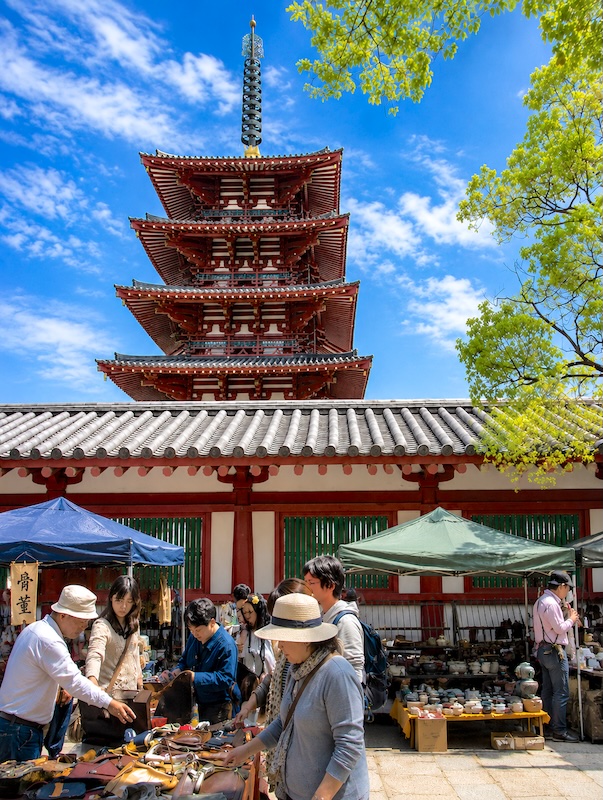
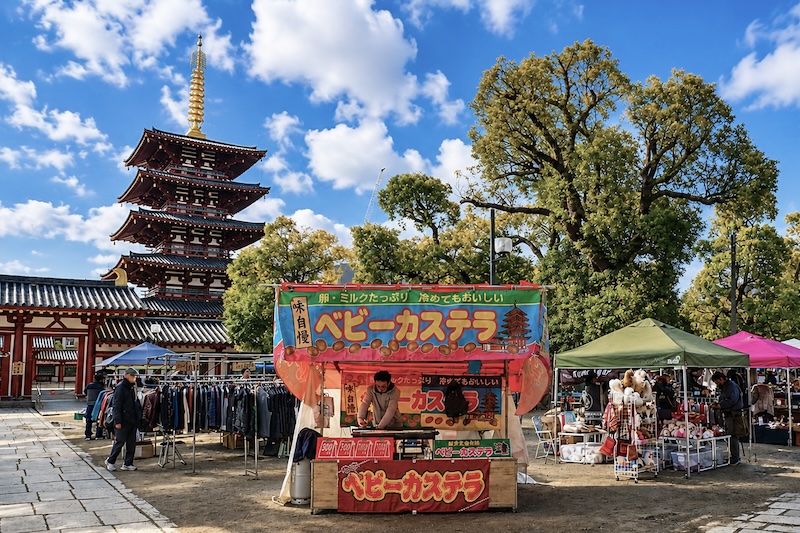
Two days each month, one of Japan’s oldest Buddhist temples transforms into one of Osaka’s most fascinating treasure hunts. Antique dealers, collectors, food vendors, and curious visitors gather beneath the shadow of Shitennoji’s iconic five-story pagoda for a market that blends religious tradition, local culture, and bargain hunting in a way few places can match.
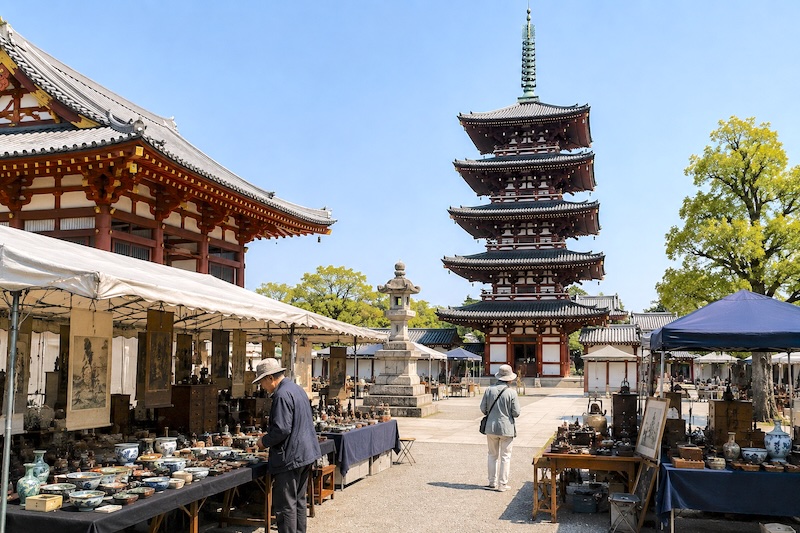
 At first glance, the Shitennoji Flea Market feels like one of Osaka’s largest antique markets. Held within the grounds of historic Shitennoji Temple in Tennoji, the monthly gathering brings together antique dealers, collectors, food vendors, and curious visitors beneath the shadow of one of Osaka’s most recognizable five-story pagodas. Rows of stalls spread across the temple grounds selling ceramics, vintage clothing, collectibles, old books, tools, tea utensils, household goods, and countless objects whose stories have long outlived their original owners. Around 300 vendors are commonly reported to participate, creating a sprawling marketplace that attracts collectors, photographers, bargain hunters, and curious travelers from across the Kansai region.
What makes the market unique, however, is that it is not simply a flea market held at a temple. The market exists because of Shitennoji’s monthly religious observances. On the 21st, the temple holds Daishi-e, a memorial observance dedicated to Kobo Daishi (Kukai), the founder of Shingon Buddhism. On the 22nd, Taishi-e honors Prince Shotoku, the founder of Shitennoji and one of the most important figures in Japanese Buddhism. These observances are held on the 21st and 22nd of every month, which is why the market follows the same schedule year-round.
The setting elevates the experience beyond shopping. Established in 593 by Prince Shotoku, Shitennoji is widely regarded as Japan’s first officially administered Buddhist temple. Market stalls spread across grounds surrounded by historic architecture, temple gates, and one of Osaka’s most recognizable pagodas. On the 21st and 22nd, the temple’s central garan is opened free of charge, allowing visitors to combine browsing and sightseeing in a single visit.
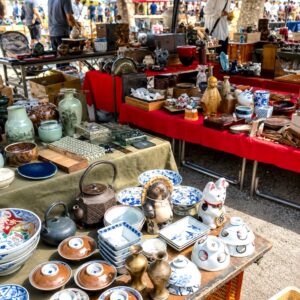 For many visitors, the appeal lies in the thrill of discovery. One stall may be selling hand-painted ceramics, while the next offers vintage kimono, antique furniture hardware, calligraphy tools, or boxes of old photographs. Experienced collectors often arrive early in the morning, while casual visitors spend hours simply wandering and seeing what catches their eye. No two visits are exactly alike because inventory changes from month to month.
Official temple materials describe food stalls, everyday goods vendors, and antique sellers as part of the monthly market atmosphere. The result is a gathering that feels both commercial and cultural. Long-time regulars browse familiar stalls, first-time visitors hunt for souvenirs and treasures, and temple visitors move between the market and the historic grounds throughout the day.
For travelers seeking something beyond Osaka’s major landmarks, the Shitennoji Flea Market offers a different perspective on the city. It is part shopping trip, part cultural experience, and part living religious tradition. Whether you leave with a rare antique, a vintage kimono, or simply a camera full of photographs, you’ll have experienced one of Osaka’s most enduring monthly gatherings.

 Treasure Hunting Awaits – Browse antiques, ceramics, collectibles, books, vintage goods, and unexpected finds from hundreds of vendors.
Rooted In Tradition – Experience a market that grew from monthly Buddhist observances that continue today.
Pagoda Backdrop – Shop beneath one of Osaka’s most recognizable historic landmarks.
Something Different Every Month – Inventory changes constantly, making every visit unique.
More Than A Market – Combine shopping, temple sightseeing, and local culture in a single visit.
Photos: Shitennoji Official Website
Maps
Opening Hours
THE SCENE: FAQ’s
ACCESS
Venue
Shitennoji Temple
1-11-18 Shitennoji, Tennoji-ku, Osaka 543-0051
Nearest Station
Osaka Metro Tanimachi Line → Shitennoji-mae Yuhigaoka Station
- Exit 4
- Approximately 5 minutes on foot to the temple grounds
Secondary Access
JR Osaka Loop Line → Tennoji Station
- Approximately 12–15 minutes on foot
Osaka Metro Midosuji Line → Tennoji Station
- Approximately 12–15 minutes on foot
From Namba
- Osaka Metro Midosuji Line → Namba Station
- Travel directly to Tennoji Station
- Walk approximately 12–15 minutes to Shitennoji Temple
From Umeda
- Osaka Metro Tanimachi Line → Higashi-Umeda Station
- Travel directly to Shitennoji-mae Yuhigaoka Station
- Exit 4 and walk approximately 5 minutes
From Shin-Osaka
- Osaka Metro Midosuji Line → Shin-Osaka Station
- Travel directly to Tennoji Station
- Walk approximately 12–15 minutes to the temple
SCHEDULE
Regular Market Days
- Held every month on the 21st and 22nd
21st — Daishi-e
- Monthly memorial observance for Kobo Daishi (Kukai), founder of Shingon Buddhism
- Often referred to locally as “O-Daishi-san”
22nd — Taishi-e
- Monthly memorial observance for Prince Shotoku
- Commemorates the founder of Shitennoji Temple
Typical Market Hours
- Most vendors begin operating around 8:30am
- Trading generally continues through mid-to-late afternoon
- Individual vendor hours vary
Upcoming Market Dates
- June 21–22, 2026
ADMISSION
Admission
- Free
Temple Grounds
- Visitors may freely enter the market area and temple grounds.
Central Garan
- The central garan is opened free of charge during the monthly observance days.
Shopping
- Individual vendors set their own prices.
- Cash is recommended, as payment methods vary between vendors.
INFO & TIPS
What You’ll Find
Antiques & Collectibles
- Ceramics
- Tea utensils
- Antique household goods
- Vintage tools
- Collectibles
- Old books
Vintage Fashion
- Kimono
- Traditional textiles
- Second-hand clothing
Food & Everyday Goods
- Food stalls
- Snacks
- Daily necessities
- Household items
Changing Inventory
- Vendor offerings vary each month.
- No two visits are exactly the same.
Best Time To Visit
Early morning generally offers the best selection before popular items are purchased.
Who Enjoys This Market?
- Antique collectors
- Photographers
- Vintage enthusiasts
- Temple visitors
- Travelers looking for a local Osaka experience
Photography
The market and temple grounds are highly photogenic. Visitors should remain respectful of worshippers, ceremonies, and temple activities.
Weather
Most market activity takes place outdoors. Comfortable walking shoes, water, sun protection, or rain gear are recommended depending on conditions.
Temple Sightseeing
Market days provide an opportunity to explore one of Japan’s oldest Buddhist temples while browsing one of Osaka’s largest regular temple markets.
Contacts
Official Website
https://www.shitennoji.or.jp/
Monthly Events Information
https://www.shitennoji.or.jp/event/