Hydrangeas begin to appear across Osaka in the final weeks of May, building toward full bloom in June. Here’s where to see them first—and where the season settles in.
By late May, Osaka has already moved beyond the energy of cherry blossom season. The crowds ease, the air grows heavier, and the city begins to shift into a quieter rhythm. Rain starts to come in cycles—steady in the morning, easing by afternoon—and the greenery deepens almost overnight.
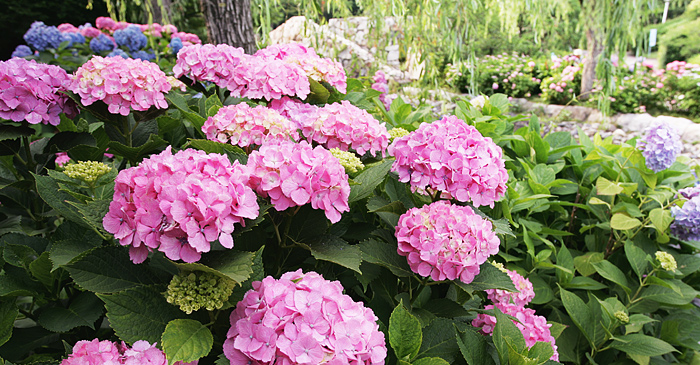
Hydrangeas begin to appear during this stretch. Early blooms open toward the end of the month, with color building day by day ahead of the June peak. You won’t find them all at once, and rarely in one sweeping view. You find them along shaded paths, beside temple steps, and in park corners where the ground stays damp.
That slower pace defines the season. Plans matter less. A short walk can turn into something memorable when the timing lines up—the light soft, the pavement still wet, a cluster of blooms catching your eye just as the clouds begin to lift.
A Different Kind of Bloom –
Why Hydrangeas Matter in Japan
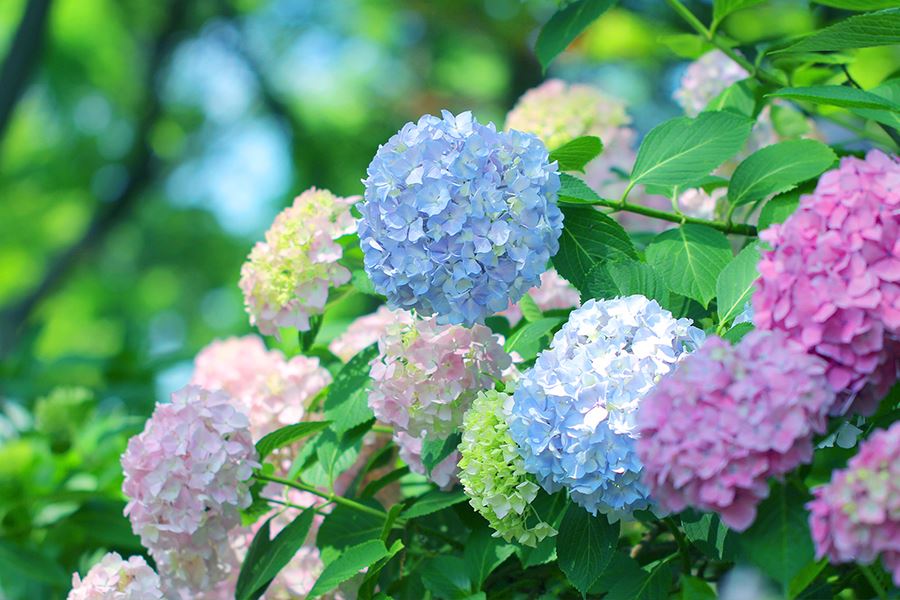
Known as ajisai (紫陽花) in Japanese, hydrangeas are closely tied to tsuyu (梅雨), Japan’s rainy season. Their colors shift with the soil, moving between blue, violet, and pink, a trait that has long linked them to change and subtle emotional shifts.
In everyday life, their presence is felt through the atmosphere. They belong to this specific moment in the year, when the air is still, sound softens, and colors appear more saturated under overcast skies.
They’re also well suited to these conditions. Rain deepens their appearance — petals hold droplets, leaves darken, and even gray light brings out their depth. The weather becomes part of the experience.
The Best Hydrangea Spots in Osaka
#1 Kyuan-ji Temple —
The One Worth the Trip
Set in the hills of Ikeda, about 30–40 minutes from Umeda via the Hankyu Takarazuka Line to Ikeda Station, Kyuan-ji Temple draws visitors each late may through June for one of the most concentrated hydrangea displays in Osaka Prefecture. A short bus or taxi ride from the station brings you to the temple entrance, where the setting immediately shifts to a quieter, wooded landscape.
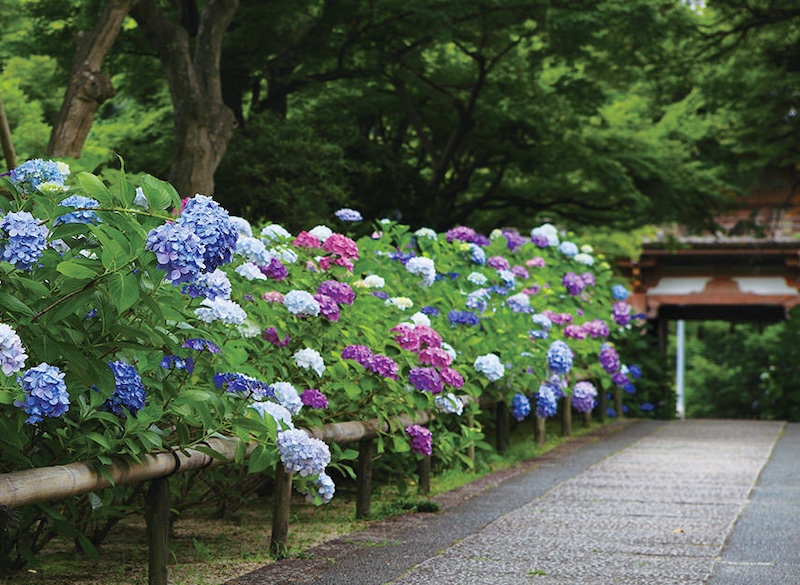
Hydrangeas are planted throughout the grounds in a way that follows the terrain. Stone paths, steps, and sloped walkways guide you through clusters that build in density as you move deeper into the temple. Shade from surrounding trees helps the blooms hold their color, creating rich blues and purples that stay vivid even under overcast skies.
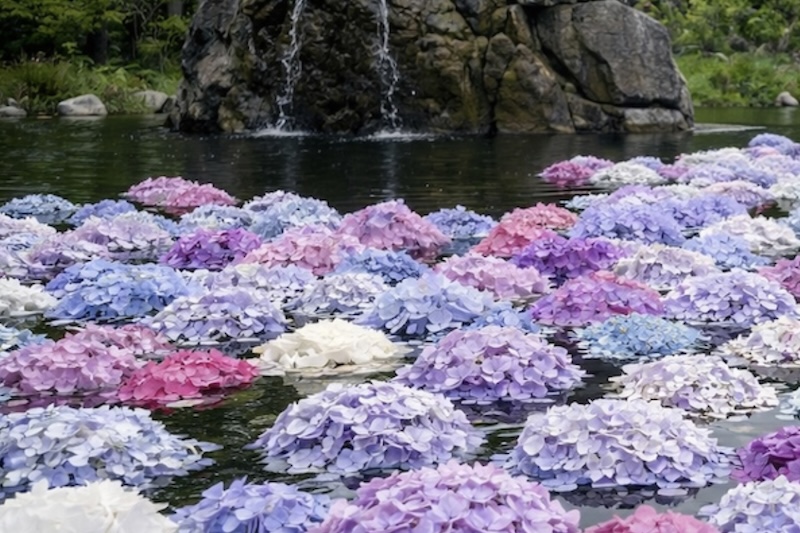
The temple’s centerpiece is the floating hydrangea display, arranged inside a large stone water basin. Freshly cut blooms are placed tightly across the surface, forming a layered mosaic of color that changes subtly as the flowers are replaced throughout the season. Visitors gather here for photos, and the detail holds up at close range—the variation in petal tones, the way water beads across the surface, and the stillness of the setting.
Kyuan-ji’s reputation has grown through consistent seasonal coverage and strong visibility across Japanese social media, where the floating display appears each year as one of the defining hydrangea images in the Kansai region. It remains the most recognized hydrangea destination within Osaka Prefecture.The combination of scale, layout, and seasonal preparation makes the trip worthwhile.
#2 Nagai Botanical Garden —
The City’s Most Reliable Bloom
Located inside Nagai Park, just 10–15 minutes from Tennoji via the Osaka Metro Midosuji Line (Nagai Station), Nagai Botanical Garden offers one of the most accessible hydrangea experiences in the city. From the station exit, it’s a short walk straight into the park and through to the garden entrance.
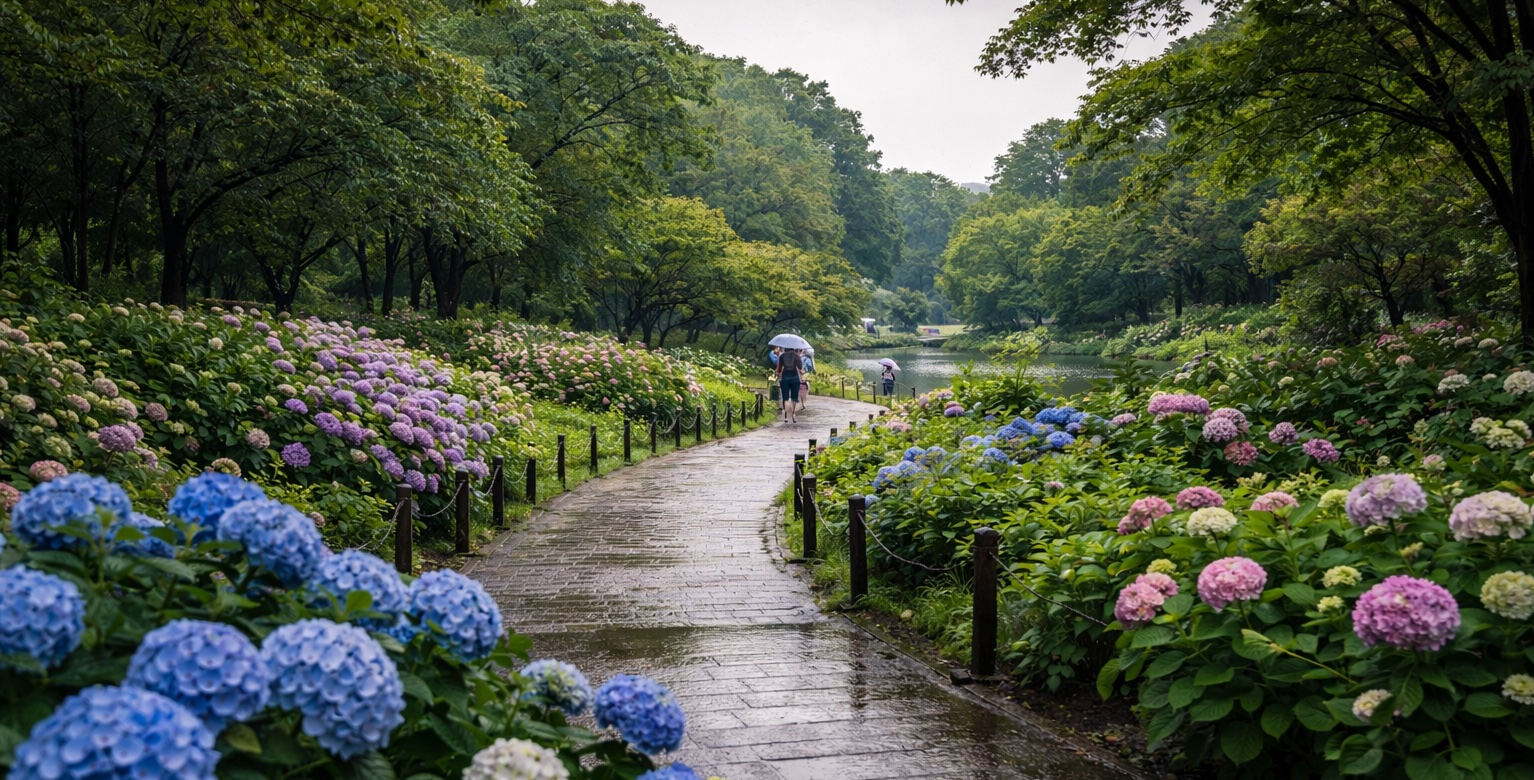
Inside, walking paths guide you through clusters planted at eye level, making them easy to enjoy and photograph. The planting is dense enough to feel immersive, especially in the shaded areas where the colors deepen and hold throughout the day.
The setting is open and relaxed. Wide paths, benches, and long sightlines give you space to move at your own pace. You can stop wherever you like, take photos without feeling rushed. The experience flows naturally, whether you’re there for 30 minutes or a couple of hours.
The garden’s strength comes from how reliably it delivers. The blooms are maintained, the paths are clear, and the overall presentation stays consistent year to year. Visitors don’t need perfect timing to enjoy it—the hydrangeas are distributed in a way that keeps the garden looking full throughout the peak period. It’s a place you can reach easily from anywhere in the city, and leave feeling like you saw exactly what you came for.
#3 Expo ’70 Commemorative Park —
Hydrangeas as Part of the Day
Located in Suita, about 30–40 minutes from central Osaka via the Osaka Monorail at Banpaku-Kinen-Koen Station, Expo ’70 Commemorative Park offers one of the most expansive seasonal landscapes in the region, with hydrangeas appearing across multiple areas of the park from late May through June.
The main concentration is in the Ajisai no Mori (Hydrangea Forest), where walking paths move through dense plantings under tree cover. Additional clusters appear throughout the Natural and Cultural Gardens, creating a broader viewing experience that unfolds over distance across the park. The scale allows visitors to encounter hydrangeas repeatedly throughout the day, with changing light and surroundings shaping how they’re experienced.
Seasonal signage and official updates highlight bloom conditions, and in some years, the park schedules nature walks and guided programs that include hydrangea viewing. These are typically held on select dates and vary each year, so checking the official schedule in advance is recommended.
What defines Expo ’70 Park during this season is how much else is happening at the same time. Visitors combine hydrangea viewing with time on the lawns, casual picnics, and weekend food stalls, while major attractions like the Tower of the Sun remain open for interior visits with advance tickets. Museums within the park, including the National Museum of Ethnology, add another layer to the experience.
This creates a visit that extends well beyond flower viewing. Hydrangeas are part of the day’s rhythm—appearing between destinations, along walking routes, and within longer stretches of time spent outdoors. The result is a seasonal experience that feels expansive, flexible, and easy to build into a full day.
Across Osaka, smaller clusters of hydrangeas appear in parks and neighborhood green spaces. In places like Hattori Ryokuchi, Tsurumi Ryokuchi, and sections of Utsubo Park, the flowers are part of the scenery rather than the main draw—something you notice while passing through rather than a reason to plan a trip.
Hydrangea season moves at its own pace. Some of the best moments come unexpectedly. A break in the rain, a quiet path, a cluster of color against darkened leaves. In Osaka, this season rewards attention more than urgency. Once you adjust to that rhythm, you start to see the city in a different color.
THE SCENE: FAQs
KYUAN-JI TEMPLE (IKEDA)
Access & Directions
Kyuan-ji Temple
Address: 697 Fushiocho, Ikeda, Osaka
Hankyu Takarazuka Line → Ikeda Station
From Ikeda Station, take a Hankyu bus bound for Fushio Onsen (伏尾温泉方面) and get off at “Kyuan-ji” (久安寺) stop (approx. 15–20 minutes). From the bus stop, it’s a short 5-minute walk to the temple entrance.
Taxi from Ikeda Station takes approximately 10–15 minutes.
Schedule
Hydrangeas at Kyuan-ji typically bloom from early to mid-June, with peak conditions usually falling around mid-June depending on rainfall and temperature.
The floating hydrangea basin display is arranged during peak bloom and maintained throughout the season, with flowers refreshed regularly.
Temple grounds are generally open during daylight hours (approx. 9:00–17:00).
Tickets & Admission
Admission to Kyuan-ji Temple is free.
Visitors may encounter donation boxes near the entrance or within the grounds.
No advance tickets or reservations are required.
Info & Tips
Paths include stone steps and uneven surfaces—wear appropriate footwear, especially after rain.
The floating hydrangea display is most crowded midday; visit earlier or later for a quieter experience.
Rain enhances the colors and atmosphere—overcast or light rain conditions are ideal for photography.
Contacts
Official website (Japanese): Not officially provided
General information is limited; access details are best confirmed via Hankyu Bus schedules.