Every June 14, one of Japan’s most important agricultural rituals transforms Sumiyoshi Taisha into a living stage of music, dance, prayer, and rice planting. Watch oxen pull a wooden plow through a sacred field, shrine maidens perform ancient dances, and thousands gather for a ceremony that has connected Osaka to its agricultural roots for centuries.
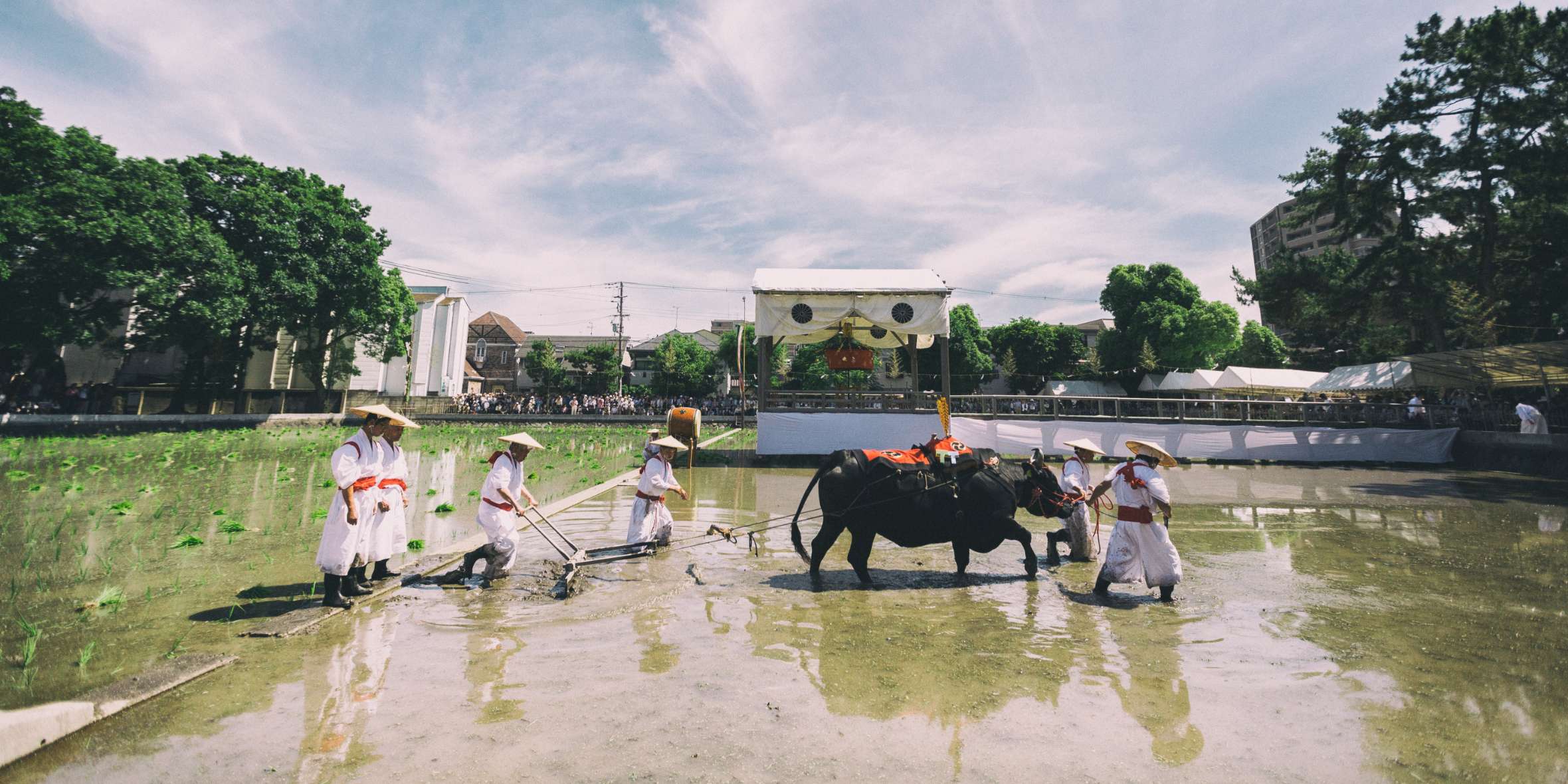
Watching oxen pull a wooden plow through a rice field may not sound like something you’d do in Osaka. Yet every June 14, that’s exactly what happens at Sumiyoshi Taisha.
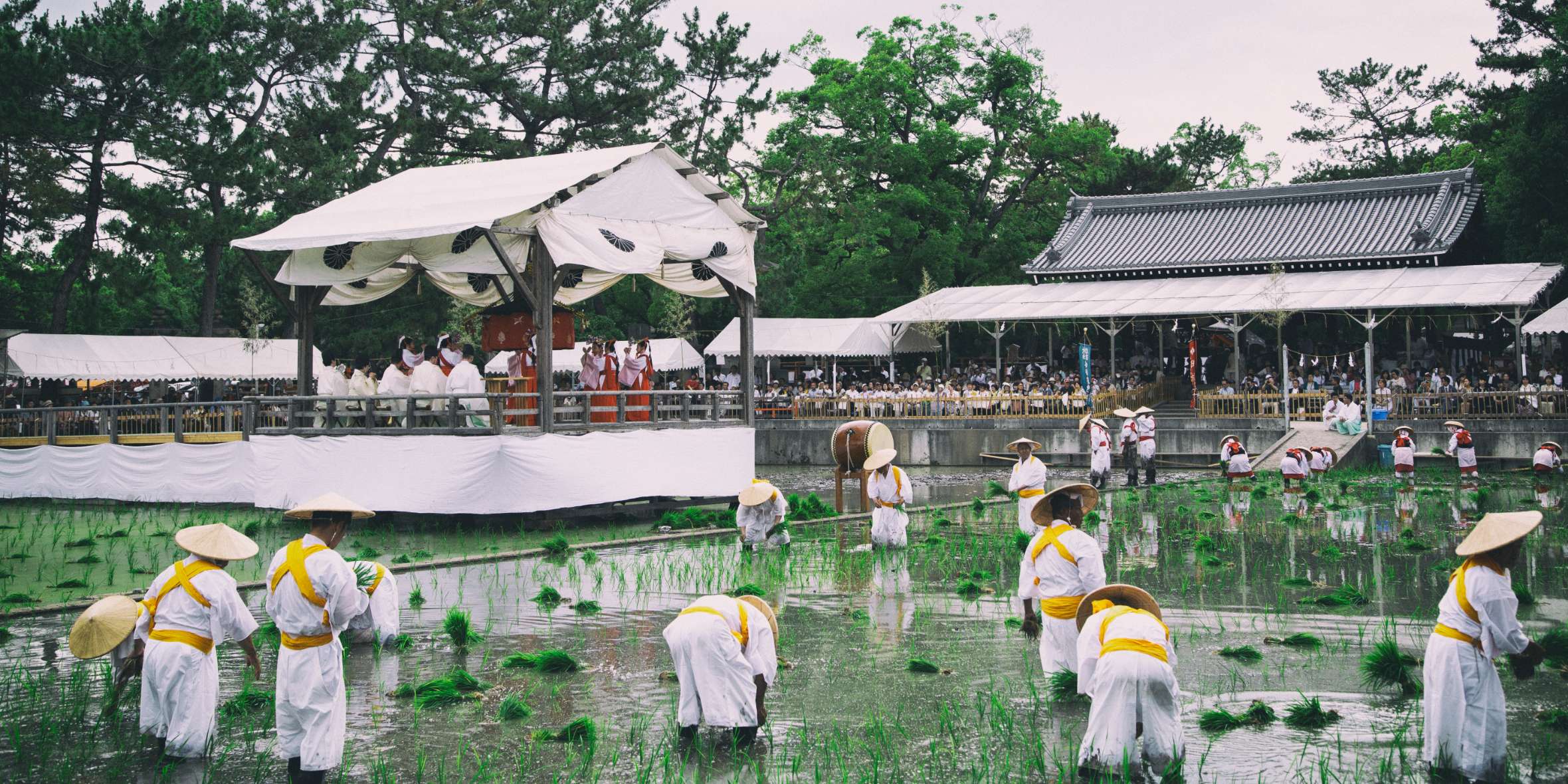
While much of the city rushes through another Sunday afternoon of shopping, sightseeing, and train transfers, a sacred rice field tucked beside one of Japan’s oldest shrines becomes the center of one of the country’s most important agricultural ceremonies. Priests gather. Musicians prepare their instruments. Shrine maidens take their places. Dancers and ceremonial participants assemble beneath the early summer sky. Then the ritual begins.
Known as Otaue Shinji, the Sacred Rice Planting Festival is one of Japan’s best-known rice-planting ceremonies and has been designated an Important Intangible Folk Cultural Property. Recent ceremonies have attracted roughly 2,000 to 3,000 spectators, including a growing number of international visitors, all drawn by the chance to witness a tradition that continues to serve its original purpose: praying for a successful harvest and prosperity in the season ahead.
What makes Otaue Shinji so compelling is that it is not a historical reenactment. The sacred rice field remains an active part of the shrine’s agricultural cycle. The planting carried out during the ceremony is real. The prayers are real. The rituals are real. Visitors are not watching actors recreate the past. They are witnessing a tradition that continues to live in the present.
Why Rice Became Sacred
To understand why thousands gather to watch rice being planted, it helps to understand the relationship between rice and religion in Japan.
For centuries, rice was far more than a staple food. It was the foundation of prosperity, survival, and community life. Across Japan, the agricultural calendar became intertwined with Shinto practice. Planting ceremonies prayed for healthy crops. Harvest festivals offered thanks for the results. Communities gathered around rituals that marked the changing seasons and the fortunes of the year ahead.
Otaue Shinji survives as one of the country’s most important examples of that tradition. In 1979, the ceremony was designated an Important Intangible Folk Cultural Property of Japan in recognition of the remarkable way it preserves a complete agricultural ritual, including music, dance, processions, planting ceremonies, and associated performances.
Unlike many traditions that survive primarily as cultural demonstrations, Otaue Shinji remains connected to an active sacred field and an ongoing cycle of seasonal observances. That connection gives the event a distinctive atmosphere. Nothing feels staged for tourists. Everything serves a purpose.
A Sacred Field In The Middle Of Osaka
According to shrine tradition, Otaue Shinji traces its origins to AD 211, when the legendary Empress Jingū is said to have established a sacred rice field dedicated to the shrine’s deities and invited specially trained planting maidens to tend it. Whether viewed as history, legend, or a blend of both, the remarkable reality is that a sacred rice field remains at the heart of the ceremony today.
Hidden just southwest of the main shrine grounds, the paddy feels worlds away from the surrounding city. The contrast is striking. Beyond the shrine, trains continue running on schedule and traffic moves through southern Osaka. Inside the grounds, attention focuses on a patch of earth where centuries of tradition still unfold. The ceremony does not take place in a remote village or mountain valley. It happens in one of Japan’s largest cities. That makes what follows feel even more extraordinary.
What You’ll Actually Experience
Visitors hoping to follow the full ceremony should plan to arrive before the official 1:00 p.m. start. The atmosphere begins changing well before the opening rituals as spectators gather around the sacred field and participants prepare throughout the shrine grounds.
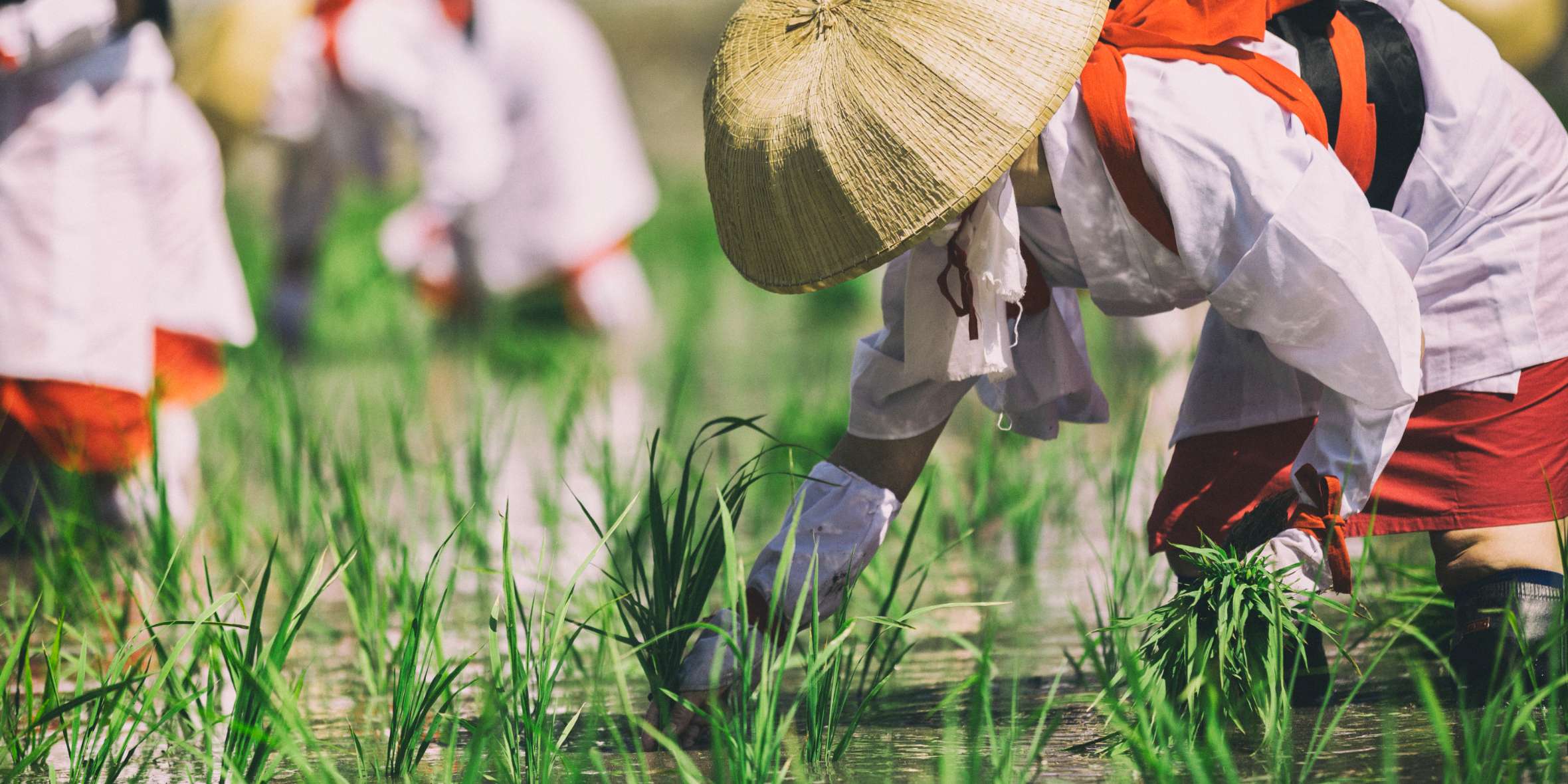
The opening rituals bring together priests, shrine officials, musicians, planting maidens, dancers, and ceremonial participants dressed in colorful traditional attire. Purification rites establish the sacred nature of the event before attention shifts toward the rice field itself. One of the most memorable moments comes when the field is ceremonially prepared. Oxen pull a traditional wooden plow across the paddy, creating a scene that feels almost impossible to reconcile with modern Osaka. It is one of those rare sights that causes cameras to rise and conversations to stop.
As the ceremony progresses, music and dance surround the field. Traditional songs drift across the grounds. Ceremonial performances unfold beside the paddy. The pace is deliberate, inviting visitors to slow down and absorb details that would be easy to miss elsewhere.
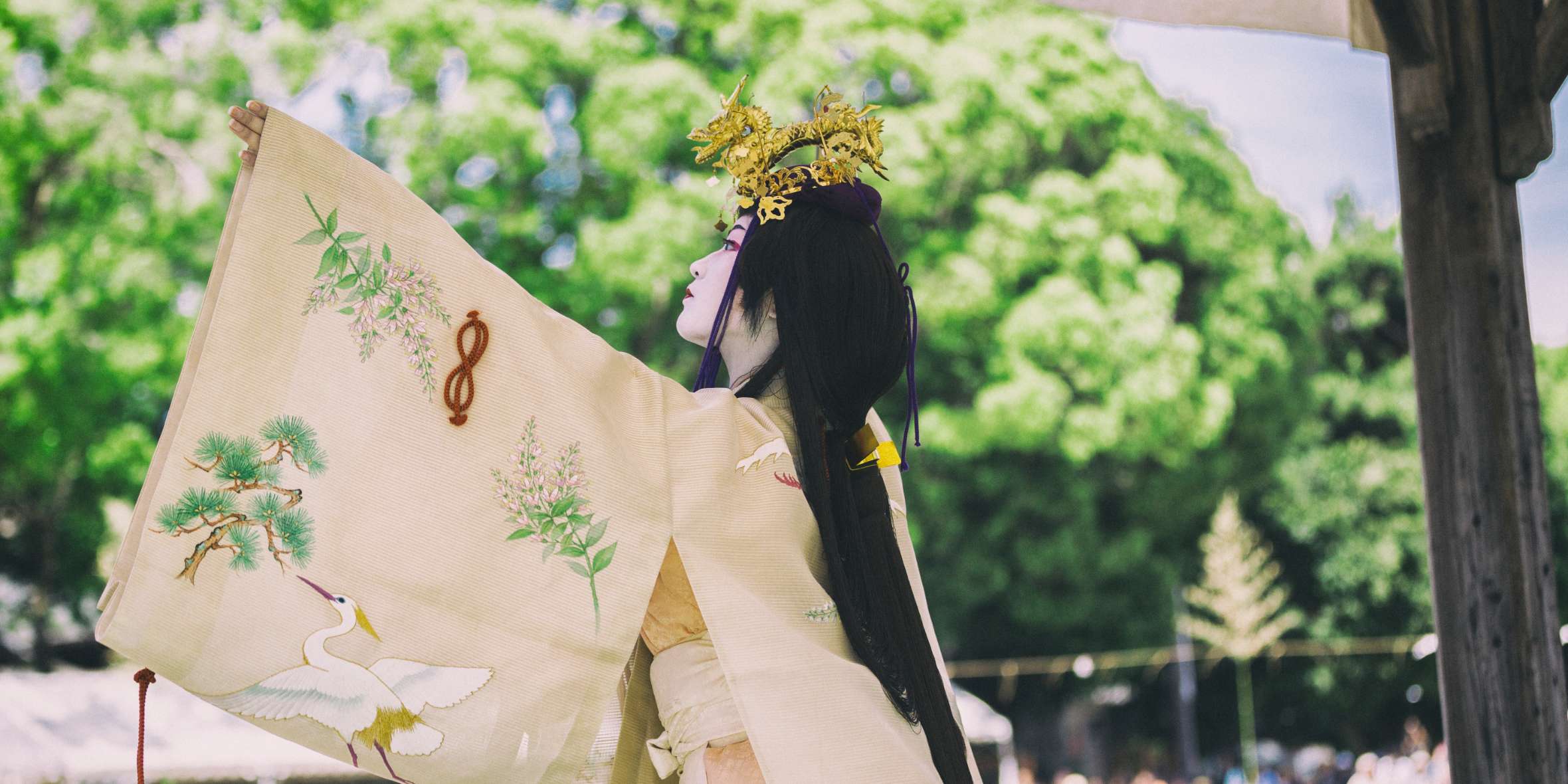
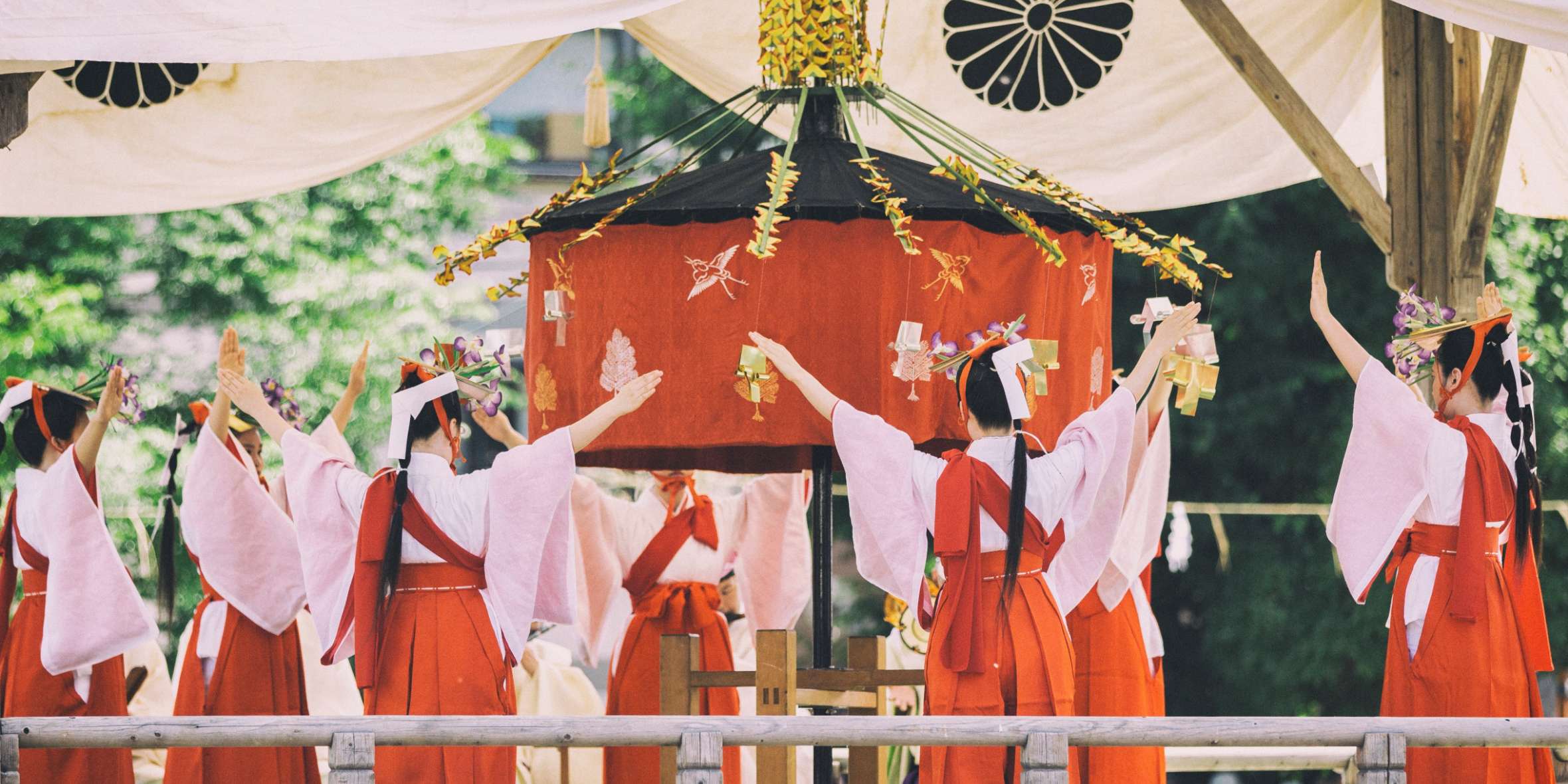
Among the visual highlights is the celebrated Yaotome dance, performed by eight ceremonial maidens. Their graceful movements are among the most photographed moments of the afternoon and remain one of the defining images of the festival.
The role of women in the ceremony has a long history. During the Edo period, many planting maidens came from nearby Sakai and became known for their accomplishments in music and dance. Contemporary accounts describe some participants as highly regarded performers, reflecting the close relationship between ritual, music, and performance that has long been part of Otaue Shinji.
Then, traditional warrior performances introduce a burst of energy and drama. The contrast between elegant dances and martial displays surprises many first-time visitors and offers a glimpse into how deeply connected religion, agriculture, community, and performance once were within Japanese society.
Eventually, attention turns toward the heart of the ritual. Blessed rice seedlings are brought to the field and handed to planting participants. As the first seedlings enter the sacred paddy, the purpose behind the entire afternoon becomes clear. Music continues. Ceremonies continue. Dances continue. Yet everything now centers on the simple act of planting rice for the season ahead.
What makes Otaue Shinji unusual is that it constantly changes. Just as one ceremony concludes, another begins. Dancers give way to musicians. Musicians give way to warrior displays. Warrior displays give way to planting rites. The result is an event that quietly holds attention far longer than many visitors expect.
As the planting nears completion, the famous Sumiyoshi Odori brings additional movement and celebration to the field. By then, many spectators who planned to stay for only a few minutes find themselves still watching.
Why You Should Go
Despite its deep cultural roots, Otaue Shinji remains surprisingly accessible for international visitors. Much of the experience is visual. No Japanese-language explanation is necessary to appreciate the sight of oxen crossing a sacred field, shrine maidens performing ceremonial dances, musicians playing traditional instruments, or rice being planted as it has been for generations.
Photographers will find extraordinary subjects throughout the afternoon. Cultural travelers will discover one of Japan’s most important surviving agricultural rituals. Families will encounter a colorful and engaging event unlike anything else on Osaka’s annual calendar.
And perhaps most importantly, visitors will experience a side of Osaka that many never realize exists. By the time the final dances conclude and the newly planted rice stands in the sacred field, the sounds of trains and city traffic beyond the shrine grounds begin to return. Modern Osaka comes back into focus.
Yet for a few hours, one of Japan’s largest cities has paused to continue a tradition rooted in prayer, agriculture, and community. It is a reminder that beneath Osaka’s modern skyline lies a much older story—one that is still being written every June.
The Otaue Shinji ceremony takes place within the shrine grounds, centering on the sacred rice field (御田) located southwest of the main shrine buildings.
Nankai Main Line → Sumiyoshi Taisha Station Approx. 3-minute walk.
Nankai Koya Line → Sumiyoshi Higashi Station Approx. 5-minute walk.
Hankai Tramway Hankai Line → Sumiyoshi Torii-mae Station Immediately adjacent to the shrine entrance.
From Namba: Nankai Main Line → Sumiyoshi Taisha Station (approx. 10 minutes).
From Osaka/Umeda: JR Osaka Loop Line → Shin-Imamiya Station → Nankai Main Line → Sumiyoshi Taisha Station.
Parking is available at Sumiyoshi Taisha, but public transportation is strongly recommended due to festival-day crowds.
SCHEDULE
Date: June 14, 2026
Official Start Time: 1:00 p.m.
The shrine does not publish a detailed public timetable for individual performances. Visitors should expect ceremonies, dances, music, warrior displays, and rice-planting rituals to continue throughout the afternoon.
Ceremony Highlights
Purification rites
Processions involving shrine officials and participants
Ceremonial preparation of the sacred rice field
Traditional oxen plowing using a wooden plow
Yaotome dance by ceremonial maidens
Traditional music and dance performances
Warrior displays
Sacred rice planting
Sumiyoshi Odori
Visitors hoping to experience the full ceremony should arrive before the 1:00 p.m. start.
TICKETS
General Admission: Free
Paid viewing seating has historically been offered for Otaue Shinji.
Advance reservations are not required for general attendance.
INFO & TIPS
The ceremony is highly visual and accessible for international visitors, even without Japanese-language ability.
June afternoons in Osaka can be hot and humid. Visitors are encouraged to bring water, sun protection, and comfortable footwear.
Photography is generally popular throughout the event. Visitors should remain outside restricted areas and follow instructions from shrine staff.
Recent ceremonies have attracted approximately 2,000–3,000 spectators. Arriving early is recommended for the best viewing opportunities.
Families are welcome, and the combination of costumes, music, dances, and ceremonial performances makes the event appealing to visitors of all ages.
Most viewing areas are outdoors within the shrine grounds. Visitors with accessibility requirements should contact the shrine directly prior to attending.
For updates regarding viewing arrangements, accessibility, or weather-related changes, visitors should consult the shrine directly prior to the event.
This is the format that aligns with your current OSAKA SCENE workflow: section-based, information-dense, no Q&A phrasing, and easy for WordPress readers to scan.