Osaka Art & Design 2026
From public art and guided architecture tours to department store installations, Osaka Art & Design 2026 turns the city into a multi-week design experience with real places to explore across Umeda, Shinsaibashi, Namba, and beyond.
 For nearly a month, from May 27 to June 23, 2026, Osaka stops behaving like a typical city and starts acting like a distributed gallery. Osaka Art & Design 2026 unfolds across multiple central districts, placing exhibitions, installations, and design projects directly inside the spaces people already move through—department stores, train hubs, galleries, and public plazas. Instead of a single venue, the event invites you to explore Osaka itself as the exhibition.
The structure is intentionally embedded. Major retail anchors like Hankyu Umeda and Daimaru Shinsaibashi host large-scale visual installations in prominent public-facing spaces, while Osaka Station’s rooftop plaza transforms into a long-running outdoor installation zone with extended hours. These are not hidden gallery shows—they are placed in high-traffic environments where design meets everyday movement.
 Several standout works give you immediate entry points. At Hankyu Umeda, artist Yuichi Hirako’s “NON NATURE” occupies the concourse window space, while Daimaru Shinsaibashi’s street-level window becomes part of the “HITOMASU” art museum project featuring multiple international artists. At Osaka Station’s Toki-no-hiroba Plaza, “PICTURE BOOK PARK” runs from early morning to late night, making it one of the most accessible installations in the entire program.
Public space plays a major role this year. At Benten Hiroba, directly connected to JR Bentencho Station, a large-scale mirrored sculpture by Taz Kurafuji anchors one of the most visible outdoor works of the festival. Meanwhile, department store pop-ups like Kenji Yanobe’s “SHIP’S CAT” installation at Osaka Takashimaya bring contemporary art directly into retail environments, blurring the line between exhibition and everyday space.
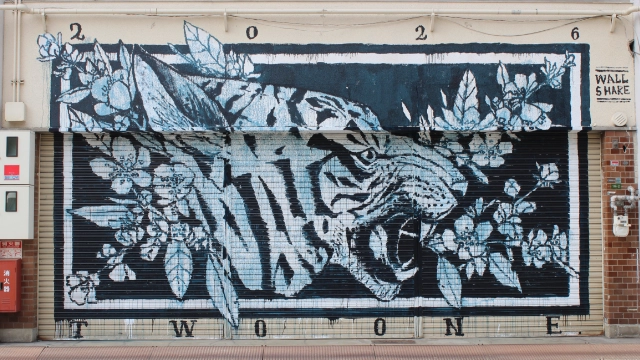
Beyond static installations, Osaka Art & Design also offers structured ways to explore the city. Guided tours expand the experience into entire neighborhoods, including a mural tour through Konohana Ward featuring 37 works from 22 countries, and architecture-focused tours through Kitasemba and Minami that examine Osaka’s historic and modern design legacy. These tours require advance application and, in some cases, a participation fee, but they provide some of the most curated experiences within the broader event.
What defines Osaka Art & Design is not just scale, but integration. Some exhibitions begin before the official start date or extend beyond it, and each venue operates on its own schedule. The result is a layered experience where planning helps—but discovery is just as important. Whether you map out specific stops or encounter installations along your route, the event rewards curiosity with something tangible at nearly every turn.

 Real places to go – Major installations anchored at Hankyu Umeda, Daimaru Shinsaibashi, Osaka Station, and Bentencho.
City as venue – No central hall; exhibitions unfold across multiple districts and buildings.
Public art scale – Large outdoor works, including a 10-meter mirrored installation at Benten Hiroba.
Rooftop experience – Osaka Station’s Toki-no-hiroba Plaza hosts all-day installations from morning to late night.
Guided exploration – Architecture and mural tours offer structured ways to experience Osaka’s design landscape.
Photos: Osaka Art & Design website
THE SCENE: FAQ’s
ACCESS
Address: Multiple venues across Osaka (Umeda, Dojima, Nakanoshima, Kyomachibori, Hommachi, Shinsaibashi, Namba, Abeno)
Osaka Art & Design 2026 is a multi-venue event held across central Osaka. There is no single entrance or ticket gate. Key starting points include:
- JR Osaka Loop Line → Osaka Station: Access to Umeda-area installations including Hankyu Umeda and Osaka Station rooftop venues
- Osaka Metro Midosuji Line → Umeda Station: Direct access to major department stores and underground networks
- Osaka Metro Midosuji Line → Shinsaibashi Station: Immediate access to Daimaru Shinsaibashi and surrounding exhibitions
- JR Osaka Loop Line → Bentencho Station: Direct connection to Benten Hiroba public art installation
Plan a route based on a few anchor venues rather than attempting to cover everything in one visit.
SCHEDULE
Event period: May 27 – June 23, 2026
Individual programs operate on their own schedules. Some exhibitions begin before May 27 or extend beyond June 23. Daily hours vary by venue, typically aligning with facility operating times.
Time: Varies by program (many installations align with venue hours, typically 10:00–20:00; some extend earlier or later)
TICKETS
General access to most installations is free
Guided tours require:
-
- advance application (lottery system)
- participation fee (free to ¥4,000 depending on tour)
Guided Tour Application Period:
April 15 – May 28, 2026
Tickets are not centralized—each program manages its own access conditions.
INFO & TIPS
Policies & Tips
- Choose 2–4 anchor locations per visit rather than trying to cover the entire event
- Use Osaka Station or Shinsaibashi as starting hubs
- Check individual exhibition dates carefully—some fall outside the core event window
- Expect crowds in major department stores during weekends
- Guided tours require advance registration and have limited capacity (20 participants per session)
Contacts
Organizer: Osaka Art & Design Executive Committee
Official Website: https://www.osaka-artanddesign.com/en/