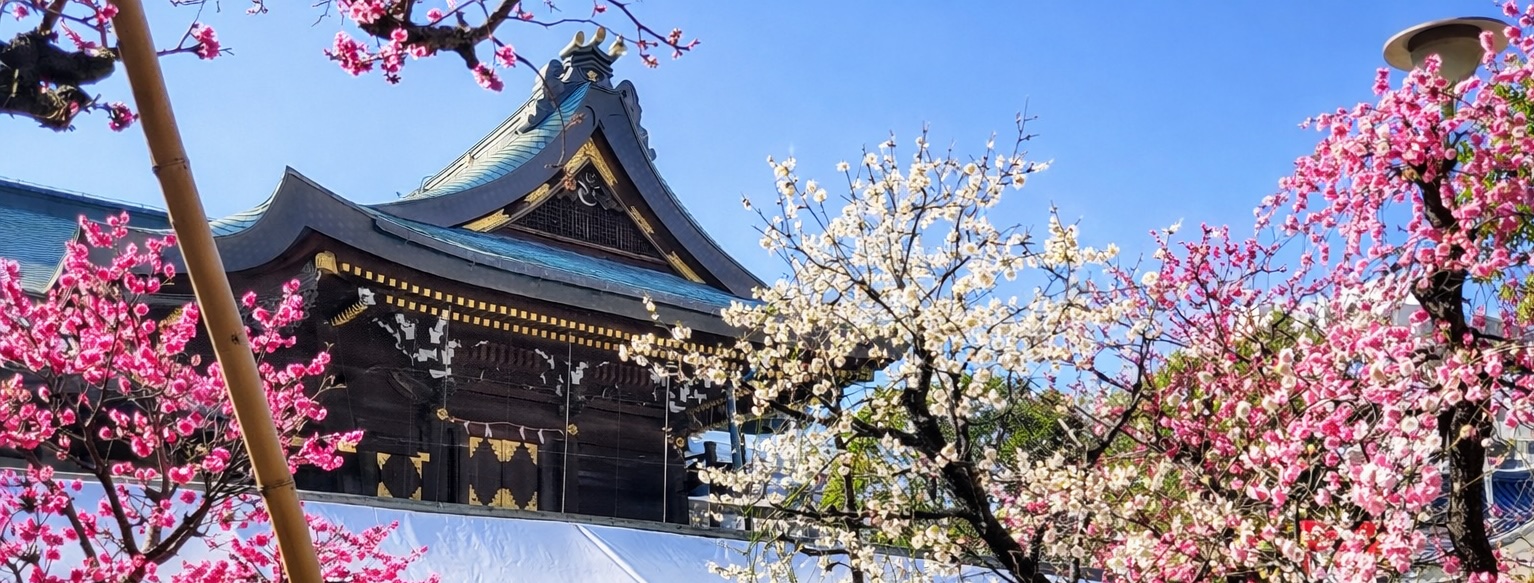
Ume Matsuri at Osaka Tenmangū
Before cherry blossom crowds arrive, Osaka Tenmangū’s Ume Matsuri marks the city’s earliest bloom — culminating in the formal Baikasai ceremony on February 25.
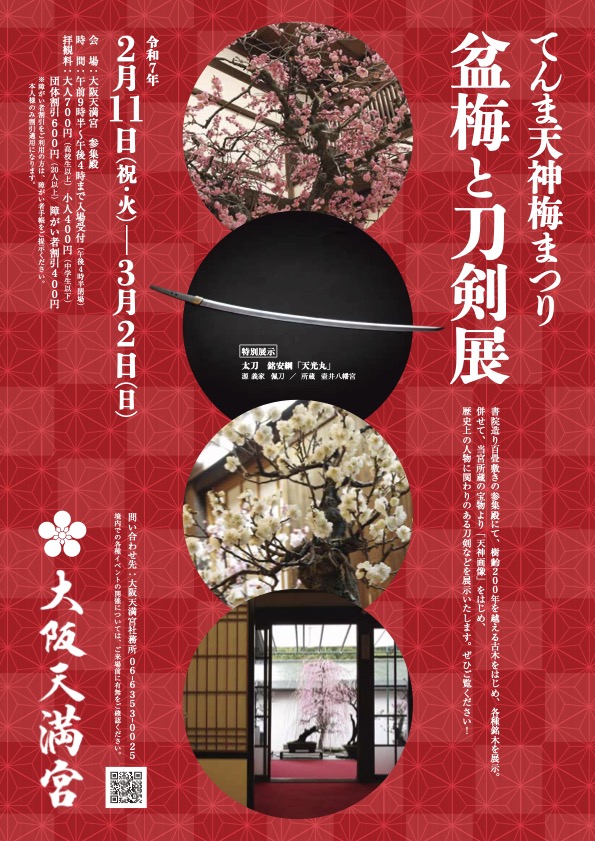 Running February 11 through March 2, 2026, Osaka Tenmangū observes its seasonal Ume Matsuri, marking the shrine’s plum blossom period and culminating in the formal Baikasai ceremony on February 25. While “festival” might suggest food stalls and performances elsewhere, here it refers to something more restrained: the blooming of plum trees within an active shrine dedicated to Sugawara no Michizane, the scholar-deity long associated with ume.
Plum blossoms hold special meaning at Tenmangū. Unlike cherry blossoms, which symbolize fleeting beauty, ume represent perseverance and scholarship — blooming while winter still lingers. That symbolism feels especially resonant in February, when students visit the shrine during entrance exam season to pray for academic success. Visitors — whether local or simply in town — may also offer prayers and purchase protective charms tied to learning and personal growth.
 The season reaches its ceremonial high point on February 25, 2026, during Baikasai. This formal Shinto ritual honors Michizane’s legacy through offerings, prayers, and traditional observances conducted by shrine priests. The atmosphere is solemn and focused rather than theatrical. There are no carnival games or rows of yatai; instead, visitors witness a continuity of tradition framed by early blooms.
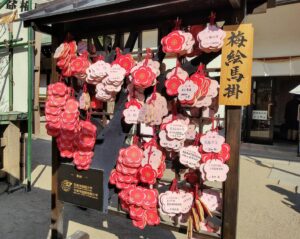
Visually, the setting offers something distinct from Osaka’s large park plum groves. White and pale pink blossoms frame vermilion shrine buildings, wooden eaves, and stone lanterns worn smooth by centuries of touch. The compact grounds allow for layered compositions — blossoms against tiled roofs, ema prayer plaques softly blurred behind petals, torii gates emerging through branches. Morning visits often provide softer light and fewer crowds.
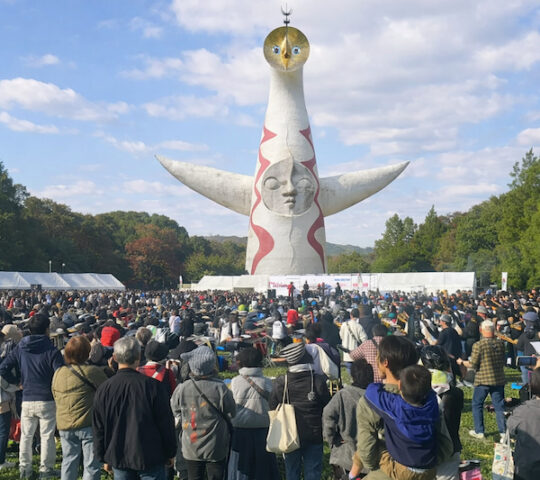
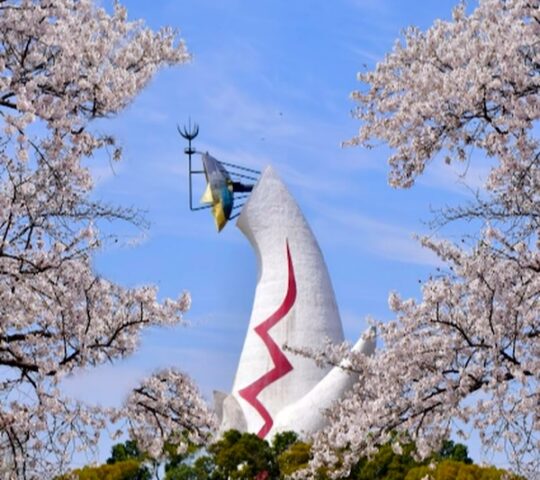
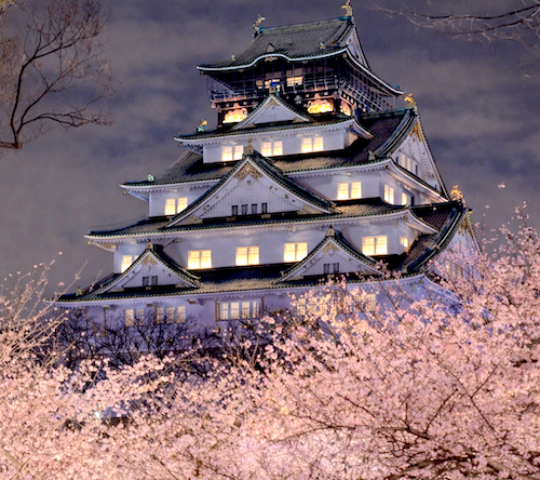
Compared to the sweeping landscapes of Expo ’70 Park or the plum grove at Osaka Castle Park, Tenmangū offers scale and symbolism over spectacle. It is an early-season experience grounded in meaning rather than magnitude — a reminder that Osaka’s spring begins not in celebration, but in endurance.

 Sacred Setting: Plum blossoms framed by historic shrine architecture.
Ceremonial Peak: Baikasai ritual held February 25.
Exam Season Tradition: Students pray for academic success throughout February.
Early Bloom Window: February 11 – March 2 seasonal observance.
Photographic Intimacy: Layered compositions unique to shrine grounds.
Photos: Official Tourism Website, Osaka Scene Staff
Maps
THE SCENE: FAQ’s
ACCESS
Venue: Osaka Tenmangū
Address: 2-1-8 Tenjinbashi, Kita-ku, Osaka
Located near Minami-Morimachi Station.
JR Tozai Line → Osaka Tenmangū Station, Exit 3 leads toward the shrine in approximately five minutes on foot.
Osaka Metro Tanimachi Line or Sakaisuji Line → Minami-Morimachi Station, Exit 4-B brings you to Tenjinbashi-suji Shopping Street; walk north approximately five minutes to reach the shrine entrance.
SCHEDULE
Ume Matsuri runs February 11 – March 2, 2026.
Plum blossoms are typically visible throughout this period, with projected peak bloom mid-February through early March depending on temperatures.
Baikasai takes place February 25, 2026; the ritual is generally conducted in late morning to midday. Visitors may observe respectfully from designated areas.
ADMISSION
Shrine entry and plum viewing are free. No ticket is required.
Optional prayer donation.
Charms, and ema plaques are available for individual fees payable at the shrine office.
INFO & TIPS
Osaka Tenmangū is an active religious site.
Photography is permitted outdoors but should remain respectful during rituals.
There are no food stalls or entertainment programs officially tied to Ume Matsuri. Combine your visit with nearby Tenjinbashi-suji Shopping Street for dining options.
Morning visits provide softer light and fewer visitors.
Contacts
Osaka Tenmangū Official Website: https://osakatemmangu.or.jp/