

Login Sign Up
  • Scenes
    • The Sakura Scene
    • The Festival Scene
    • The Music Scene
    • The Food & Drink Scene
    • The Sports Scene
    • The Museum Scene
    • The Anime & Manga Scene
    • The Shopping Scene
    • The Arts & Crafts Scene
    • The Illuminations Scene
    • The Fireworks Scene
  • Events
    • March 2026
    • April 2026
    • May 2026
  • Guides
    • Spring Blossoms Guide
    • Osaka Castle Guide
    • Concert Guide
    • Sports Guide
  • Magazine
    • March Magazine
      • Hello Osaka! Hello World!
      • Baseball Is Back
      • March Music Month
      • Sumo: The Power of the Haru Basho
      • When Will Osaka Bloom?
    • February Magazine
      • February in Osaka: Winter in Full Swing
      • Valentine’s Day, the Japanese Way
      • Setsubun: Chasing Away Winter
      • Plum Blossom Season in Osaka
      • Osaka’s Late‑Winter Comfort Foods
    • January Magazine
      • The World’s No.1 Trending Destination
      • Expo’s 2026 Afterglow
    • December Magazine
      • Osaka in Lights
      • Countdown Osaka 2026
    • November Magazine
      • Life After the Expo
      • Peak Foliage in Osaka
      • One Day at Osaka Castle
      • Nakazaki-cho: Osaka’s Retro Village
    • October Magazine
      • Fall Sports in Season
      • Summer Sky’s Last Glow
      • Expo’s Grand Finale
      • Osaka’s Halloween Twist
  • Trip Planner
    • One Day in Osaka
    • Two Days in Osaka
    • Three Days in Osaka
    • Dawn to Dusk: A Full Day at Osaka Castle
  • 英語
    • 翻訳はまもなく公開されます。公開までの間はブラウザ翻訳をご利用ください。
    • 翻译即将发布,期间请使用浏览器翻译功能。
    • 번역은 곧 제공됩니다. 제공 전까지는 브라우저 번역 기능을 사용해 주세요.
    • Translation coming soon. Please use your browser’s translation function in the meantime.
Osaka Scene
  • Art Scene Art Scene
  • Car Scene Car Scene
  • Culture Scene Culture Scene
  • Expo Scene Expo Scene
  • Holiday Scene Holiday Scene
  • Movie Scene Movie Scene
  • Neighborhood Scene Neighborhood Scene
  • Sakura Scene Sakura Scene
  • Theater Scene Theater Scene
  • Scenes
    • The Sakura Scene
    • The Festival Scene
    • The Music Scene
    • The Food & Drink Scene
    • The Sports Scene
    • The Museum Scene
    • The Anime & Manga Scene
    • The Shopping Scene
    • The Arts & Crafts Scene
    • The Illuminations Scene
    • The Fireworks Scene
  • Events
    • March 2026
    • April 2026
    • May 2026
  • Guides
    • Spring Blossoms Guide
    • Osaka Castle Guide
    • Concert Guide
    • Sports Guide
  • Magazine
    • March Magazine
      • Hello Osaka! Hello World!
      • Baseball Is Back
      • March Music Month
      • Sumo: The Power of the Haru Basho
      • When Will Osaka Bloom?
    • February Magazine
      • February in Osaka: Winter in Full Swing
      • Valentine’s Day, the Japanese Way
      • Setsubun: Chasing Away Winter
      • Plum Blossom Season in Osaka
      • Osaka’s Late‑Winter Comfort Foods
    • January Magazine
      • The World’s No.1 Trending Destination
      • Expo’s 2026 Afterglow
    • December Magazine
      • Osaka in Lights
      • Countdown Osaka 2026
    • November Magazine
      • Life After the Expo
      • Peak Foliage in Osaka
      • One Day at Osaka Castle
      • Nakazaki-cho: Osaka’s Retro Village
    • October Magazine
      • Fall Sports in Season
      • Summer Sky’s Last Glow
      • Expo’s Grand Finale
      • Osaka’s Halloween Twist
  • Trip Planner
    • One Day in Osaka
    • Two Days in Osaka
    • Three Days in Osaka
    • Dawn to Dusk: A Full Day at Osaka Castle
  • 英語
    • 翻訳はまもなく公開されます。公開までの間はブラウザ翻訳をご利用ください。
    • 翻译即将发布,期间请使用浏览器翻译功能。
    • 번역은 곧 제공됩니다. 제공 전까지는 브라우저 번역 기능을 사용해 주세요.
    • Translation coming soon. Please use your browser’s translation function in the meantime.
Login Sign Up
TwoDaysTop
Travel Panner

Two Days in Osaka – Day 2

Retro Streets & Skyline Heights

Two days in Osaka mean more than double the fun — savor the city’s castles, markets, neon canals, retro charm, and soaring skylines at a pace that feels natural. From street food lunches to an elegant final dinner, this 48-hour guide blends heritage, flavors, and unforgettable nightscapes.
Osaka Scene Staff
Guide by Osaka Scene Staff

A Time Slip Through Osaka Culture

After a full first day spent wandering castle grounds, snacking through Kuromon, shopping Shinsaibashi, and cruising under Dotonbori’s towering signboards, Day Two offers a new way to experience Osaka. It’s a day that moves from the city’s retro underbelly to its modern skyline, from the nostalgic alleys of Shinsekai to sunset views high above Umeda. If Day One was about the city’s energy at street level, Day Two is about shifting perspectives—both physically and emotionally—while discovering neighborhoods that feel worlds apart, yet are just minutes away by train.

There’s no need to rush north just yet. Start your morning like a local, grabbing breakfast in Namba before heading south toward Shinsekai’s nostalgic streets. From there, the day will slowly arc upward—ending high above the skyline with dinner and a view you won’t forget.

Clock_730AM_

Breakfast in Minami — A Kissaten Morning

There’s no better way to ease into your second day in Osaka than with a quiet morning in a kissaten. These traditional Japanese coffee shops were a cornerstone of Showa-era urban culture—long before the arrival of Starbucks or convenience store coffee. Kissaten were where salarymen read their morning papers, artists lingered over hand-dripped brews, and students debated the world over thick toast and boiled eggs. They were part café, part living room, part refuge: spaces that belonged as much to the regulars as to the owners behind the counter.
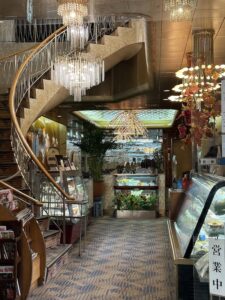
 

Osaka is dotted with excellent kissaten, each with its own personality.

The kissaten aesthetic is instantly recognizable.  The menu rarely changes: toast sliced thick like cake, soft-boiled eggs timed with care, a simple salad, and a cup of carefully brewed pour-over coffee served in delicate porcelain. It’s a breakfast that feels timeless. Even today, as modern cafés flourish, kissaten remain beloved for their nostalgia and quiet constancy, a link to everyday Japan as it once was.

Since we’re beginning the morning in Minami, you won’t have to go far to find one. Just east of Dotonbori, Coffeehouse American has been serving locals since the 1940s and stands out for its grand Showa-era interior, complete with chandeliers, polished wood, and a regular crowd that seems unchanged by time. But part of the charm is that there are so many to choose from—wander a few streets in Namba and you’re likely to stumble upon your own favorite. It’s more than a meal—it’s a gentle, authentic portal to another era.


Namba_to_Shinsekai
Now that we've enjoyed a great breakfast, Showa-style, let's jump on the Midosuji Line at Namba and head out to our first stop of the day - Shinsekai.
Clock_9AM_

Shinsekai — Osaka’s Nostalgic “New World”

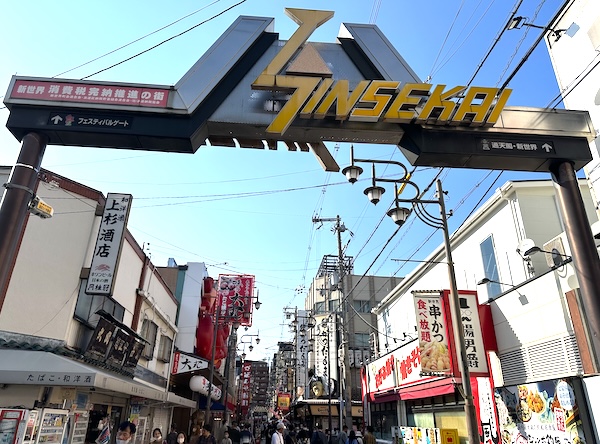
Walking through the Shinsekai arch is like transporting yourself back to Osaka’s Showa-era glory days.


From the bustle of Namba, a quick ride on the Midosuji Line takes you two stops south to Dobutsuen-mae Station, where Osaka’s modern edges soften into something older, quirkier, and unmistakably local. Step out onto the street and you’re in Shinsekai, literally “New World” — a name that made sense when this neighborhood was laid out in 1912, inspired partly by Paris and partly by New York’s Coney Island. More than a century later, Shinsekai hasn’t so much changed as it has weathered, becoming a living time capsule of mid-20th-century Osaka, complete with vintage neon signs, covered alleys, and the hum of daily life.  

Wander deeper and the “time capsule” feeling comes fully alive. Jan-Jan Yokocho, the narrow, covered food alley that cuts through the heart of Shinsekai, feels frozen in another era.  The air is thick with the scent of frying oil, and signs shout in bold, hand-painted fonts straight out of the Showa period.  Take note, we’ll return here for lunch.
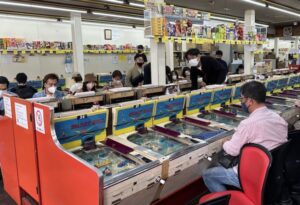
Before pachinko there was Smart Ball.
The “Stranger Things” kids would be right at home here.

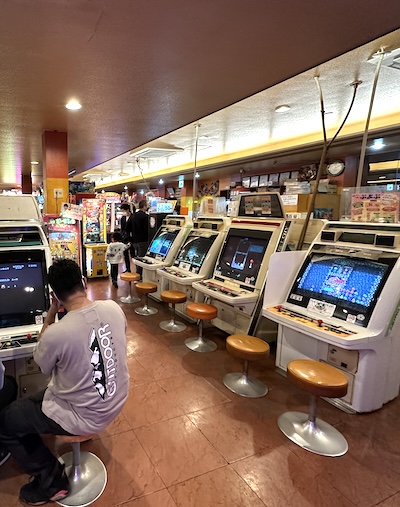
And it’s not just the food. Game centers from the 1980s still hum with life, their flashing lights reflecting off worn tile floors. You can still find the old-school smart ball parlors—those quirky silver-ball games that predate modern pachinko—where prizes hang overhead from clotheslines, clipped like laundry waiting to be won. Locals lean over the machines with quiet concentration, the soft clatter of balls filling the alley like a nostalgic soundtrack.
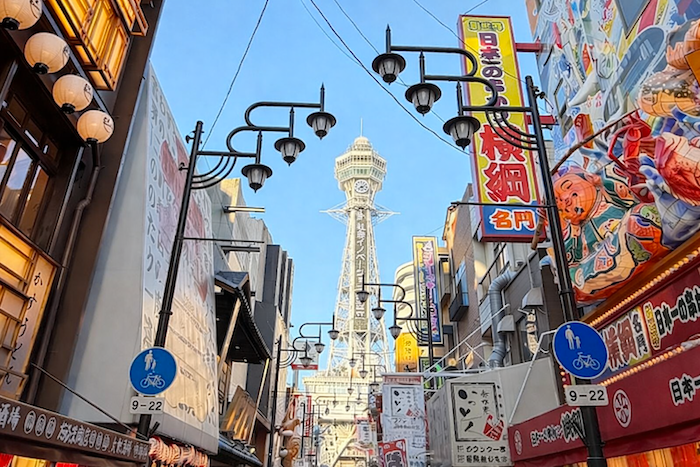
Tsutenkaku Tower — The Vertical Heart of Shinsekai

As you climb out of the alleys, in one glance you see Shinsekai’s dense tapestry, and you feel Osaka’s past and future all at once.

And rising above it all, standing watch through decades of change, is Tsutenkaku Tower. More than a landmark — it is part of the skyline’s memory.  Its current form, built in 1956, replaced an earlier structure razed by fire, and today it stands at roughly 103 meters tall, with its main observation floor around 88 meters above ground. 

Step inside, and you’ll pass through floors where relics of mid-century Osaka still linger. Head up to the fifth floor, you’ll find Billiken, Osaka’s beloved “God of Things As They Ought to Be.” Visitors line up to rub the soles of his feet for good luck — a quirky tradition that has endured through generations. 

Robot Icons of Japan’s Showa Era are well known world-wide.

Beyond that, the exhibits include vintage photographs, scale models, and displays that frame Tsutenkaku’s history in the city’s shifting identity.

At the heart of the experience is an outdoor observation deck that gives you the thrill of the open sky and panoramic views that stretch from Osaka Bay to the distant hills. From here you can step onto a glass-floored platform that juts out over Shinsekai—standing there feels like hovering over the city.
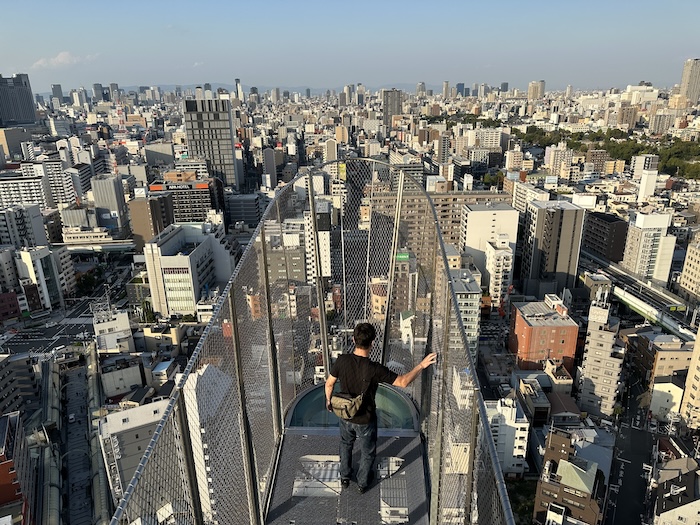
Not for the faint of heart.

  The glass floor seemed to quiver when nearby children jumped in sync, making even hardened travelers (and our OSAKA SCENE editor)  grip the handrails. It’s a reminder that despite its solidity, Tsutenkaku is connected to and moves with the pulse of the city and its people.

Below the observation decks lies the Tower Slider, a 60-meter slide that spirals down from the third-floor level to the basement. Riders don safety gear, cross their arms, and plunge downward in about 10 seconds—part indoor through the structure, part exterior spiral.  It’s a thrilling counterpoint to standing still, a taste of Osaka’s willingness to blend whimsy into heritage. 

 

TSUTENKAKU FAQs

Address
1-18-6 Ebisuhigashi, Naniwa-ku, Osaka 556-0002
(大阪府大阪市浪速区恵美須東1-18-6)


Access
• Subway Midosuji Line → Dobutsuen-mae Station 


 Hours
• Tsutenkaku Tower Observation Deck: 10:00 – 20:00 (last entry 19:30)
• Tower Slider: 10:00 – 19:30 (last entry 19:20)
Hours may extend during peak holiday seasons.

Tickets
• Observation Deck Admission
• Adults (High school & up): ¥900
• Children (Elementary & Middle school): ¥400
• Preschoolers: Free
• Tower Slider (optional): ¥1,000 per ride
• Must be 7 years or older, over 120 cm tall, and under 100 kg.
• Riders wear helmets and protective gear; small lockers are available.
• Tickets can be purchased on-site or via official e-ticket partners (e.g., Rakuten Experiences, Osaka e-Pass).

Highlights & Tips
• Don’t miss Billiken, Osaka’s quirky good-luck deity, on the fifth floor. Rub his feet for a dose of tradition.
• Tip the Tsutenkaku: the glass-floored “plank” platform that juts out from the observatory, offering jaw-dropping photo ops and heart-stopping wobbles when others walk past.
• Tower Slider: a 60 m spiraling slide that drops you from the third floor to the basement in about 10 seconds—part indoor, part exterior. It’s fast, fun, and louder than you expect.
• Lower floors feature retro souvenir stalls, gacha machines, and specialty shops selling nostalgic toys, including Showa-era style robot figurines, vintage candy, and Osaka-themed goods.
• The tower can shake slightly in strong wind or with foot traffic on the plank; not recommended for the extremely height-sensitive.

Recommended Visit Time
Allow 45 – 60 minutes for the tower and another 30 – 45 minutes to explore the surrounding Shinsekai streets before and after.

🌐 Official Website
https://www.tsutenkaku.co.jp/

Lunch Time — A Crispy Bite of Osaka

Clock_Noon
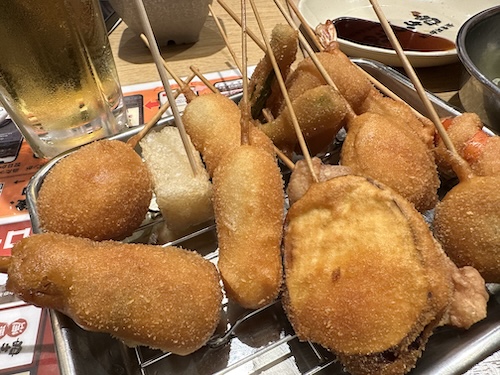
The deep-fried skewers that were born right here in Shinsekai.

As midday approaches, it’s time to pause your journey through Osaka’s living time machine for lunch—and there’s no better way to do it than with kushikatsu. This dish has its roots in the 1920s, when vendors in this neighborhood began skewering meat and vegetables, dipping them in batter, and frying them crisp as a quick, cheap, and hearty meal for the local working class. It surged in popularity during the postwar Showa era, when its comforting crunch and affordable price made it a go-to food for Osaka’s everyday people. Today, biting into kushikatsu is more than just enjoying a local specialty—it’s participating in a century-old culinary tradition that’s still alive on these streets.
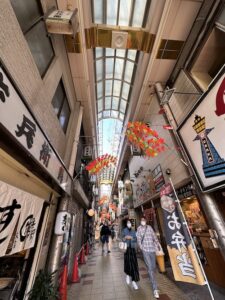
The calm before the lunch time storm.

We return to where we entered,  Jan-Jan Yokocho.  By lunchimte the crowds have become dense in Shinsekai’s narrow covered food alley where every few steps another kushikatsu shop calls out to you.  Inside, skewers of pork, shrimp, lotus root, and vegetables are dipped into a light batter, fried golden, and served with communal vats of savory sauce. Remember the golden rule—no double dipping—a bit of etiquette every Osakan knows. 

Coming Soon: Our Shinsekai Guide
Screenshot
Let's walk off lunch with a Stroll through Tennoji Park and on to Harukas 300 to level up the skyline view.
Clock_130PM_

Tennoji Park — A Green Gateway Between Eras

Just beyond the lantern-lit alleys of Shinsekai lies Tennoji, one of Osaka’s most walkable and layered districts. A short stroll east brings you into Tennoji Park, a surprisingly expansive green space that acts as a soft buffer between the nostalgic streets and the sleek skyline beyond. On sunny days, locals gather here for picnics and lunch breaks, families push strollers along tree-lined paths, and street performers set up by the fountains. After the sensory overload of Shinsekai, it’s a gentle reset—a place to slow down for a moment and let the morning settle.


Just beyond the trees, Abeno Harukas rises dramatically, a gleaming symbol of how Osaka’s past and present meet in the open air.  In this way Tennoji park provides a time slip of sorts—a quiet walk from the Showa-era nostalgia of Shinsekai into the sleek Heisei skyline ahead. 

Clock_2PM_

Abeno Harukas — Osaka’s Heisei-Era Skyline Statement

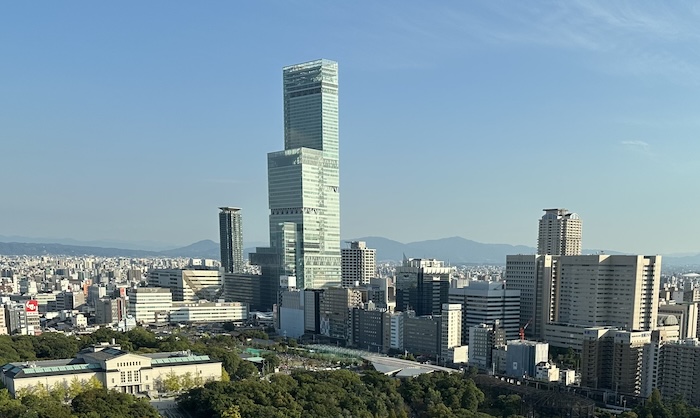
Rising dramatically from the south edge of Tennoji Park, Abeno Harukas gleams in the sun.

A vertical masterpiece of glass and light that became Japan’s tallest building when it opened in 2014. Its name comes from harukasu, meaning to brighten or clear up, and the building lives up to it, lifting Osaka’s skyline into the Heisei era with clarity and grace. Even now, more than a decade later, it remains one of the city’s proudest landmarks and an enduring symbol of modern Osaka’s ambition.

The Kintetsu Department Store spans the lower levels with a mix of luxury boutiques, cafés, and artisan sweets, while the Abeno Harukas Art Museum offers cultural calm with its rotating exhibitions.

From there, high-speed elevators launch visitors toward the 60th floor and the famed Harukas 300 Observatory. As the glass doors open, sunlight floods the space, and Osaka unfurls beneath you in all directions.

By day, the view is dazzling. The city spreads out like a living map—the green expanse of Tennoji Park, the retro lattice of Shinsekai, and, far below, the Tsutenkaku Tower rising modestly among its brightly lit signs. From this height, the difference between eras becomes visible: Showa and Heisei, nostalgia and progress, all within the same line of sight.

Cafés on the 58th floor offer a moment to linger, reflect, and realize just how much of Osaka you’ve already seen—and how much more still lies ahead. The open-air terrace gives a rush of wind and perspective that photographs can’t capture. You can feel Osaka’s density, and scale—stretching from the inland hills to the shimmering outline of Osaka Bay.


Shinsekai_to_Umeda
Let's head to Kita Osaka. Back to the Midosuji Line at Dobutsuen-mae Station and get off in Umeda.
Clock_430PM_

Umeda — Urban Rhythm & Elevated Indulgence

By early afternoon, it’s time to trade retro alleyways and park paths for the pulse of modern Osaka. A quick ride on the Midosuji Line from Tennoji to Umeda delivers you into the city’s northern hub—an energetic, layered district where trains, architecture, and commerce all converge in dazzling fashion. Umeda feels different the moment you arrive: sleek glass towers, sprawling concourses, and the steady flow of commuters and shoppers create a rhythm that’s brisk but exhilarating.

Start by wandering through Grand Front Osaka, a sprawling complex that blends boutique shopping, concept stores, cafés, and rooftop gardens. It’s a place to slow down and browse—whether you’re drawn to cutting-edge Japanese fashion labels, interior design shops, or the lively food hall filled with smells of grilled meats and fresh baked breads. A short walk away, Hankyu Department Store offers a more classic Osaka retail experience. Its depachika (basement food hall) is one of the most dazzling in the country, with rows of jewel-like pastries, elaborately wrapped sweets, bento boxes arranged like art, and chefs deftly assembling meals behind glass counters. Even if you’re not buying, it’s a feast for the senses and a reminder of how much care the Japanese put into presentation.

For a change of pace, take the escalators up into Osaka Station City, a vast complex of glass and steel that straddles the train tracks. Its upper floors open into terraces and viewing decks, where you can step outside and watch trains glide in and out beneath a massive arched roof. It’s a surprisingly peaceful moment in the middle of the city’s busiest transport hub, and one of those places where Osaka’s mix of functionality and beauty comes into sharp focus. Whether you’re shopping, people-watching, or just taking a breather, Umeda is where the day starts to build toward its spectacular finale.

Screenshot
From the heart of the Umeda station area, the walk to the Umeda Sky Building is refreshingly straightforward. Head toward the north side of the station and the Grand Front Osaka complex, then follow signs leading west. Or just look up - you'll see it.
Clock_6PM_

Umeda Sky Building - Floating Above the City

As late afternoon slides toward evening, make your way west from the station to the Umeda Sky Building, Osaka’s most striking architectural silhouette. Completed in the 1990s, this pair of towers linked at the top by a circular observatory looks like something lifted straight from a sci-fi movie. The short walk there is part of the experience: slipping through a quiet underground walkway, emerging into an open plaza where the twin glass towers rise dramatically against the sky. It’s a moment that never fails to draw a breath.


The real magic happens when you ride the glass elevator up the side of the building, the city shrinking below as daylight softens. A set of glowing escalators then carries you through the building’s hollow core—an almost cinematic ascent that deposits you at the Floating Garden Observatory, a 360° open-air deck perched 173 meters above ground. From here, Osaka spreads out in every direction: ribbons of expressways curving like glowing arteries, trains snaking through the urban fabric, the Yodogawa River reflecting the evening light like a sheet of glass. Arrive just before sunset and you can watch the city shift through every shade of gold, pink, and deepening blue as the lights come on.


Unlike many urban observatories, this one is completely open to the air, and as dusk falls, the breeze at the top adds a tactile thrill. The deck is ringed with light panels that subtly illuminate the night sky, while couples and photographers line the edges for that perfect skyline shot. It’s an unforgettable vantage point—not just for its view, but for the way it makes you feel suspended between the city and the sky, reflecting on the two days you’ve spent exploring Osaka at every level: from castle stones and lantern alleys to shimmering canals and, now, the glittering heights.

Screenshot
After your time above the skyline, heading back is as easy as retracing your steps. Slip back through the Grand Front Osaka, where cafés, wine bars, and shops make it tempting to linger before dinner.
Clock_8PM_

Dinner Finale in Umeda — A Well-Earned Indulgence

After two days spent tracing Osaka’s streets, waterways, towers, and tastes, the best way to end your journey is with a sit-down dinner in Umeda. As night settles fully over the city, the bright façades of Grand Front and Hilton Plaza glow like beacons, and the streets hum with office workers unwinding and travelers savoring their last moments in town. Umeda is home to some of Osaka’s most polished dining experiences, and after markets, street snacks, and retro cafés, this is your moment to lean back and indulge.


For those wanting to finish on a high note, a wagyu yakiniku spot is a standout: choose a stylish yet approachable place to grill Matsusaka wagyu, one of Japan’s most prized beef varieties, right at your table. Each slice is marbled like silk, seared briefly, and practically melts on the tongue. If you’re looking for something more traditional, kaiseki restaurants tucked into Hilton Plaza and nearby high-rise buildings offer elegant seasonal tasting menus, each dish a small work of art. And for a contemporary twist, Grand Front’s modern izakaya and wine bars plate creative small dishes paired with craft sake and local spirits, blending the old and new with Osaka flair.


What makes dinner in Umeda special isn’t just the food—it’s the atmosphere. Through tall windows, you can watch the skyline glitter, the trains sweep in and out of Osaka Station below, and the streets pulse with nighttime energy. It’s a moment to exhale, to reflect on everything you’ve seen: from castle stones and bustling markets to retro alleys, sky-high observatories, and neon canals. This isn’t just the end of the itinerary—it’s a quiet toast to a city that’s shown you its many faces, each as vibrant as the last.

Two Days in Osaka — A City of Many Layers

Two days in Osaka may fly by, but the impressions linger. This is a city that doesn’t reveal itself all at once—it unfolds in layers, each neighborhood offering a different rhythm, flavor, and perspective. On the first day, you walked through centuries of history at Osaka Castle, snacked shoulder to shoulder with locals in Kuromon Market, wandered Shinsaibashi’s bustling arcades, and drifted under Dotonbori’s glowing signs as the night came alive. On the second, you stepped back in time in Shinsekai’s lantern alleys, rose above the skyline at Harukas and the Sky Building, and ended the journey with a well-earned feast overlooking the glittering north.

What makes Osaka unforgettable isn’t just its famous landmarks—it’s the way modern life and history, refinement and playfulness, tradition and energy coexist so naturally. In two days, you can experience the city at every level: from steaming takoyaki stands to sky-high observatories, from quiet kissaten to river walks. Whether this whirlwind visit is a side trip from Kyoto or Tokyo, or the heart of your journey itself, Osaka has a way of making even a short stay feel full. And if there’s one certainty, it’s this: you’ll leave planning to come back—not to do more, but to deepen what you’ve begun.

Umeda_to_Shin Osaka
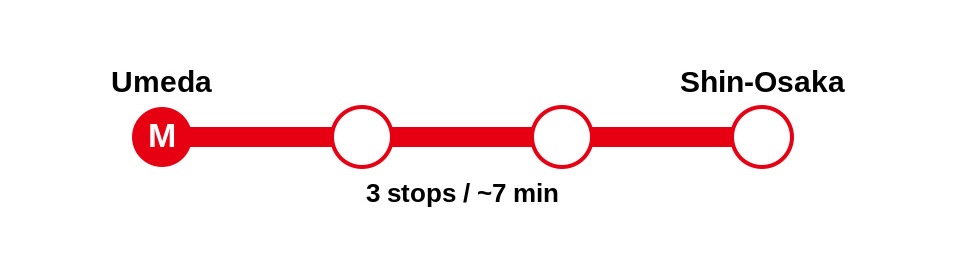
It’s time to head home. If you’re taking the Shinkansen, hop back onto the Midosuji Line for a quick ride to Shin-Osaka Station and the Bullet Train Terminal. Alternatively, if you’re flying home, we recommend the Haruka Airport Express to KIX.
Umeda_to_KIX

THE SCENE: FAQs

Access
You One Day Trip to Osaka can be accessed entirely on the Osaka Metro subway lines.

FOR OSAKA CASTLE: At Shin Osaka Station board the Midosuji Line on Track 2. At Umeda station transfer to the Tanimachi Line train on Track 1. Use Exit 9. FOR KUROMON MARKET Return to the Tanimachi Line on Track 1 and get off at Nippombashi Station. Use Exit 4.
Schedule
To enjoy your full day in Osaka we recommend you plan to arrive at Shin-Osaka station by 8:50AM. That means taking one of the first Shinkansen Bullet Trains from Tokyo around 6AM, but the trains are so comfortable you can sleep on the way (Just don't miss the view of Mt. Fuji - select a window seat on the right of the train to get the best view!)
Tickets
We recommend that you buy the Osaka Metro Pass which will give you access to any of their 9 Subway Lines for the whole day for one price.
Info
Answer content goes here.

Photos: Osaka Scene Staff

Video

Video: Expo 2025 Official YouTube Channel

You may also be interested in:

buffaloes opener win

Baseball Is Back

Osaka Jo Concert Top

March Music Month

March Top

Osaka and the Power of the Haru Basho

Also read:

Also read:

buffaloes opener win

Baseball Is Back

Osaka Scene: GUIDES

January Guide Cover

January 2026

CastleGuideCover

Osaka Castle

FebruaryCover

February 2026

GSportsuideCover

Osaka Sports

March Cover

March 2026

Biwa2
COMING SOON!

Fireworks

Displays & Festivals
AprilCover

April 2026

MozuFest3
COMING SOON!

Festival Guide

Add Your Heading Text Here

What can I do TODAY in Osaka?

Instagram Facebook Youtube

Company

  • About us
  • Submit an Event
  • Advertise with Us
  • Disclosure

Contact Us

  • Email: mail@osakascene.com
2026 © Osaka Scene. All rights reserved.
Log in Sign Up
Forgot your password? Reset password.

Sending login info,please wait...

Sending info,please wait...

Back to login

Sending register info,please wait...

Back to Registration
  • Anime & Manga Scene
  • Art Scene
  • Arts & Crafts Scene
  • Autumn Scene
  • Car Scene
  • Culture Scene
  • Event Scene
  • Expo Scene
  • Fashion Scene
  • Festival Scene
  • Fireworks Scene
  • Food & Drink Scene
  • History Scene
  • Holiday Scene
  • Illumination Scene
  • Kaiju Scene
  • Kids Scene
  • Market Scene
  • Movie Scene
  • Museum Scene
  • Music Scene
  • Neighborhood Scene
  • Outdoor Scene
  • Sakura Scene
  • Shopping Scene
  • Sports Scene
  • Theater Scene
  • Tour Scene
  • Travel Scene