
Osaka’s Riverside Sakura Tunnel
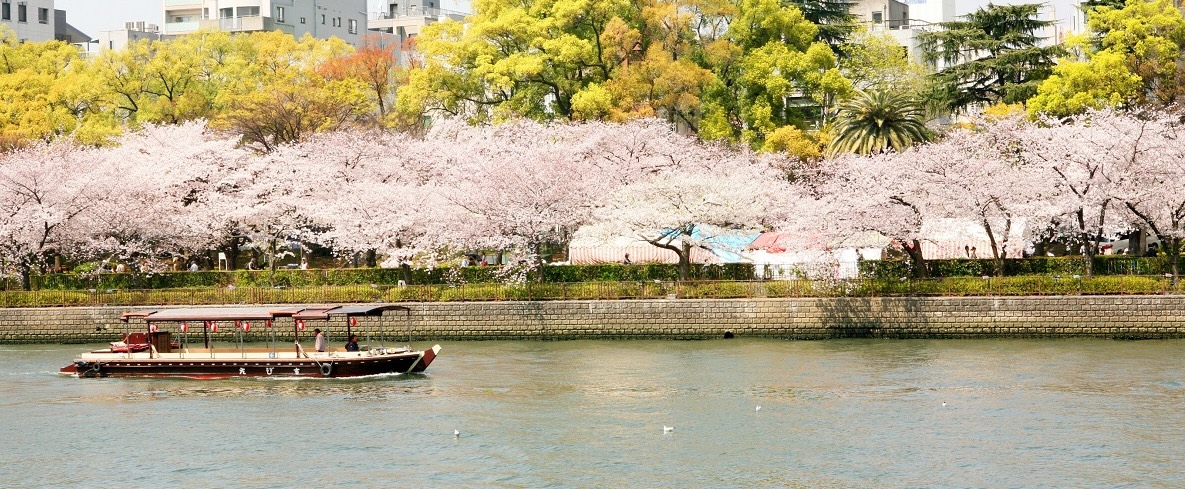
Nearly 5,000 cherry trees line the Okawa River at Kema Sakuranomiya Park, creating one of the longest and most immersive hanami walks in Kansai.
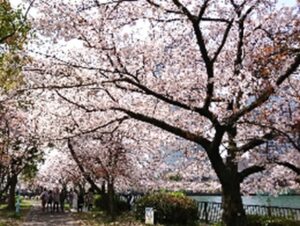
Running along the Okawa River just north of Osaka Castle, Kema Sakuranomiya Park stretches between Temmabashi and Sakuranomiya for several kilometers, forming one of the longest cherry blossom corridors in the city. Nearly 5,000 cherry trees line both banks of the river, creating a continuous canopy that feels immersive rather than concentrated.
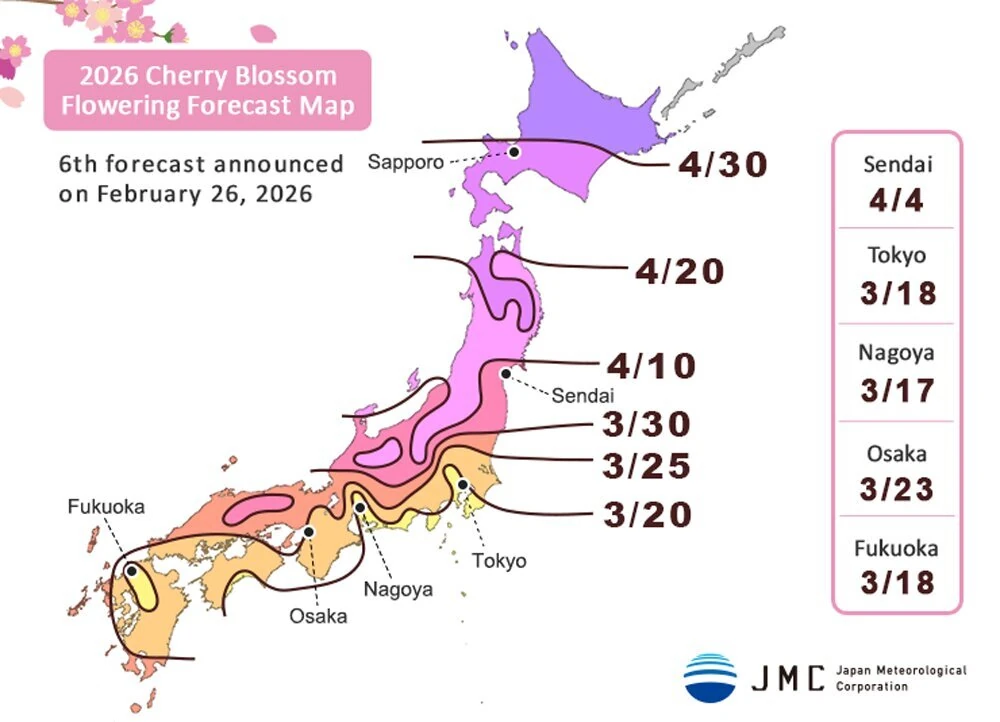
 The dominant Somei-yoshino variety typically reaches peak bloom in late March. According to the latest 2026 forecasts from the Japan Meteorological Corporation, flowering in Osaka is expected around March 23, with full bloom projected March 31. About 2 days earlier than previously predicted. (See the Sakura Forecast Map below). Because the trees extend for such a long distance, even slight variations in bloom timing rarely diminish the overall experience.
Hanami here feels expansive and relaxed. Families gather on grassy embankments overlooking the water. Cyclists glide beneath low-hanging branches. Joggers slow to take photos. The mood builds gradually throughout the afternoon as groups settle in, drinks are opened, and conversations stretch beneath arching blossoms.
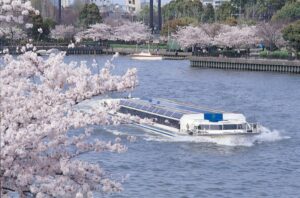
During peak cherry blossom season, seasonal Okawa River sakura cruises typically operate from Hachikenyahama Pier near Temmabashi Station. These limited-time sightseeing boats travel along the Okawa River past Nakanoshima, Osaka Castle’s river edge, and the Kema Sakuranomiya cherry blossom corridor.
In addition to the seasonal sakura-branded cruise, regular Osaka water buses (such as year-round sightseeing services) also travel this stretch of river and provide cherry blossom views during bloom season.
There is no formal illumination event, but early evening remains especially beautiful as the sky softens and the river reflects rows of pale pink trees. During peak bloom, temporary vendors sometimes appear near major access points and bridges, though offerings vary annually.
Unlike Osaka Castle’s dramatic stone backdrop or Nishinomaru’s curated garden setting, Kema Sakuranomiya is about scale and movement — kilometers of sakura framing skyline views and river reflections. For travelers, it’s one of Osaka’s most photogenic seasonal walks. For locals, it’s where spring unfolds at full length.

 5,000 Trees — One of Osaka’s longest sakura stretches.
Riverside Reflections — Blossoms mirrored in the Okawa River.
Kilometers of Bloom — Continuous canopy along both banks.
Picnic-Friendly — Wide embankments ideal for hanami gatherings.
Open Access — No tickets or reservations required.
Photos: Official Website
Maps
Contact
THE SCENE: FAQ’s
ACCESS
Venue: Kema Sakuranomiya Park (Okawa River banks)
Address: Kita-ku / Miyakojima-ku, Osaka
JR Osaka Loop Line → Sakuranomiya Station
(West Exit) About 5 minutes on foot to the riverbank.
JR Tozai Line → Osakatemmangu Station
(Exit 1) About 15 minutes on foot toward the Okawa River.
Osaka Metro Tanimachi Line → Minamimorimachi Station
(Exit 3) About 15 minutes on foot.
Multiple access points exist along the river; visitors can enter at various bridges.
SAKURA FORECAST MAP
SCHEDULE
Cherry blossoms at Kema Sakuranomiya typically bloom in late March, with peak lasting about one week depending on weather. For 2026, full bloom is projected between March 30 and April 2 based on current forecasts.
The park is open 24 hours.
Daytime and early evening viewing is recommended.
TICKETS
The Park is free and open to the public.
Cruises are ticketed separately from park access. Schedules, fares, and operating dates vary each year and are weather dependent. Visitors should check operators directly for current details during sakura season.
Departure Area: Hachikenyahama Pier (Temmabashi area)
See our feature on Sakura Cruises in the OSAKA SCENE MAGAZINE section.
INFO & TIPS
Admission is free. No reservations required.
During peak bloom, certain embankment areas can become crowded on weekends. Open flames and BBQ equipment may be restricted depending on city guidelines.
During some peak seasons, temporary vendors may appear near major bridges and access points, though offerings vary annually.
Cyclists and pedestrians share paths; exercise caution during busy hours.