
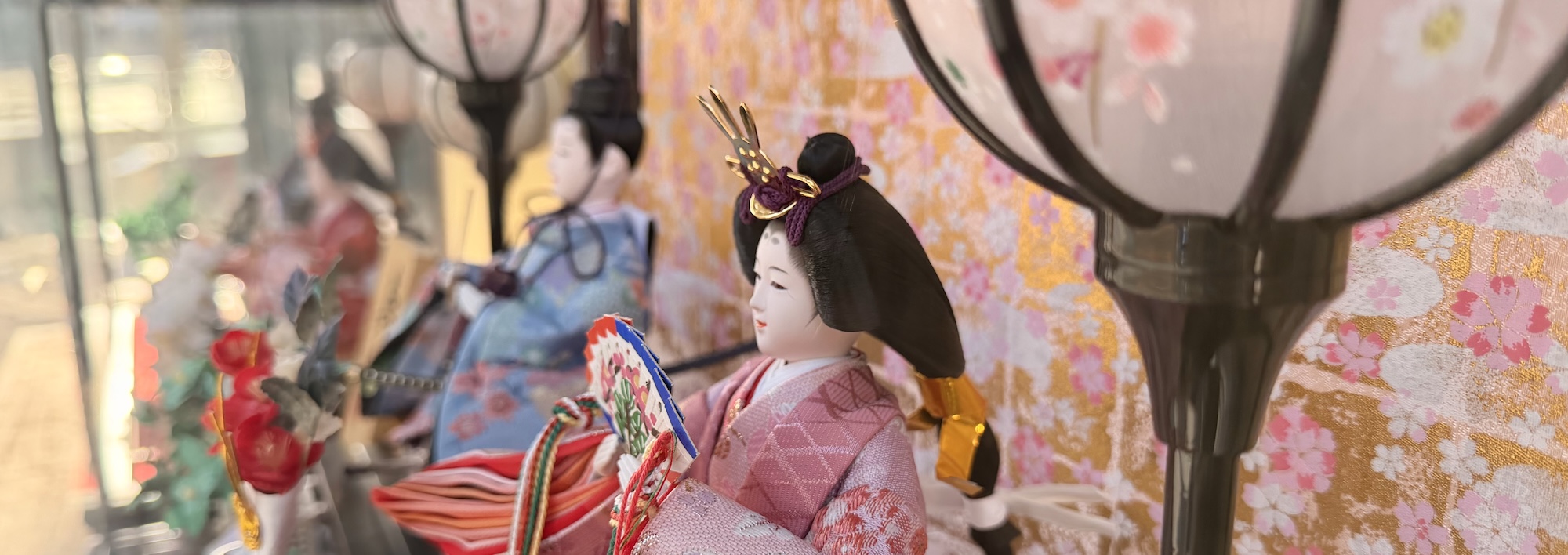
Girls’ Day Doll Festival
Hina Matsuri returns every March 3, and in Osaka there’s no better place to experience it than Matsuyamachi — the city’s historic doll district. In the weeks leading up to the holiday, tiered imperial displays fill shop windows and bring the tradition to life.
Every year on March 3, Japan observes Hina Matsuri — often translated as Girls’ Day or the Doll Festival. The tradition traces back to the Heian period (794–1185), when court nobles practiced purification rituals intended to transfer misfortune into symbolic objects. Over centuries, those rituals evolved into the display of hina dolls: tiered arrangements representing the imperial court. The Emperor and Empress are seated at the top and attendants arranged below.
Unlike Osaka’s larger shrine festivals or seasonal parades, Hina Matsuri remains primarily a domestic celebration. Most observances happen inside private homes. Some shrines conduct small ceremonial rites, but the holiday does not manifest as a major public spectacle in the city.
What Can I do Today to experience Girls’ Day?
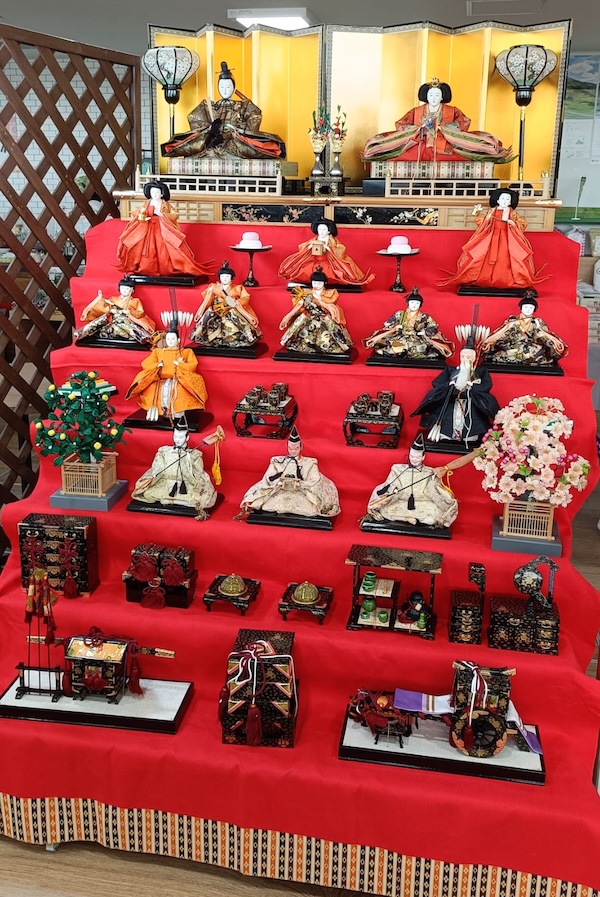 In Osaka, the most tangible way to experience Hina season is through Matsuyamachi, the city’s historic doll district in Chuo Ward. From late January through early March, storefronts fill with layered hina displays — lacquered platforms, silk-robed figures modeled on Heian court attire, folding gold screens, and intricate accessories.
Long-established merchants and wholesalers line Matsuyamachi-suji, alongside national brands such as Kyugetsu. Some displays are compact and contemporary; others rise five or seven tiers high as heirloom arrangements intended to be passed down through generations.
 While you are there, combine your Matsuyamachi visit with a stroll west toward the Karahori Shopping Street — a short walk away and home to small confectionaries and traditional wagashi makers (and home to OSAKA SCENE‘s head office). In the weeks surrounding Hina Matsuri, you’ll find hina arare, seasonal mochi, and spring-themed sweets that tie directly into the holiday.

 Tiered Imperial Displays — Multi-level hina doll sets filling shop windows.
Heian-Era Tradition — A festival dating back to 794–1185.
Generational Craftsmanship — Long-established doll merchants serving Kansai.
Seasonal Sweets Nearby — Hina arare and spring wagashi in Karahori.
Walkable Cultural Loop — Matsuyamachi to Karahori in under 15 minutes.
Photos: Osaka Scene Staff
Maps
THE SCENE: FAQ’s
ACCESS
Primary Experience Area: Matsuyamachi-suji (Chuo Ward, Osaka)
Best Station for Hina Displays:
Osaka Metro Nagahori Tsurumi-ryokuchi Line → Matsuyamachi Station (Exit 1)
Exit 1 places you directly onto Matsuyamachi-suji. Walk north or south along the street to see hina doll shop displays.
Karahori Shopping District Access:
From Matsuyamachi Station Exit 3, walk west 4 minutes toward Karahori Shotengai.
From Tanimachi 6-chome Station Exit 4, Turn Right, about 3 minutes to Karahori Shotengai.
From Osaka Station / Umeda:
Midosuji Line to Shinsaibashi → transfer to Nagahori Tsurumi-ryokuchi Line → Matsuyamachi.
From Namba:
Sennichimae Line to Tanimachi 9-chome → transfer to Tanimachi Line → Tanimachi 6-chome.
SCHEDULE
Official Holiday Date: March 3 (annually)
Public Display Window in Matsuyamachi:
Late January through March 3
Peak viewing period: Mid-February to March 3
Typical Shop Hours:
10:00–17:00 (varies by merchant)
There is no single centralized program schedule. Displays operate during normal shop business hours.
ADMISSION & PURCHASES
Admission: Free
Walking Matsuyamachi and viewing shop displays is completely free.
Purchases (Optional):
-
Compact decorative hina sets: approx. ¥8,000–¥30,000
-
Multi-tier heirloom sets: can exceed ¥100,000 depending on craftsmanship
-
Individual dolls and accessories: priced individually by shop
Seasonal Confectionery (Karahori / Nearby Shops):
-
Hina arare (rice crackers): ¥300–¥800
-
Spring wagashi and mochi: ¥400–¥900 per piece
-
Gift boxes vary by shop
INFO & TIPS
What is Hina Matsuri? A traditional Japanese holiday on March 3 celebrating the health and happiness of girls, marked by the display of hina dolls representing the imperial court.
Is there a major public festival in Osaka?
No large-scale parade or stage event takes place. The best public experience is walking Matsuyamachi during display season.
How long should I plan to spend strolling around Matsuyamachi & Karahori Shopping Street?
Most visitors spend 45–90 minutes browsing displays and nearby sweets shops.
What Exactly Will I See?
Tiered hina doll sets (2-tier to 7-tier arrangements)
- Emperor and Empress dolls in Heian court attire
- Miniature furnishings and ceremonial accessories
- Gold folding screens and silk backdrops
- Window displays arranged for seasonal viewing
This is a retail district, so displays vary by shop.
Is There a Shrine Ceremony I Can Attend?
Some shrines in Osaka conduct small-scale rites on or near March 3, but there is no large public ceremony tied specifically to Matsuyamachi. Hina Matsuri remains primarily a domestic tradition.
If you wish to include a shrine visit, Ikutama Shrine and Osaka Tenmangu are within broader walking distance of the area.
How Long Should I Plan to Spend There?
45–90 minutes is ideal for browsing doll displays and walking to Karahori for sweets.
Longer visits are possible if you explore side streets and cafés.
Is This Good for Families?
Yes. The displays are visually engaging and stroller-friendly. Matsuyamachi-suji is a standard city street with sidewalks.
Is It Accessible for Inbound Tourists?
Yes.
- No tickets required
- No Japanese required
- Displays are visual
- Shops are accustomed to seasonal browsing
Most merchants may not speak fluent English, but purchasing is straightforward.
Photography Policy
Exterior shop window displays may be photographed respectfully.
Interior photography policies vary by store — ask before shooting inside.