Login Sign Up
  • Scenes
    • The Sakura Scene
    • The Festival Scene
    • The Music Scene
    • The Food & Drink Scene
    • The Sports Scene
    • The Museum Scene
    • The Anime & Manga Scene
    • The Shopping Scene
    • The Arts & Crafts Scene
    • The Illuminations Scene
    • The Fireworks Scene
  • Events
    • March 2026
    • April 2026
    • May 2026
  • Guides
    • Spring Blossoms Guide
    • Osaka Castle Guide
    • Concert Guide
    • Sports Guide
  • Magazine
    • March Magazine
      • Hello Osaka! Hello World!
      • Baseball Is Back
      • March Music Month
      • Sumo: The Power of the Haru Basho
      • When Will Osaka Bloom?
    • February Magazine
      • February in Osaka: Winter in Full Swing
      • Valentine’s Day, the Japanese Way
      • Setsubun: Chasing Away Winter
      • Plum Blossom Season in Osaka
      • Osaka’s Late‑Winter Comfort Foods
    • January Magazine
      • The World’s No.1 Trending Destination
      • Expo’s 2026 Afterglow
    • December Magazine
      • Osaka in Lights
      • Countdown Osaka 2026
    • November Magazine
      • Life After the Expo
      • Peak Foliage in Osaka
      • One Day at Osaka Castle
      • Nakazaki-cho: Osaka’s Retro Village
    • October Magazine
      • Fall Sports in Season
      • Summer Sky’s Last Glow
      • Expo’s Grand Finale
      • Osaka’s Halloween Twist
  • Trip Planner
    • One Day in Osaka
    • Two Days in Osaka
    • Three Days in Osaka
    • Dawn to Dusk: A Full Day at Osaka Castle
  • 英語
    • 翻訳はまもなく公開されます。公開までの間はブラウザ翻訳をご利用ください。
    • 翻译即将发布,期间请使用浏览器翻译功能。
    • 번역은 곧 제공됩니다. 제공 전까지는 브라우저 번역 기능을 사용해 주세요.
    • Translation coming soon. Please use your browser’s translation function in the meantime.
Osaka Scene
  • Art Scene Art Scene
  • Car Scene Car Scene
  • Culture Scene Culture Scene
  • Expo Scene Expo Scene
  • Holiday Scene Holiday Scene
  • Movie Scene Movie Scene
  • Neighborhood Scene Neighborhood Scene
  • Sakura Scene Sakura Scene
  • Theater Scene Theater Scene
  • Scenes
    • The Sakura Scene
    • The Festival Scene
    • The Music Scene
    • The Food & Drink Scene
    • The Sports Scene
    • The Museum Scene
    • The Anime & Manga Scene
    • The Shopping Scene
    • The Arts & Crafts Scene
    • The Illuminations Scene
    • The Fireworks Scene
  • Events
    • March 2026
    • April 2026
    • May 2026
  • Guides
    • Spring Blossoms Guide
    • Osaka Castle Guide
    • Concert Guide
    • Sports Guide
  • Magazine
    • March Magazine
      • Hello Osaka! Hello World!
      • Baseball Is Back
      • March Music Month
      • Sumo: The Power of the Haru Basho
      • When Will Osaka Bloom?
    • February Magazine
      • February in Osaka: Winter in Full Swing
      • Valentine’s Day, the Japanese Way
      • Setsubun: Chasing Away Winter
      • Plum Blossom Season in Osaka
      • Osaka’s Late‑Winter Comfort Foods
    • January Magazine
      • The World’s No.1 Trending Destination
      • Expo’s 2026 Afterglow
    • December Magazine
      • Osaka in Lights
      • Countdown Osaka 2026
    • November Magazine
      • Life After the Expo
      • Peak Foliage in Osaka
      • One Day at Osaka Castle
      • Nakazaki-cho: Osaka’s Retro Village
    • October Magazine
      • Fall Sports in Season
      • Summer Sky’s Last Glow
      • Expo’s Grand Finale
      • Osaka’s Halloween Twist
  • Trip Planner
    • One Day in Osaka
    • Two Days in Osaka
    • Three Days in Osaka
    • Dawn to Dusk: A Full Day at Osaka Castle
  • 英語
    • 翻訳はまもなく公開されます。公開までの間はブラウザ翻訳をご利用ください。
    • 翻译即将发布,期间请使用浏览器翻译功能。
    • 번역은 곧 제공됩니다. 제공 전까지는 브라우저 번역 기능을 사용해 주세요.
    • Translation coming soon. Please use your browser’s translation function in the meantime.
Login Sign Up
March Top
Magazine

Osaka and the Power of the Haru Basho

Fifteen days. One ring. A city holding its breath.

Every March, as winter thins and the first hints of plum blossoms appear across Osaka, another seasonal marker arrives — heavier, louder, and far older than the pink drift of sakura. It's thunder in the Spring.

Every March, as winter thins and the first hints of plum blossoms appear across Osaka, another seasonal marker arrives — heavier, louder, and far older than the pink drift of sakura.

It is sumo season.

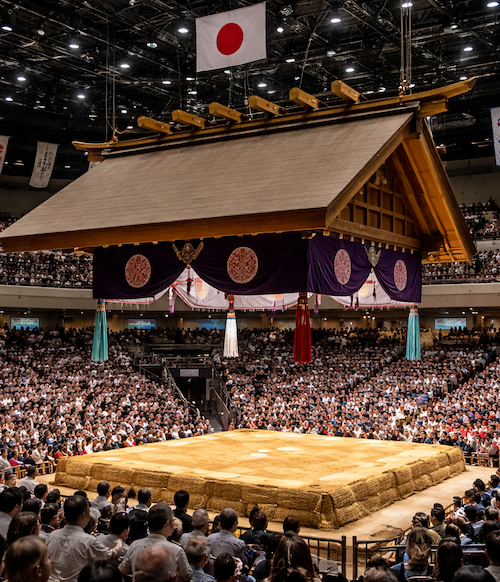
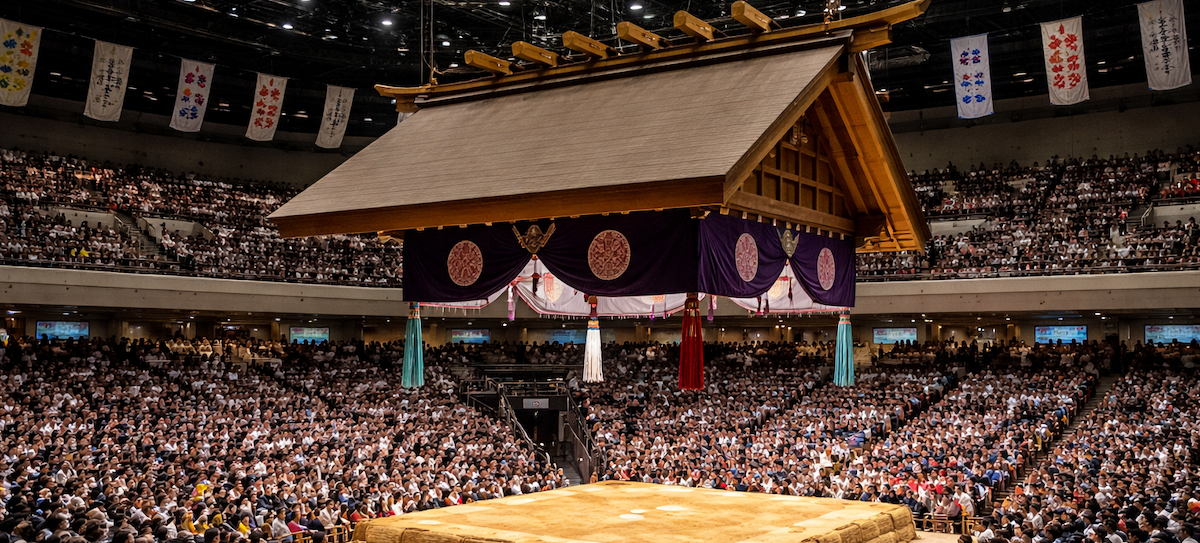
For fifteen consecutive days, the Haru Basho — the Spring Grand Sumo Tournament — transforms EDION Arena Osaka into the epicenter of Japan’s most ancient professional sport. A square of packed clay, raised from the arena floor and crowned with a Shinto-style roof, becomes sacred ground. The dohyō, or ring, is constructed by hand before each tournament, a physical reminder that this sport is built not only on strength, but on ritual continuity.

When the official ranking sheet — known as the banzuke — is released in late February, it sets the stage. The banzuke is not just a list of names. It is the sport’s hierarchy, meticulously ordered from East to West, top to bottom. Every promotion earned. Every demotion endured. In Osaka, fans study it the way baseball fans study standings. It is the roadmap for fifteen days of consequence.

Sumo Haru Formal

A Tournament That Shapes the Year

Sumo holds six grand tournaments each year, but Haru Basho carries particular weight. Positioned in March, it becomes the emotional and competitive hinge between winter and the rest of the calendar.

Unlike Western playoff systems, sumo unfolds over a strict 15-day format. Each top-division wrestler fights once per day. Fifteen bouts. No rematches. No postseason bracket. The wrestler with the best record at the end lifts the Emperor’s Cup.

That structure makes every single afternoon matter.

An 8–7 record secures a winning majority and often protects rank. A 7–8 losing record can trigger demotion. For those at the upper ranks — ozeki (the sport’s second-highest title) — strong double-digit performances are essential to maintain status. For a wrestler aiming to become yokozuna, the highest and most prestigious rank, consistent championships or near-championship performances are required.

Promotion is not automatic. It is evaluated by the Japan Sumo Association with intense scrutiny. That pressure travels with the wrestlers into Osaka.

By Day 5, narratives begin to form.
By Day 10, tension tightens.
By Day 14, the arena hums with arithmetic — who must win, who can afford to lose, who is still alive in the yūshō (championship) race.

Ritual Before Sport

For readers unfamiliar with sumo’s rhythm, the experience can be surprising. A single bout may last only seconds — but the minutes leading up to it are layered with ceremony.
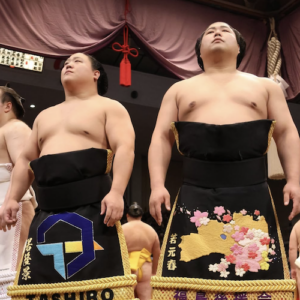
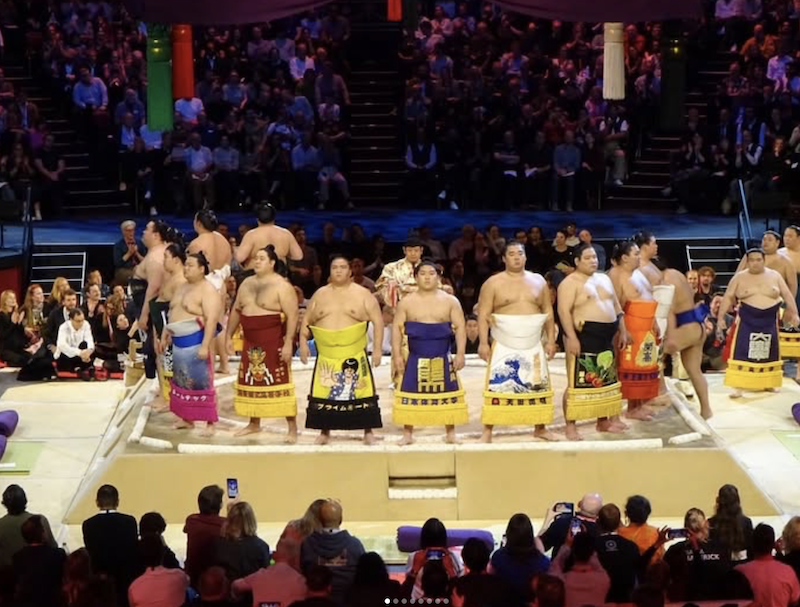
Each wrestler enters wearing a kesho-mawashi, a richly embroidered silk apron representing sponsors, supporters, or personal motifs. Salt is cast into the ring to purify it. Wrestlers stamp the clay floor to symbolically drive away malevolent spirits. The referee, dressed in a traditional kimono reminiscent of feudal-era court attire, calls the match.

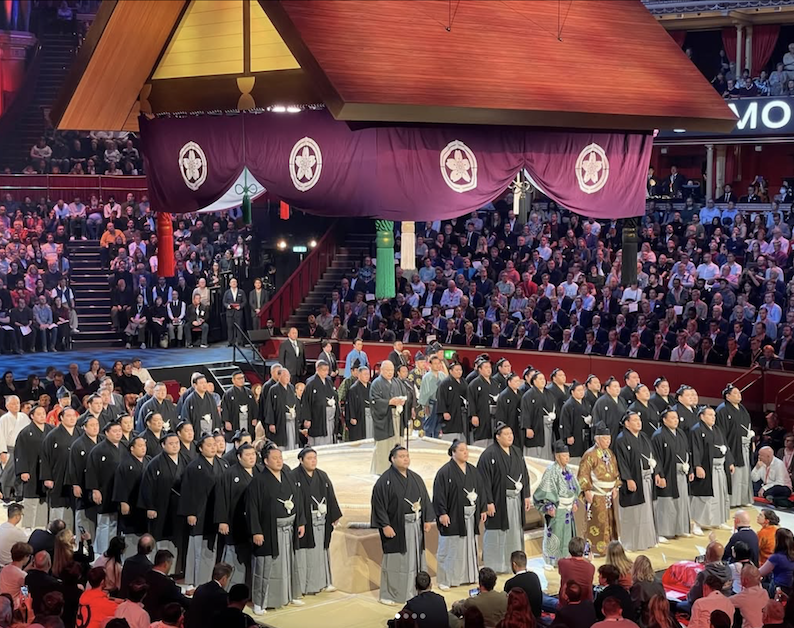
The most dramatic ritual belongs to the yokozuna. During the dohyō-iri, the grand champion performs a stylized ring-entering ceremony accompanied by attendants. A thick braided rope belt — weighing up to 20 kilograms — is tied around his waist. The stomps are thunderous. The arena goes silent.

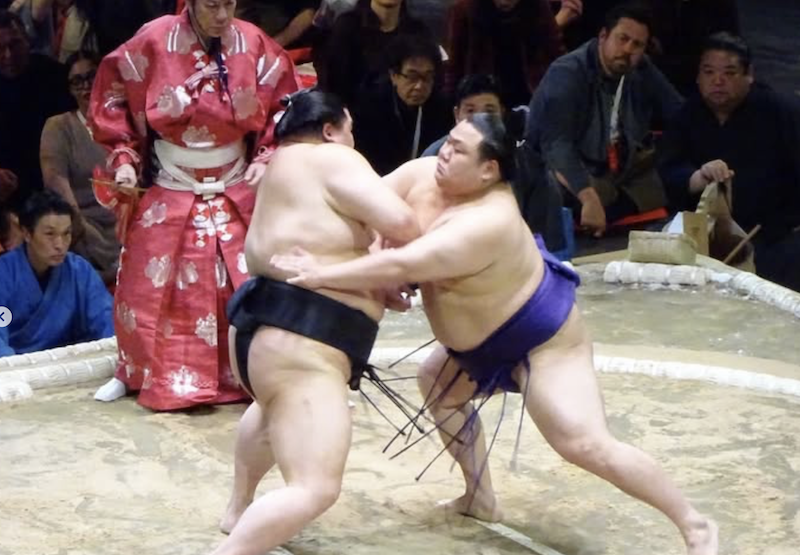
Then comes the tachiai — the explosive initial charge. In less than five seconds, months of training and thousands of hours of practice are distilled into impact.

Sumo may appear simple — push your opponent out or force him down — but beneath that simplicity lies a dense matrix of technique. Grip control. Foot placement. Timing. Balance shifts measured in millimeters. Osaka’s crowds recognize the subtleties. A well-executed throw draws audible appreciation.
Sumo Haru Move

The State of Sumo in 2026

Sumo in 2026 is both traditional and modern in ways that feel uniquely Japanese.

Television ratings remain robust, particularly among older demographics who grew up with the sport as appointment viewing. But in recent years, a noticeable influx of younger fans — many in their 20s and 30s — has reshaped the arena atmosphere. Social media clips of dramatic throws, wrestler personalities, and behind-the-scenes training footage have broadened appeal.

International interest has also grown. While sumo remains deeply rooted in Japanese culture and Shinto tradition, foreign-born wrestlers have long been part of the sport’s competitive fabric. Their success has expanded global awareness without diluting ritual formality.

Attendance numbers across recent tournaments reflect sustained demand, with many days — especially weekends and final days — selling out quickly. Osaka’s Haru Basho, in particular, has seen strong ticket interest, blending corporate spectators, long-time local fans, and international visitors drawn by the chance to witness sumo in its Kansai setting.

The demographic blend inside the arena tells its own story. Salarymen sit beside university students. Families bring children who cheer louder than expected. Tourists listen closely to the referee’s calls, gradually learning to decode the sport’s language.

What’s at Stake in Osaka This March

The Haru Basho is never just another stop on the calendar. It often reveals who will define the year.
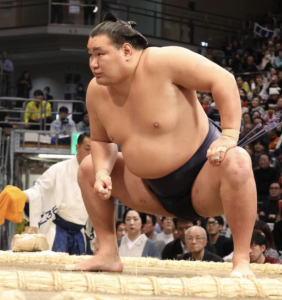
For wrestlers at the sport’s summit, Osaka can reinforce dominance — or expose vulnerability. A yokozuna who falters risks criticism. An ozeki chasing promotion must demonstrate consistency under pressure. Wrestlers in the lower half of the top division fight to preserve their place among the salaried elite.

Because rankings are recalculated after each tournament, Osaka’s results ripple forward. A breakout performance in March can propel a wrestler into the upper ranks by summer. A collapse can send him tumbling down the banzuke.

By the final weekend, the emotional weight becomes palpable. Scoreboards matter. Tiebreakers loom. If two wrestlers remain tied for the best record on Day 15, a championship playoff bout — rare and electric — can determine the winner in front of a roaring arena.

Osaka crowds respond to momentum. They sense when something historic may be unfolding.
Sumo Haru Ring

The Osaka Experience

xperiencing Haru Basho in Osaka carries a texture distinct from Tokyo’s Ryōgoku Kokugikan. The arena sits within walking distance of Namba’s restless nightlife and shopping streets, creating a striking contrast: outside, takoyaki stands and riverfront neon; inside, solemn ritual and controlled violence.

Spectators with traditional floor seating open carefully packed bento boxes between bouts. Upper-tier fans lean forward as wrestlers crouch at the starting line. Elderly attendees debate technique. Younger fans photograph ceremonial entrances.

Unlike many global sporting events, sumo’s day flows gradually. Early divisions begin in the morning before sparse crowds. By mid-afternoon, energy builds as jūryō (the second division) wrestlers enter. When the top makuuchi division takes the ring, the building is full.

It is possible to arrive in Osaka knowing little about sumo and leave feeling its pulse.

In a city famous for food, laughter, and baseball rivalries, the Haru Basho represents something older and steadier. It is a reminder that some traditions are not nostalgic artifacts but living systems — culturally resonant.

When senshūraku — the final day — concludes and the Emperor’s Cup is awarded, the dohyō is dismantled. The clay ring that absorbed two weeks of impact disappears. But the imprint remains. Osaka steps into spring carrying the echoes of bodies colliding, salt scattering, and crowds rising in unison. Thunder precedes pedals.

THE SCENE: FAQs

ACCESS

EDION Arena Osaka (Osaka Prefectural Gymnasium)

Address: 3-4-36 Namba, Chuo-ku, Osaka 556-0011

Located in central Namba, just south of Namba Parks and within walking distance of multiple major rail hubs.


Osaka Metro Midosuji Line → Namba Station

Exit 5 → Approx. 8-minute walk

Follow signs toward Namba Parks, continue south past Namba Parks along Nansan-dori.

Osaka Metro Yotsubashi Line → Namba Station

Exit 32 → Approx. 6-minute walk

Osaka Metro Sennichimae Line → Namba Station

Exit 5 → Approx. 8-minute walk

Nankai Main Line → Nankai Namba Station

South Exit → Approx. 3-minute walk

JR Yamatoji Line → JR Namba Station

North Exit → Approx. 12-minute walk

SCHEDULE

Tournament Dates

March 8–22, 2026

15 consecutive days (no rest days)


Daily Flow

8:30 a.m. – Arena doors open

Morning – Jonokuchi, Jonidan, Sandanme divisions

Late Morning to Early Afternoon – Makushita division

Approx. 2:00 p.m. – Jūryō (second division) ring-entering ceremony

Approx. 3:40–4:00 p.m. – Makuuchi (top division) ring-entering ceremony

4:00–6:00 p.m. – Top division bouts

Approx. 6:00 p.m. – Final match of the day


Key Days

Day 1 (March 8) – Opening ceremony, full arena energy.

Nakabi (Middle Sunday, March 15) – Often a competitive turning point.

Final Weekend (March 21–22) – Championship race intensifies.

Senshūraku (March 22) – Final day; Emperor’s Cup presentation and potential playoff bout if tied.

Wrestlers compete once per day across the full 15-day stretch.


Arrival Timing Guidance

• Morning (lower divisions): 8:30–10:30 a.m. — light crowds, easiest entry.

• Peak arrival window (top division): 2:30–4:00 p.m. — expect congestion.

• Final bouts conclude approximately 6:00 p.m.

• Post-event exit congestion typically lasts 20–30 minutes.

Public transportation is strongly recommended. There is no dedicated spectator parking.

TICKETS

Tickets are sold exclusively through authorized platforms:

• Japan Sumo Association Official Site

https://www.sumo.or.jp/EnTicket/

• Ticket Oosumo

https://ticket.pia.jp/piasumo

• Ticket Pia

https://pia.jp

• Lawson Ticket

https://l-tike.com

General public sales began February 7, 2026.


Price Ranges (2026 Standard Tiers)

Prices vary by day (weekend vs weekday) and seat location.

Masu Box Seats (4-person traditional floor boxes):

Approx. ¥36,000–¥52,000 per box

Chair Seats (Arena Level):

Approx. ¥8,000–¥15,000

Second Floor Seats:

Approx. ¥4,000–¥9,000

Accessible Seating:

Available via official ticketing channels (advance coordination required)

Weekend and final-day tickets often sell out early.


Important Ticket Notes

• Tickets are date-specific and cannot be reused for another day.

• Re-entry is permitted with hand stamp (confirm at entry).

• Electronic QR code tickets are common; bring charged smartphone.

• Unauthorized resale may result in denied entry.

INFO

Food & Drink

• Outside food is permitted.

• Bento boxes are commonly consumed between bouts.

• Concessions available inside arena (limited selection).


Photography

• Non-flash photography permitted from spectator seating.

• Professional equipment may be restricted.

• Video recording policies may vary — check official guidelines.


Best Viewing Strategy

• Arrive before 2:00 p.m. to experience division progression.

• Even upper-tier seats provide full ring visibility due to compact arena design.

• For atmosphere, final three bouts of the day are the most intense.


What First-Time Visitors Should Know

• Matches are brief — often under 10 seconds.

• Ritual is as important as the bout itself.

• Applause follows technique; silence often precedes impact.

• You may enter and exit the arena throughout the day with a valid ticket.


Accessibility

• Elevator access available.

• Wheelchair seating available (advance reservation recommended).

• Restrooms located on each level.


Contacts

Japan Sumo Association

Official English Site: https://www.sumo.or.jp/En/

EDION Arena Osaka

Official Venue Site: https://www.furitutaiikukaikan.ne.jp

VIDEO

Osaka Scene Staff
Guide by Osaka Scene Staff

Photos: Official Sumo Websites

Artwork: Osaka Scene

You may also be interested in:

buffaloes opener win

Baseball Is Back

Osaka Jo Concert Top

March Music Month

March Top

Osaka and the Power of the Haru Basho

Also read:

Countdown_Dotonbori

Osaka Crowned the World’s No.1 Trending Destination

ad

Also read:

buffaloes opener win

Baseball Is Back

Osaka Scene: GUIDES

GSportsuideCover

Osaka Sports Guide

March Cover

March 2026

CastleGuideCover

Osaka Castle

AprilCover

April 2026

MozuFest3
COMING SOON!

Festival Guide

Guide Cover

May 2026

Biwa2
COMING SOON!

Fireworks

Displays & Festivals

What can I do TODAY in Osaka?

Instagram Facebook Youtube

Company

  • About us
  • Submit an Event
  • Advertise with Us
  • Disclosure

Contact Us

  • Email: mail@osakascene.com
2026 © Osaka Scene. All rights reserved.
Log in Sign Up
Forgot your password? Reset password.

Sending login info,please wait...

Sending info,please wait...

Back to login

Sending register info,please wait...

Back to Registration
  • Anime & Manga Scene
  • Art Scene
  • Arts & Crafts Scene
  • Autumn Scene
  • Car Scene
  • Culture Scene
  • Event Scene
  • Expo Scene
  • Fashion Scene
  • Festival Scene
  • Fireworks Scene
  • Food & Drink Scene
  • History Scene
  • Holiday Scene
  • Illumination Scene
  • Kaiju Scene
  • Kids Scene
  • Market Scene
  • Movie Scene
  • Museum Scene
  • Music Scene
  • Neighborhood Scene
  • Outdoor Scene
  • Sakura Scene
  • Shopping Scene
  • Sports Scene
  • Theater Scene
  • Tour Scene
  • Travel Scene