Setsubun: Chasing Away Winter, Welcoming Spring
Beans, demons, and a fresh start
Setsubun sits at one of Japan’s most meaningful seasonal thresholds: the point when winter is considered to end and spring begins. On calendars it can look like a single day—typically in early February—but in practice it’s closer to a mood that spreads across the city: a collective reminder that the cold won’t last forever, and that the new season deserves a proper welcome.
In Osaka, that meaning takes on different forms depending on where and how you experience it. From formal ritual to street-level celebration, Setsubun here isn’t a single event, but a spectrum of moments shaped by place, timing, and intention.
What Setsubun Marks, and Why It Still Feels Real
Setsubun sits at one of Japan’s most meaningful seasonal thresholds: the point when winter is considered to end and spring begins. It is observed in early February each year—typically February 2 or 3—depending on how the traditional calendar aligns with the solar year.
At the center of Setsubun is mamemaki, the bean-throwing ritual. Roasted soybeans are tossed toward the outside—out of doorways, shrine precincts, or designated ritual areas—while people chant “Oni wa soto, fuku wa uchi” — “Demons out, good fortune in.” The words are simple, but the meaning is clear: drive away misfortune and welcome a better season ahead. Even without religious framing, the logic is intuitive: clear out what you don’t want to carry, and invite in what you do.
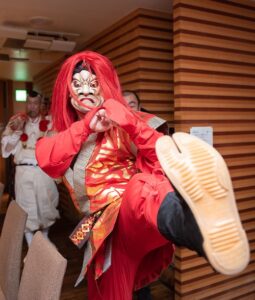
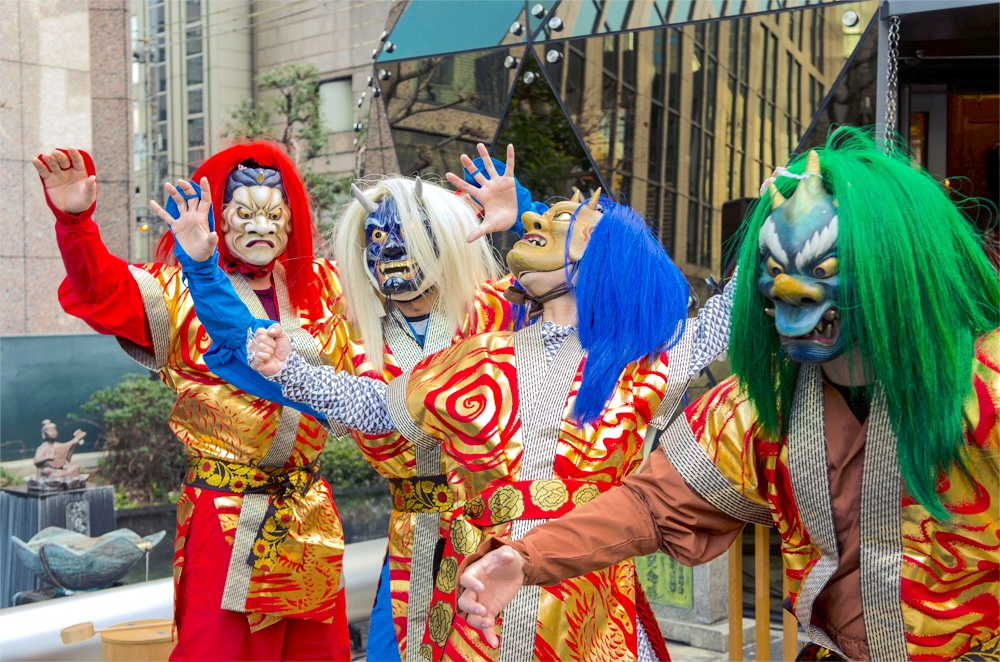
The oni referenced in the chant are often given a physical presence as well. During Setsubun, people wearing oni masks appear at shrines, temples, and neighborhood events, turning misfortune into something visible and external. The masks aren’t meant to frighten so much as to clarify—giving bad luck, illness, or lingering winter energy a face so it can be confronted, laughed at, and sent away together.
After the beans are thrown, many people eat them as well. The custom is to eat the same number of roasted soybeans as your age, sometimes plus one for the year ahead. Known as fukumame, the beans are believed to carry good fortune and protection, turning the ritual inward after the outward act of driving misfortune away. It’s a small, almost quiet gesture—counting beans, eating them one by one—but it completes the meaning of Setsubun.
For many foreign residents, Setsubun is the first time Japanese tradition feels participatory rather than observational. You simply show up, follow the flow, and join in—making it one of the easiest cultural entry points in Osaka.
Sumiyoshi Taisha: The Big, Classic Osaka Setsubun Experience
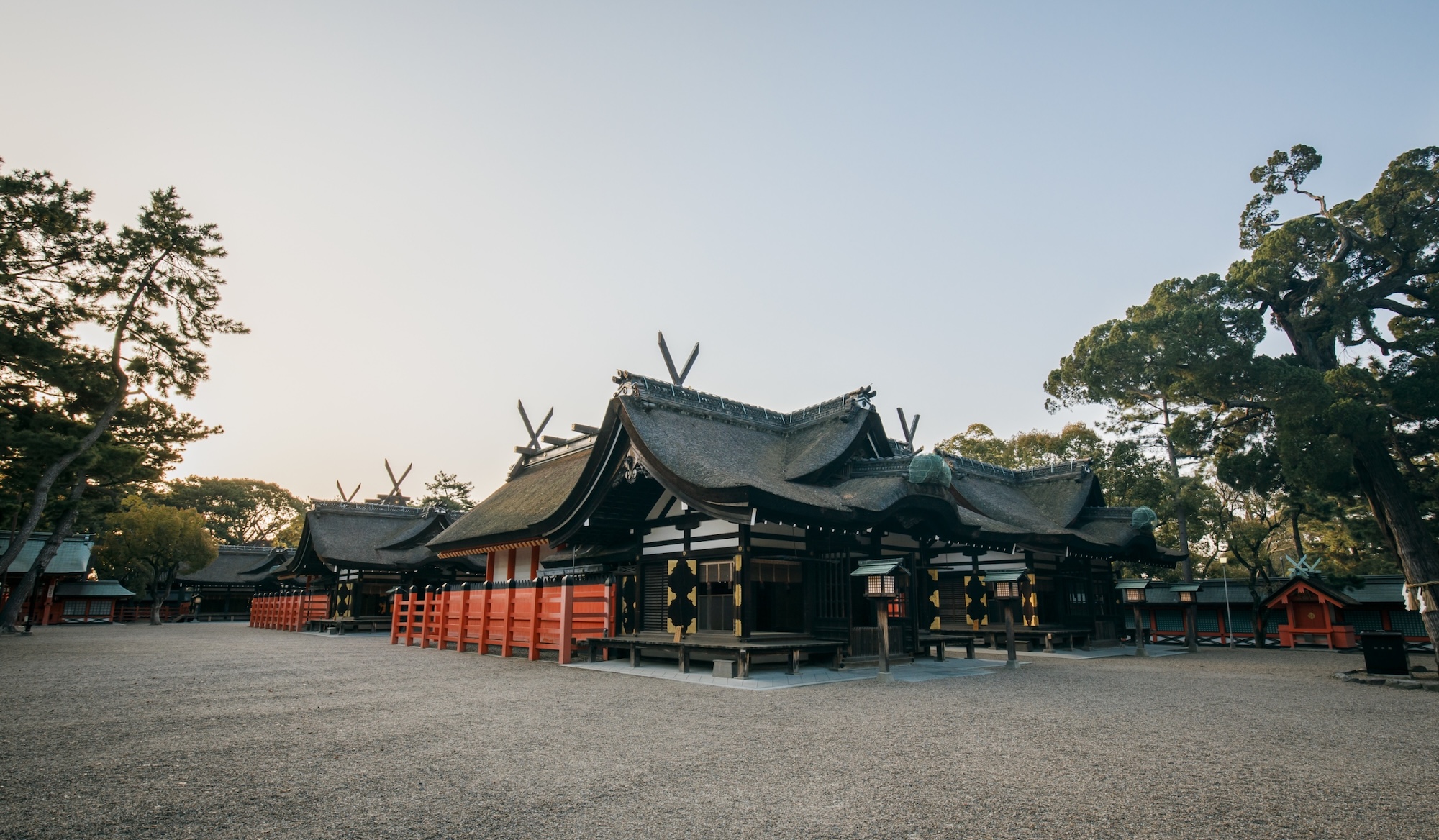
If Setsubun in Osaka has a center of gravity, this is it. Sumiyoshi Taisha doesn’t just host a morning ritual — it absorbs the city for an afternoon and sends it back out reset, ready to put winter behind it.
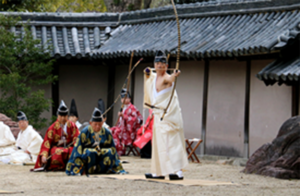
Early in the day, the shrine fills gradually with families and older visitors, many treating Setsubun as a solemn annual checkpoint rather than a spectacle. Formal Shinto rites unfold quietly within the precincts, including ritual archery used to symbolically drive away misfortune, giving the observance a measured, ceremonial tone before the crowds arrive.
By late afternoon into early evening, the shrine reaches its peak. Crowds compress near the main ritual areas, voices rise, and the chant—“Oni wa soto, fuku wa uchi” (“Demons out, good fortune in”)—moves through the grounds in waves. When beans are thrown, it’s physical and competitive in a distinctly Osaka way: laughter when they miss, boisterous bursts as beans arc overhead, and an easy acceptance of close quarters.
What sets Sumiyoshi apart is scale with structure. Even as participation intensifies, the shrine’s layout allows moments of ritual focus and reflection to coexist with collective release. Visitors step aside to watch, catch their breath, or eat lucky beans—often in numbers matching their age—without fully leaving the flow of the event.
For first-timers, early afternoon offers the clearest introduction. For those who want Setsubun at full volume, early evening delivers the communal surge people remember all year.
Shitennō-ji: Setsubun with Historical Weight
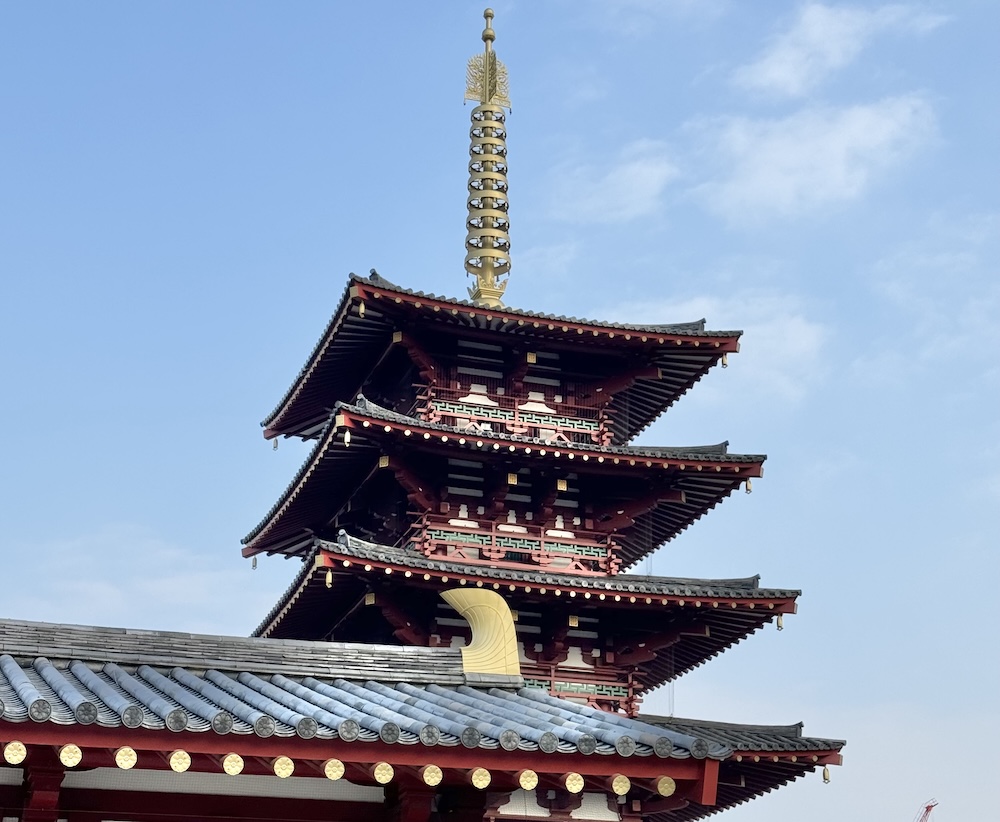
If Sumiyoshi Taisha shows Setsubun as a communal surge, Shitennō-ji reveals its quieter, more contemplative side. As one of Japan’s oldest Buddhist temples, the observance here feels less like an event and more like something that has been repeated, refined, and carried forward through centuries.
Setsubun at Shitennō-ji emphasizes prayer and intention over spectacle. The mood is noticeably calmer, with fewer shouts and none of the physical urgency that defines larger shrine celebrations.
Mamemaki is part of the observance, but it unfolds in a far more orderly, restrained way than at major Shinto shrines. Beans are thrown and distributed ceremonially, and visitors move deliberately—pausing to pray, offer incense, and quietly mark the seasonal shift for themselves. It’s a distinctly Buddhist framing of Setsubun, where reflection carries as much weight as participation.
Throughout the day, ceremonies and public moments draw a steady flow of visitors without the sharp crowd surges seen elsewhere. This makes Shitennō-ji especially appealing to those who want to experience how Buddhist temples frame Setsubun differently from Shinto shrines—less about driving something out, and more about restoring balance and clarity as the year turns.
Dōjima Yakushidō: The Most Playful Face of Setsubun
If Sumiyoshi Taisha captures Setsubun at its most energetic and Shitennō-ji reveals its reflective Buddhist core, Dōjima Yakushidō is where the day turns unmistakably festive. This is Setsubun experienced at street level—colorful, theatrical, and easy to join, even for those encountering it by chance.
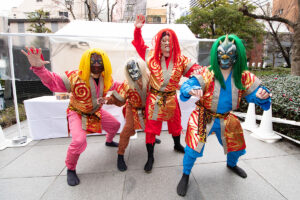
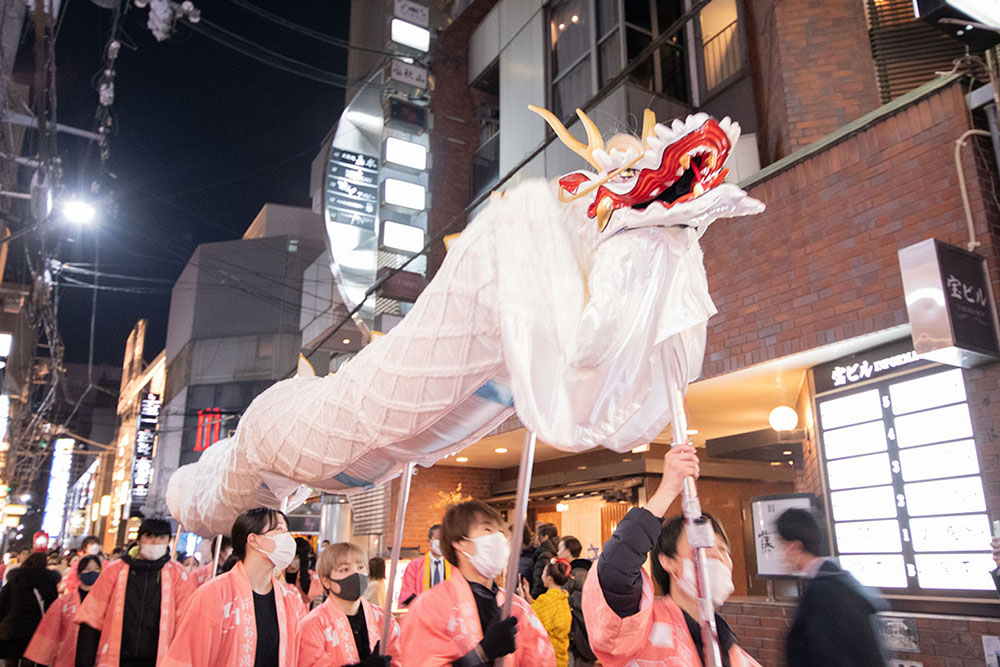
Oni appear and engage directly with the crowd, misfortune given a visible form that can be laughed at, chased, and symbolically driven away. A dragon ritual adds movement and visual drama, weaving through the space and reinforcing the sense that Setsubun here is meant to be seen, felt, and shared.
Unlike the vast precincts of major shrines, Dōjima Yakushidō’s celebration spills naturally into the surrounding streets. Participants gather close, voices rise, and the boundary between ritual and neighborhood life dissolves. Mamemaki takes place not as a distant ceremony but as a communal act—beans thrown, caught, and shared in a way that feels playful without losing its symbolic weight.
What sets Dōjima apart is its sustained energy and welcoming atmosphere. For visitors, this is often the moment Setsubun clicks—not just as a seasonal custom, but as a living festival shaped by people, movement, and sound.
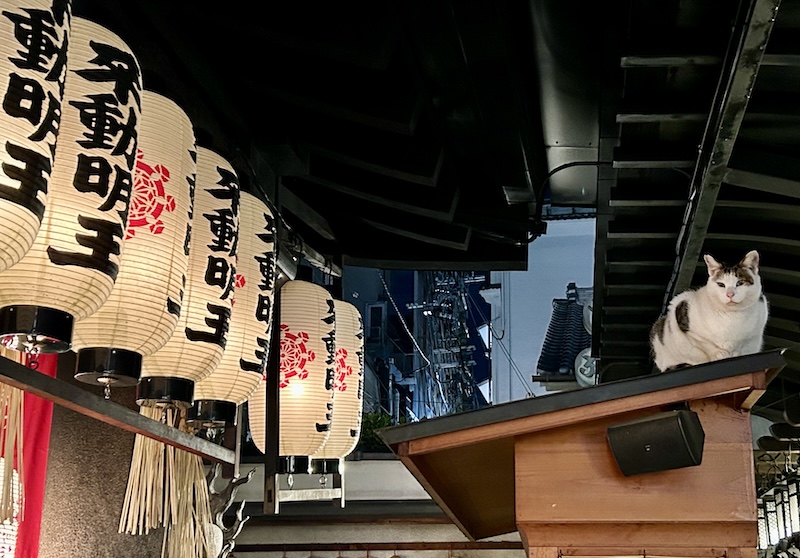
Hōzen-ji: Small-Scale Setsubun in the Middle of the City
Hōzen-ji offers a markedly different way to experience Setsubun in Osaka—one shaped by scale and timing rather than spectacle. Tucked just off Namba’s busiest streets, the temple’s observance is brief and intimate, designed for people who encounter it in passing rather than plan their day around it.
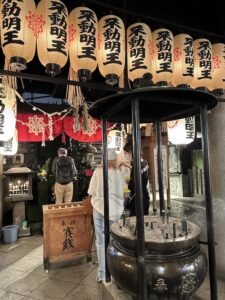
Setsubun moments here tend to surface from late afternoon into early evening. Observances are compact and loosely timed: a short chant, a quiet offering, a small distribution of beans. There’s no crowd surge and no single focal moment—just repeated, understated acts woven into the flow of the neighborhood.
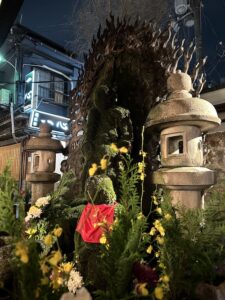
At Hozen-ji the focus centers on Mizukake Fudō Myōō, the temple’s moss-covered statue. During Setsubun, the familiar practice of pouring water and offering prayers takes on seasonal meaning, framing the transition from winter to spring as something released gently rather than forcefully driven away. It’s a Buddhist interpretation of Setsubun that emphasizes intention, reflection, and personal reset.
Hōzen-ji appeals to visitors who want to experience Setsubun without committing to crowds or schedules. You don’t need to arrive at a precise time or understand every ritual. You simply step in, take part for a moment, and continue on—carrying the meaning with you rather than the memory of an event.

What makes Setsubun compelling in Osaka isn’t just the ritual itself, but how naturally it fits into the city’s rhythm. It isn’t treated as something precious or distant. It’s loud where it should be loud, quiet where it should be quiet, and flexible enough to meet people wherever they are in their day.
Whether you find yourself in the surge at Sumiyoshi Taisha, the calm of Shitennō-ji, the fleeting intimacy of Hōzen-ji, or at a small neighborhood shrine you happen upon along the way, the meaning is the same: release what no longer serves you, and make space for what comes next.
That’s why Setsubun endures here. Not because it’s preserved perfectly—but because it’s practiced imperfectly, year after year, by people who simply show up.
And in Osaka, that’s usually enough.
THE SCENE: FAQs
Sumiyoshi Taisha
Address: 2-9-89 Sumiyoshi, Sumiyoshi-ku, Osaka
Train Access:
Nankai Main Line → Sumiyoshitaisha Station (approx. 3–5 min walk)
Hankai Uemachi Line → Sumiyoshitoriimae Station (approx. 1–2 min walk)
This is the easiest major Setsubun site in Osaka to access without transfers from Namba or Shin-Imamiya. On Setsubun day, station platforms and surrounding streets become crowded from mid-afternoon onward; arriving earlier significantly improves flow and comfort.
Shitennō-ji
Address: 1-11-18 Shitennōji, Tennōji-ku, Osaka
Metro Access:
Osaka Metro Tanimachi Line → Shitennōji-mae Yūhigaoka Station (approx. 8–10 min walk)
Shitennō-ji’s approach roads are wide and calm compared to shrine precincts, making access straightforward even during ceremonies. Visitors seeking a quieter experience often choose this location specifically for its manageable pedestrian flow.
Dōjima Yakushidō
Address: 1-6-20 Dōjima, Kita-ku, Osaka-shi, Osaka 530-0003
Train Access:
JR Line → Kitashinchi Station Approx. 5–7 minutes on foot
Osaka Metro Yotsubashi Line → Nishi-Umeda Station Approx. 8–10 minutes on foot
Osaka Metro Midosuji Line → Yodoyabashi Station Approx. 10–12 minutes on foot
The temple is situated along local streets rather than a large precinct, and activity may extend into surrounding roadways during Setsubun.
Hōzen-ji
Address: 1-2-16 Namba, Chūō-ku, Osaka
Metro Access:
Osaka Metro Midosuji Line → Namba Station (approx. 7–10 min walk)
Hōzen-ji is located down a narrow stone alley near Hōzen-ji Yokocho. The entrance can be easy to miss, especially at night. There is no crowd control, so visitors should move slowly and respectfully through the space.
Neighborhood Shrines (Various Locations)
Smaller shrines throughout Osaka typically sit within residential districts and are accessible via local stations or short neighborhood walks. These sites are rarely signposted in English and may not appear on tourist maps, but they are often discovered naturally while walking.
Setsubun is observed once per year in early February, marking the day before the start of spring (Risshun).
Most years: February 3
Some years: February 2
Ceremonies :
There is no single universal timetable. Each shrine or temple sets its own schedule annually.
Sumiyoshi Taisha:
Ceremonies and mamemaki typically begin midday and continue in stages through early evening, with peak crowds from late afternoon to early evening.
Shitennō-ji:
Observances generally take place mid-afternoon, with a calmer, more structured pace and fewer crowd surges.
Dōjima Yakushidō:
Daytime: Buddhist prayer rites and early public observances
Afternoon to early evening: Increased activity, appearance of oni, dragon ritual/procession, and mamemaki
Evening: Peak energy as crowds gather and street-level participation intensifies
Hōzen-ji:
Ritual moments are brief and loosely timed, usually unfolding early evening and lasting only short intervals.
Neighborhood shrines:
Most commonly mid-afternoon, often centered around families and children.
Because schedules vary year to year, the best strategy is choosing a time window (afternoon vs evening) rather than chasing a specific minute.
Admission: Free at all listed shrines and temples
Optional items sold on site may include:
-
Lucky beans (fukumame)
-
Protective charms (omamori)
-
Paper talismans or votive slips
Prices vary by site but are generally inexpensive and cash-friendly.
Crowds: Expect the heaviest crowds at major shrines, especially Sumiyoshi Taisha, from late afternoon onward
Dress: February evenings can be cold; wear warm layers and comfortable walking shoes
Behavior: Follow staff and volunteer guidance during bean-throwing rituals; pushing or aggressive behavior is discouraged
Photography: Generally permitted, but avoid blocking ritual areas or close-up flash photography during ceremonies
Children: Setsubun is family-friendly, but evening crowds may be overwhelming for very young children
Accessibility Notes
Sumiyoshi Taisha: Large grounds with flat pathways; some crowd compression during peak hours
Shitennō-ji: Wide walkways and calmer pacing make it the most accessible option
-
Hōzen-ji: Narrow stone paths and steps; limited accessibility for wheelchairs or strollers
English signage is limited at all locations; however, rituals are intuitive and do not require language comprehension to participate respectfully.
Contacts & Official Sources
-
Sumiyoshi Taisha: https://www.sumiyoshitaisha.net
-
Shitennō-ji: https://www.shitennoji.or.jp
-
Hōzen-ji: https://hozenji.or.jp
All schedules and ceremonial details are confirmed annually via official shrine and temple announcements.
VIDEO
Photos: Official Websites, Osaka Scene Staff
Video: Dōjima Yakushidō You Tube Channel
You may also be interested in:
Also read:
Osaka Scene: GUIDES
Festival Guide