





Two Days in Osaka
From Castles to Glowing Nights!
Day One — Minami Immersion
Osaka has a reputation as Japan’s kitchen, but it’s also one of the country’s most photogenic and personality-filled cities. A quick day trip gives you a taste — the stone walls of Osaka Castle, the bustle of Kuromon Market, the glow of the signs lining Dotonbori. But if you can spare two days, the experience transforms.
With a little more time, Osaka reveals its contrasts: the nostalgic backstreets of Shinsekai balanced against the modern shine of Umeda’s skyscrapers, street food bites alongside upscale dining, historic shrines framed by youth fashion boulevards.
This two-day feature takes you from morning castle strolls to the sign-lit canals of Minami on Day One, then from retro street corners to sky-high observatories, wrapping up with one of Japan’s most exciting dining scenes in the Kita section of Osaka.
You’ve arrived in Osaka! Whether you got here by plane to the airport or to Shin-Osaka station by Bullet Train, we highly recommend shipping your luggage to your hotel so you are hands-free for our exciting day ahead!
So let’s start our Osaka adventure by exploring Osaka’s history—at its most iconic landmark, Osaka Castle.
Start Your Day Where Osaka Began
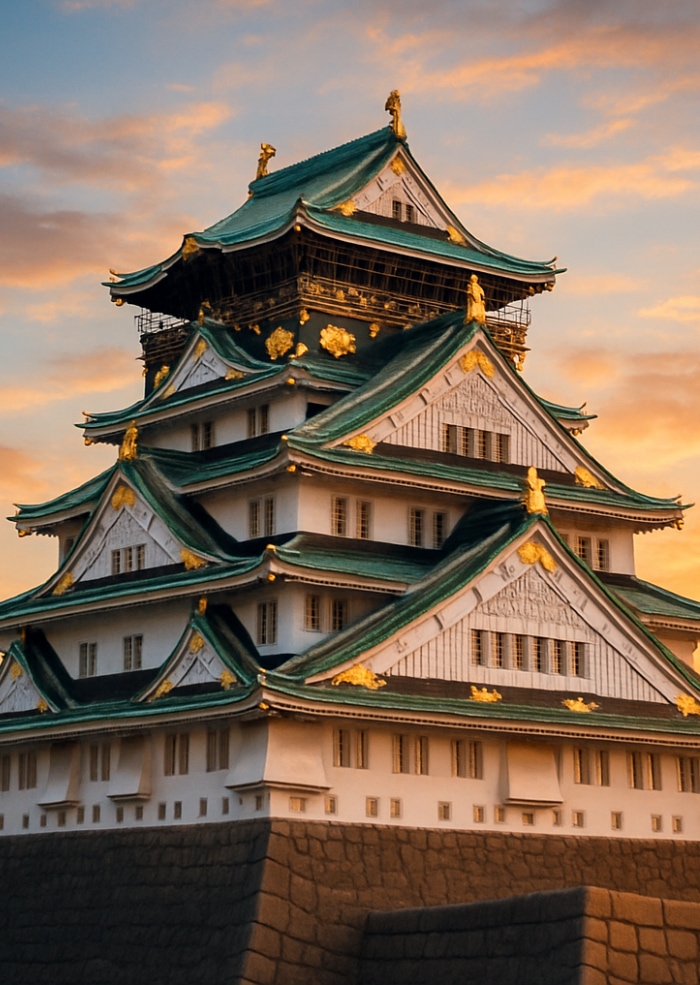
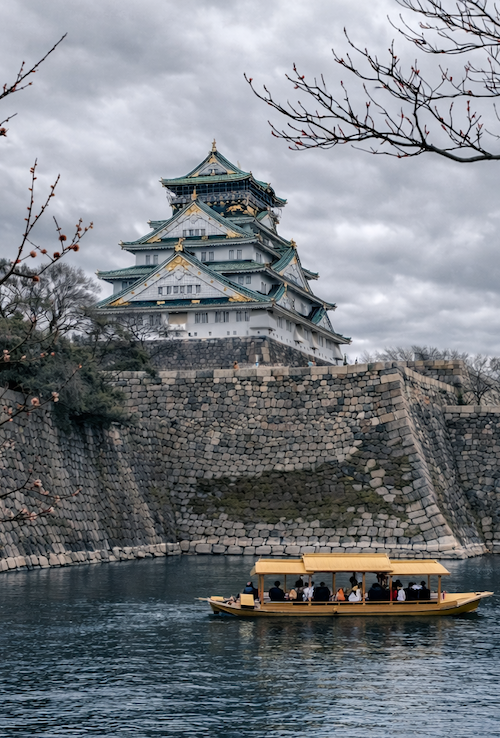
Begin where Osaka itself began — Osaka Castle. You don’t “arrive” at the Castle; you approach it. The walk lets your eyes adjust to scale—first the outer stone ramparts (each block the size of a small car), then the shimmer of water, and finally the keep itself, white walls trimmed in gold leaf, floating above a mountain of granite. You cross the moat and pass through one of the massive castle gates, and perspective snaps into place. Those gates were engineered to funnel invading armies into tight, defensible angles; now they slow modern crowds just long enough for you to glance up and notice the carp-shaped roof tiles and gilded tigers glinting on the eaves.
Osaka Castle has been razed and rebuilt more than once—by war, lightning, and ambition—and the present keep, completed in the 1930s and restored since, houses a modern museum that tells a very old story with surprising clarity.
Osaka Castle Museum
The stairs between floors are part of the narrative: each landing drops you deeper into context—Toyotomi Hideyoshi’s rise from foot soldier to unifier, the castle’s role as both palace and fortress, the emergence of early modern Osaka as a merchant capital.
Dioramas chart the Winter and Summer Sieges of Osaka (1614–1615); maps bloom with arrows like veins; and armor—lacquered cuirasses, antlered helmets, crested jingasa—glows under glass so you can study rivets and silk lacing up close. Placards are bilingual and specific; you’re not reading myth so much as logistics—food supplies, troop movements, stone-hauling techniques.
Look for the battle screens, models, and large-scale painted screens—reproductions of the famous Osaka Campaigns that let you zoom in on tiny horsemen and field banners. Relief models of the keep and walls show the genius of those impossible stones: quarried in distant provinces, shipped by sea and river, then stacked with tolerances that have outlived earthquakes and empires.
The observation deck is where past and present braid together. Step out, and Osaka unfurls in every direction: west to the Umeda skyline and the Yodogawa River, south to Abeno Harukas, east to the blue hum of the Ikoma Mountains, north to long green corridors of parkland and moat. The deck is ringed, so linger—watch morning sun crawl across office towers, or pick out the day’s later destinations like markers on a board.
Take a Break and Stroll Through History
When you exit the keep, don’t leave the park—give yourself an hour to wander its textures. Walk the curve of the inner moat, take the Castle Tram or a ride on the Castle Cruise to get a new perspective on the massive Castle walls.
Veer into Nishinomaru Garden—a ticketed lawn with a postcard view of the keep. Spring brings a cathedral of blossoms from 600 cherry trees; autumn turns the maples lacquer-red.
Follow the paths toward the fountain plaza near Osaka-jo Hall and pause for a light snack to tide you over until lunch. If you’re lucky, you’ll get to hear a morning soundcheck of that evening’s headliner at the Band Shell.
If you have time (and you should make it), loop past the Plum Grove. The plums bloom earlier than cherries—January to March—photogenic against pale winter light.
A short detour brings you to Peace Osaka, a museum presenting sobering galleries on wartime Osaka and postwar rebuilding: artifacts, testimonies, and images that anchor the day’s pleasures in perspective. It’s honest, and you leave with a deeper sense of the city’s resilience.
When you finally drift back toward the station, the castle has done its work: with our slower two-day plan, you’re unhurried, but hungry. Which is exactly how you want to arrive at our next stop—Osaka’s pantry—ready to eat your way through the day.
Fuel Up at Kuromon Market
You’ve been walking through history all morning. Now let your nose lead the way. Step into Kuromon, and the air changes — grilling scallops, buttery wagyu, the sweetness of cut fruit. For more than a century, “Osaka’s Kitchen” has fueled the city’s appetite under 580 meters of covered arcade. Here, lunch is a moving feast: thick-cut tuna skewers at Marusho; scallops searing on the shell at Chuo Gyorui, brushed with soy and butter; oysters cracked open with a squeeze of lemon; wagyu cubes torched to a caramelized edge; and molten takoyaki at Kukuru, its line of locals the best endorsement. Vendors banter in Kansai dialect, kids try grilled eel for the first time, and chefs in white coats thread the aisles in search of perfect cuts. Eat along the way or choose from one of the sit-down restaurants. Eating here is less a meal than a rite — you join the city’s rhythm, one bite at a time.
Den-Den Town
Osaka’s playground for hobbyists and collectors buzzes with arcade jingles and LED glow. Super Potato is retro-gamer heaven — Famicom cartridges, Game Boys in every color, pixel posters from the 80s. Mandarake stacks floors with rare manga, figurines, and cosplay. Joshin Nihonbashi anchors entire blocks with cameras, headphones, and the latest gadgets. Even if you’re just browsing, the spectacle is irresistible: cosplayers posing, claw machines chiming, glass cases glittering with vintage toys.
Namba Yasaka Shrine
At first it’s a quiet neighborhood shrine — until the lion’s head appears. Twelve meters tall, jaws agape, it seems to swallow the courtyard whole. Locals say it “eats evil” and brings success. Visitors line up for photos, but the clapped prayers and coin offerings remind you it’s still a living place of faith — serious, with Osaka’s trademark wink.
Dive into Osaka’s Youth Culture
Amerikamura—Amemura to locals—is Osaka’s bohemian heartbeat. Centered on Triangle Park, this compact district pulses with creativity: skaters carve lazy circles on the concrete, street musicians strum guitars under murals splashed in neon colors, and clusters of students lounge with bubble tea in hand.
Around the square, boutiques brim with thrift finds, vintage sneakers, and edgy streetwear, often one-of-a-kind pieces imported from the U.S. or handmade by Osaka designers looking to make their mark. Food is just as eclectic—tacos and burgers share the block with Kansai staples like takoyaki, and the stand beside Triangle Park is a local favorite, its iron pans sizzling as sauce and bonito flakes dance in the breeze.
What makes Amemura irresistible is the way it feels both curated and spontaneous: a neighborhood where fashion trends are born in the morning, tested by afternoon, and Instagrammed by night. For visitors, it’s less about checking off a sight and more about slipping into the city’s current of youthful energy, playful style, and street-corner creativity.
Shinsaibashi: Got ¥100?
Leaving the murals and skateboards of Amemura behind, you slip under the glass canopy of Shinsaibashi-suji, one of Japan’s most famous shopping arcades. Nearly 600 meters long and perpetually buzzing, it’s a kaleidoscope of color and commerce where Osaka’s mix of high and low really shines. Trendy teens pour out of GU and Uniqlo with bulging bags, while budget hunters dive into the massive Daiso, each floor stacked with quirky finds and household goods for just ¥100.
Anchoring the arcade are two giants: Daimaru and PARCO, department stores that embody Osaka shopping at its grandest. Daimaru’s basement food hall is a wonderland of jewel-like pastries, sizzling yakitori skewers, and glossy bento boxes that look almost too perfect to eat, while PARCO pushes the pulse of youth fashion with pop-up galleries and brand collaborations. Together, they give Shinsaibashi a sense of scale—where global trends meet Kansai flavors under one roof.
Wander deeper and you’ll discover stylish local boutiques tucked between the big names, as well as basement izakaya that tempt with the smell of yakitori grilling just out of sight. Above all, Shinsaibashi-suji is about immersion—drifting with the tide of shoppers, stopping when something catches your eye, and realizing that you could spend hours here without even trying.
Midosuji Blvd: The Ginza of Osaka
Once you’ve loaded up at Daiso, you can wander onto Midosuji Boulevard and add a few zeros to your shopping bill—trading ¥100 trinkets for ¥100,000 luxury labels.
This broad, tree-lined avenue is often called the “Ginza of Osaka”, and it’s easy to see why: Louis Vuitton, Chanel, Prada, and Dior line the boulevard in sleek glass-and-steel flagships, their glowing displays join the bright white Apple logo blazing at dusk.
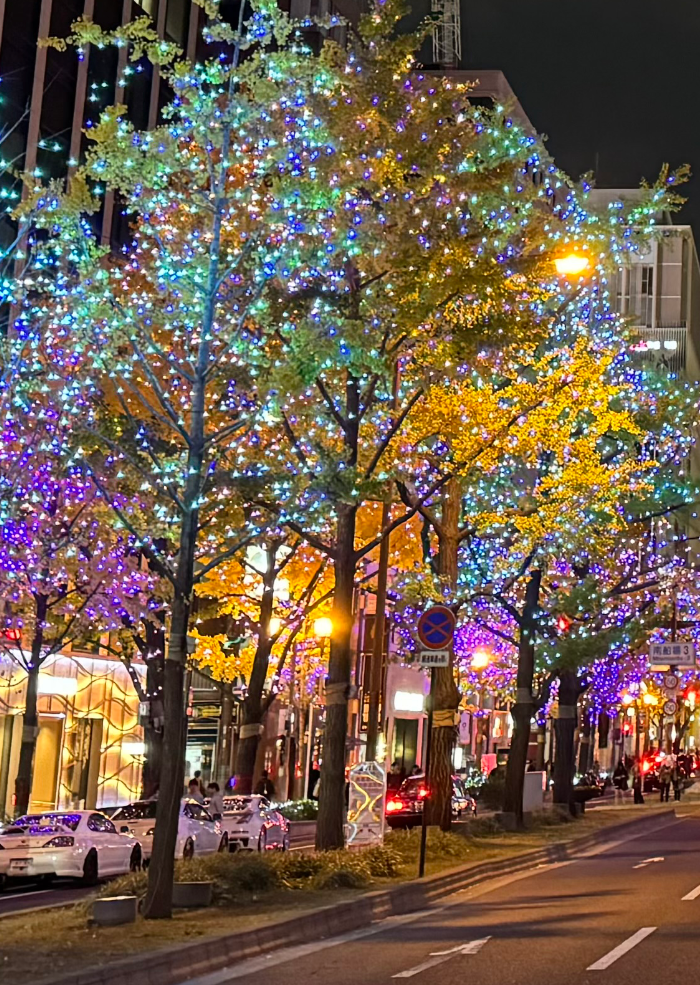
Gingko trees blaze gold in autumn and if you’re here in December, don’t miss the Midosuji Illumination, when the entire boulevard glows with millions of LED lights strung through its gingko trees drawing couples, families, and photographers in equal measure.
For many visitors, Midosuji is less about what you buy than the sensation of walking amid luxury, window shopping and seeing firsthand how this city balances its playful Kansai soul with a cosmopolitan edge.

Dotonbori: Osaka’s Riverfront Glow
By the time you’ve finished your stroll down Midosuji, it’s likely close to six in the evening. The boulevard naturally funnels you toward the canal, where the buzz of the city thickens into a hum of neon and chatter. Suddenly, you’re at Dotonbori, the most famous strip in Osaka.
A wooden boardwalk hugs the water, lined with shops and eateries, while above, colossal animated signs—crabs that wave their claws, lanterns that flicker—compete for your attention. The air is alive with the scent of frying batter and grilled seafood, and as you walk toward Ebisu Bridge, the city’s unofficial stage, you’re met by the most iconic sight of all: the giant Glico Running Man billboard, his arms frozen mid-sprint. Everyone stops here for their Osaka photo, the canal gleaming below, the billboard sprinting above
Wander a little closer to the food stalls and watch the takoyaki masters at work. The cast-iron pans hiss and bubble as batter is poured, octopus pieces dropped, and the spheres flipped with practiced flicks of long picks. The smell—rich, savory, slightly sweet—wafts over the canal, and it’s impossible not to give in.
Dinner Time: Osaka, Your Way
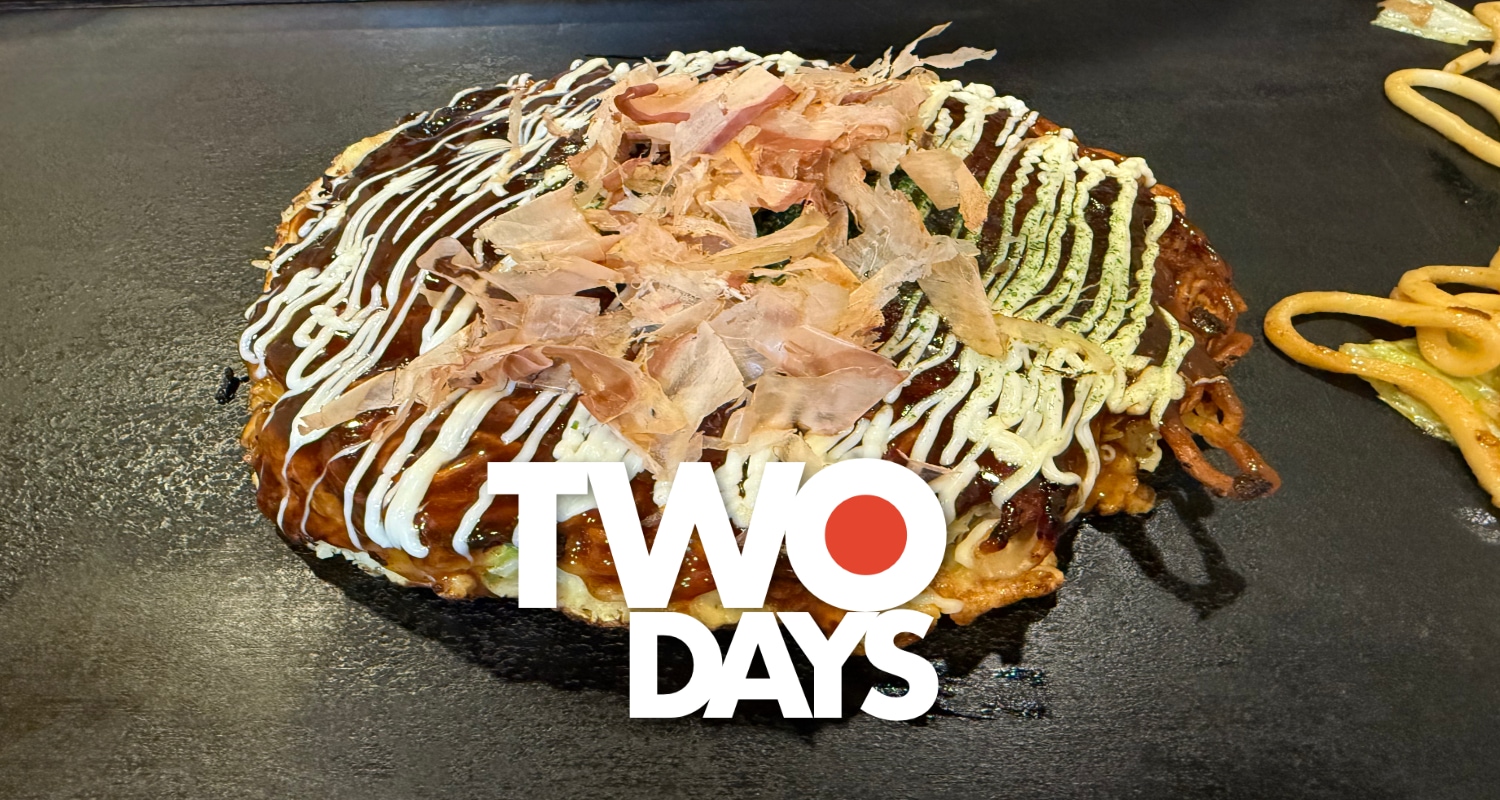
But for dinner, you’ll want something even more authentic: okonomiyaki, Osaka’s signature savory pancake. The side streets just off the promenade are filled with small, family-run restaurants that specialize in it. Mizuno is one of the most celebrated, a cozy spot where lines form nightly, but there are plenty of other standouts within a block or two. Each serves its own version—fluffy layers of cabbage, pork, and seafood bound with batter, sizzled on a griddle before you, then lacquered with sauce, mayo, and a flourish of bonito flakes that wave in the heat. Eating okonomiyaki in Osaka isn’t just a meal—it’s a performance, and the locals will tell you there’s no better place to try it.
Dive Back into the Neon
After dinner, dive back into the neon. Just steps away is the towering Don Quijote, open nearly all night and crammed floor to ceiling with everything from luxury cosmetics to instant ramen, cosplay outfits to quirky souvenirs. It’s a chaotic wonderland where aisles feel like treasure hunts, and the famous yellow Ferris wheel attached to the building looms over the canal outside.
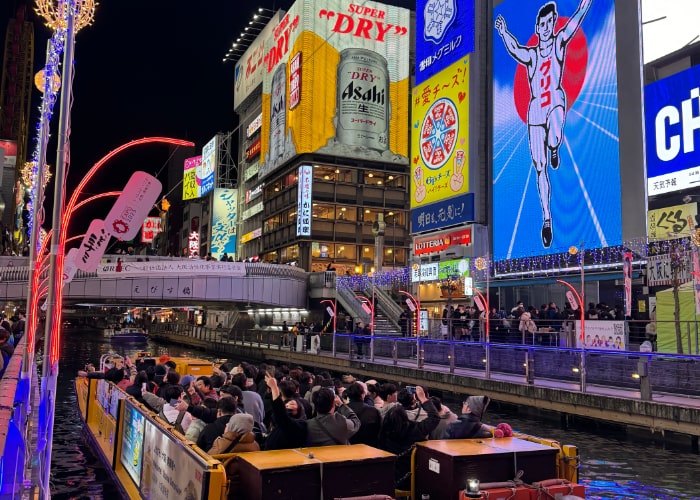
The night is far from over. Step onto a Dotonbori River Cruise for a new perspective: from the boat, the neon signs ripple across the water, the laughter of the bridges above mixing with the guide’s lively banter. The city feels electric, both surreal and intimate.

Dotonbori Night Cap
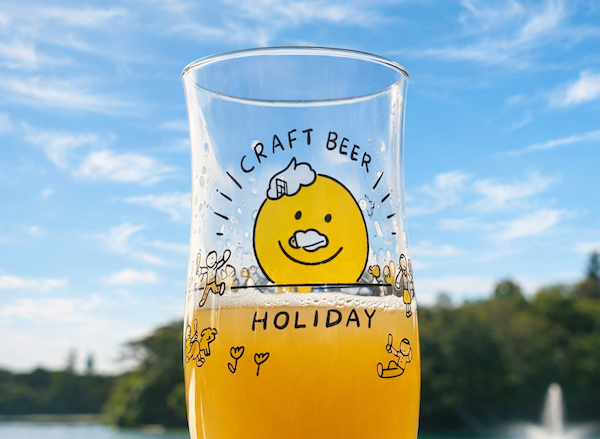
And when you finally return to dry land, the night offers one last indulgence: a bar. Osaka’s nightlife is endlessly varied, and within a few blocks you can find just about anything—an ‘80s tribute bar with cassette tapes and retro posters, a craft beer standing bar serving IPAs from across Japan, or a high-class cocktail lounge where bartenders stir martinis with quiet elegance.
However you end the night, you’ll feel the city still buzzing around you. Tired, satisfied, maybe a little dizzy from neon and sake, you settle into the realization that this is just day one—and Osaka has already set a pace that few cities in the world can match.
Head back to your hotel, you’ve had a great day and earned a good night’s sleep. Tomorrow is another day in Osaka!
Where to Stay in Osaka
For this two-day visit to Osaka, choosing the right area makes it easy to explore the city efficiently while enjoying a comfortable base between days. Osaka Scene suggests staying in areas like Namba and Shinsaibashi, which offer convenient access to restaurants, nightlife, and major transport lines.
Browse hotels in Osaka → (Rakuten Travel)
THE SCENE: FAQs
You One Day Trip to Osaka can be accessed entirely on the Osaka Metro subway lines.
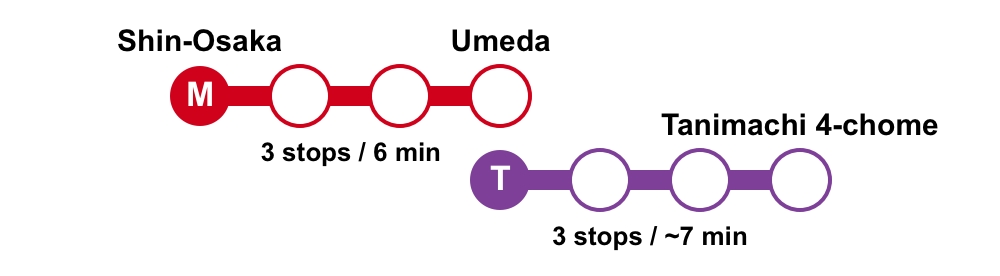
OSAKA CASTLE: At Shin Osaka Station board the Midosuji Line on Track 2. At Umeda station transfer to the Tanimachi Line train on Track 1. Use Exit 9.
KUROMON MARKET
Return to the Tanimachi Line on Track 1 and get off at Nippombashi Station. Use Exit 4.
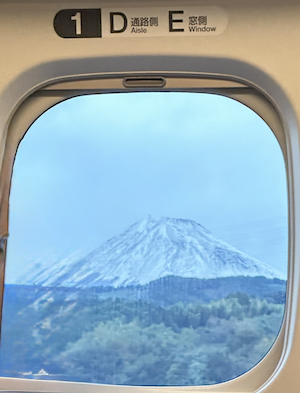
To enjoy your full day in Osaka we recommend you plan to arrive at Shin-Osaka station by 8:50AM. That means taking one of the first Shinkansen Bullet Trains from Tokyo around 6AM, but the trains are so comfortable you can sleep on the way (Just don't miss the view of Mt. Fuji - select a window seat on the right of the train to get the best view!)

We recommend that you buy the Osaka Metro Pass which will give you access to any of their 9 Subway Lines for the whole day for one price.
Photos: Osaka Scene Staff
Video
Video: Expo 2025 Official YouTube Channel
sponsored ad
Also read:
Osaka Scene: GUIDES
Fireworks
Festival Guide